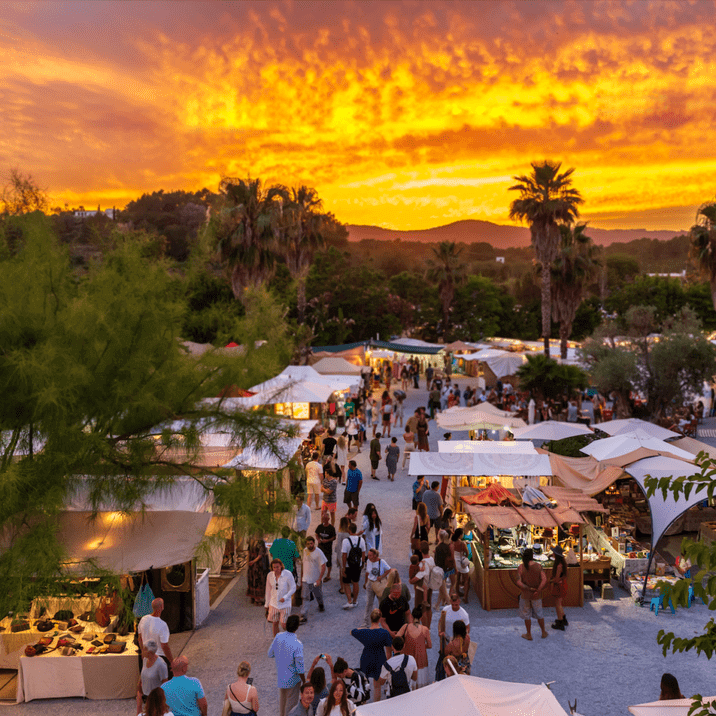
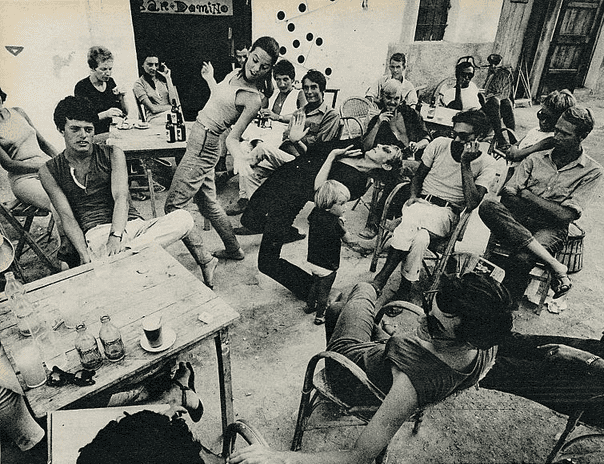
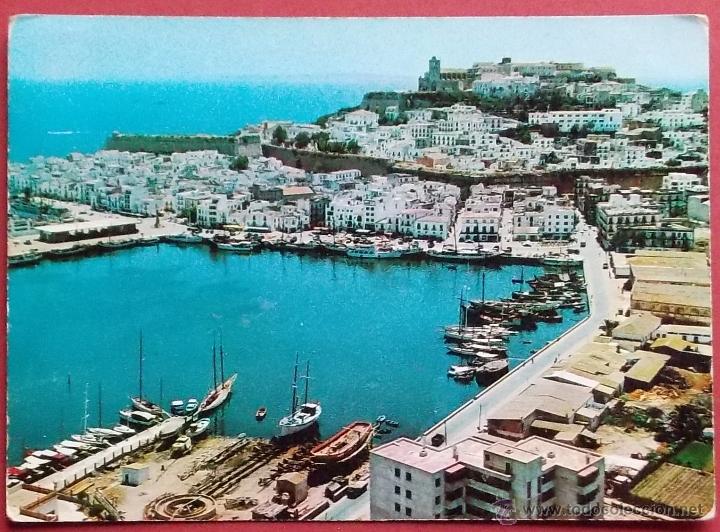
Ibiza has long attracted filmmakers and travelers alike, serving as a vibrant backdrop for stories about freedom, art, music, and counterculture. From the hippie heyday of the 1960s to becoming the party capital of the 21st century, the island’s atmosphere has been captured in numerous films of different languages and genres. Below, we explore notable films, and some documentaries, that were shot entirely in Ibiza or are largely set on the White Island. Each film is set against the backdrop of the island’s changing culture, offering a cinematic window into the soul of the island over time.
Although more films have been shot in Ibiza than are featured here, ranging from lighthearted romantic comedies to thrillers, this article has focused on those that have at least some cultural resonance. Whether through their portrayal of local life, their engagement with the island’s history, or their reflection of its subcultures, these works go beyond using Ibiza as a mere postcard backdrop. They offer a glimpse into the island’s evolving identity, capturing moments and moods that help define its place in cinema.
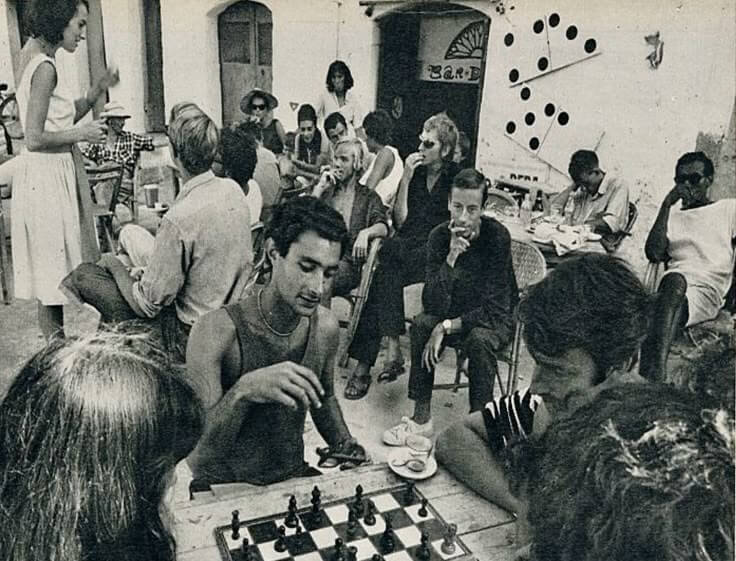
The counterculture era (1960s–1970s)
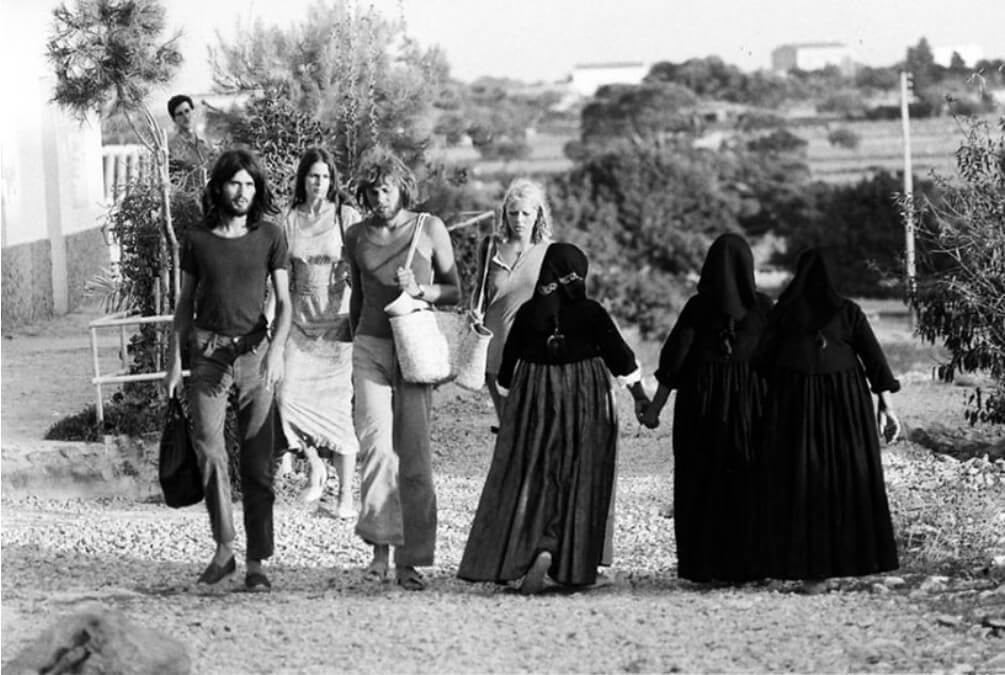
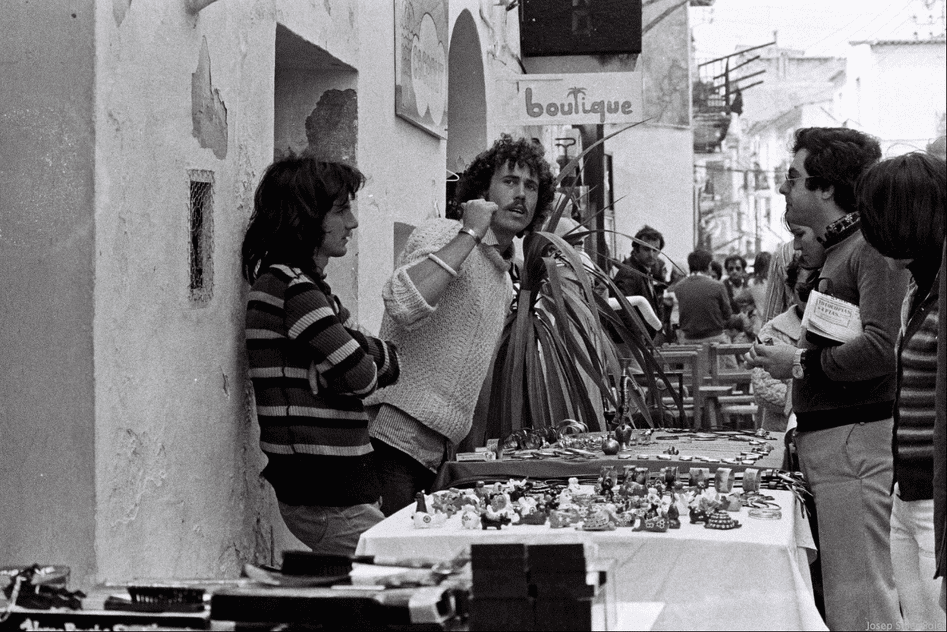
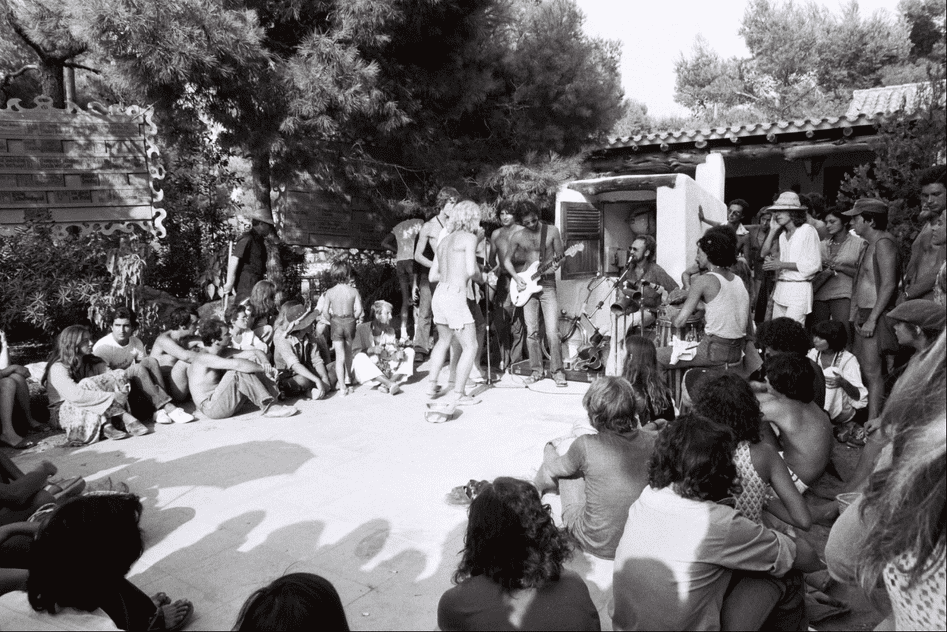
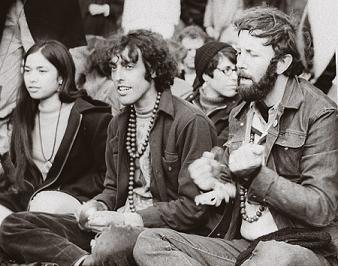
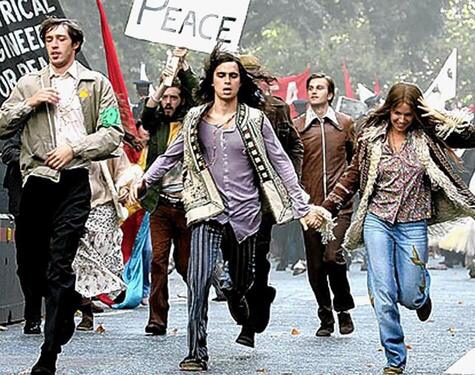
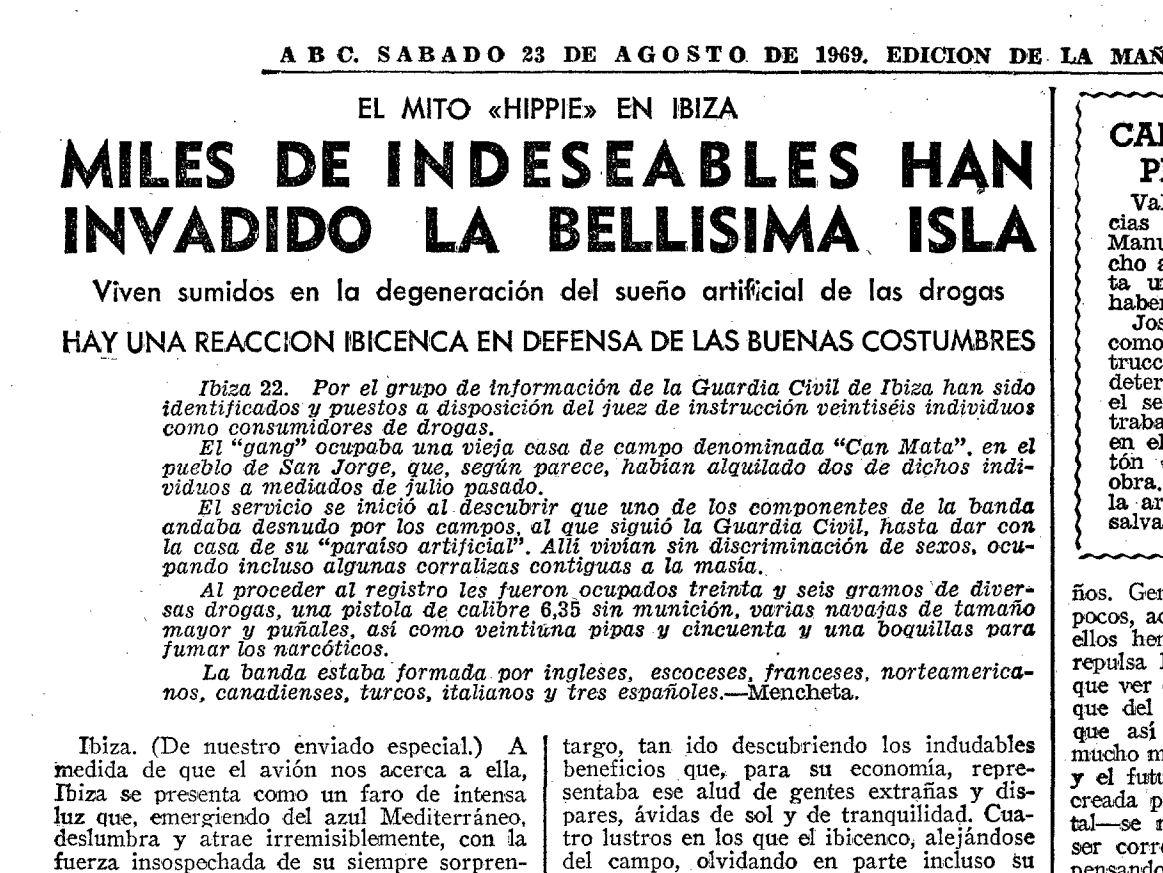
Ibiza first appeared on the big screen in the 1960s, when it was a remote bohemian enclave. Early films depicted an island with a simple rural lifestyle and a fledgling hippie subculture, reflecting the pioneering days before mass tourism.
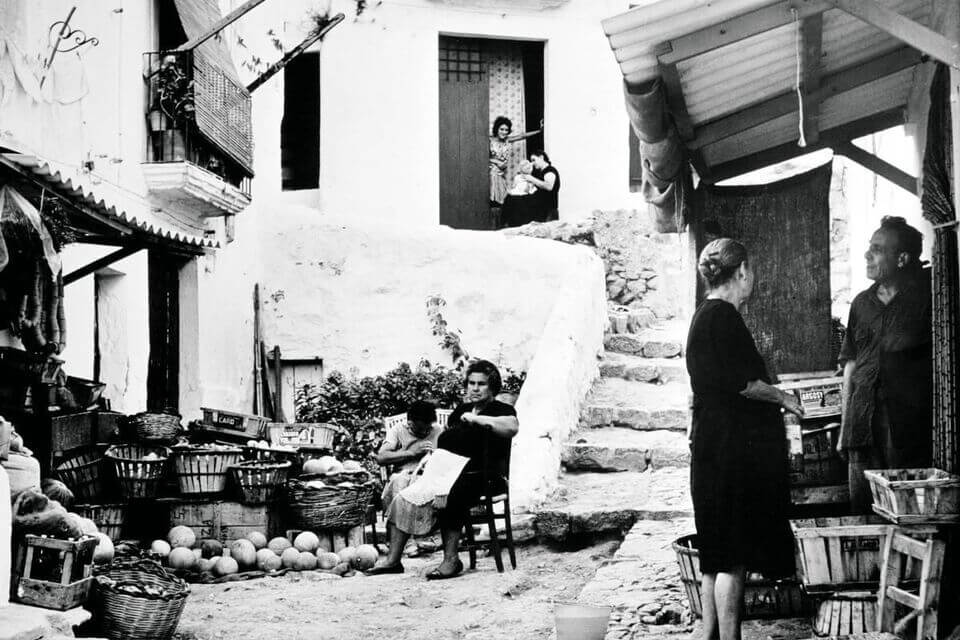
• The Day (1960): One of the first films shot in Ibiza, this 26-minute short film by actor and director Peter Finch is a semi-documentary about the daily life of a young Ibizan. At a time when the island was still quiet and traditional, The Day captures the rustic charm of Ibiza through the eyes of a child, offering a time capsule of local culture before the hippie invasion.
This is one of the rarest and hardest-to-find films ever shot on the island. Although it won awards in Venice and Cork in 1961, it was never commercially released, and today only physical copies are preserved in archives such as the NFSA in Australia and the BFI in the United Kingdom. Public screenings have been few and far between, including a one-off event in Ibiza in 2017, making it a highly coveted gem for both film buffs and lovers of the island’s cultural history.
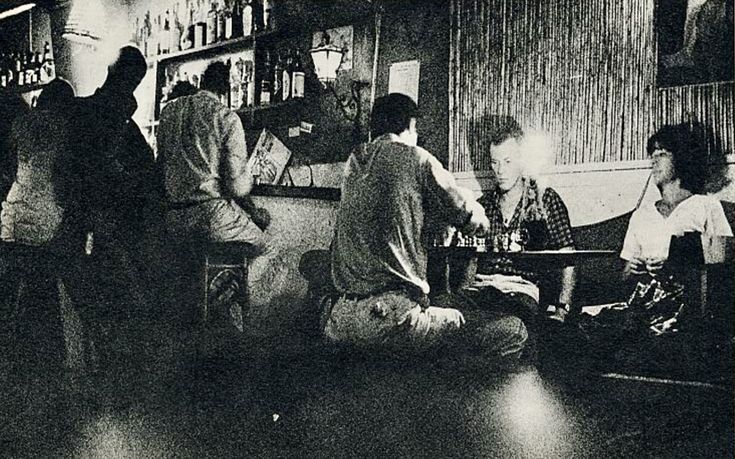
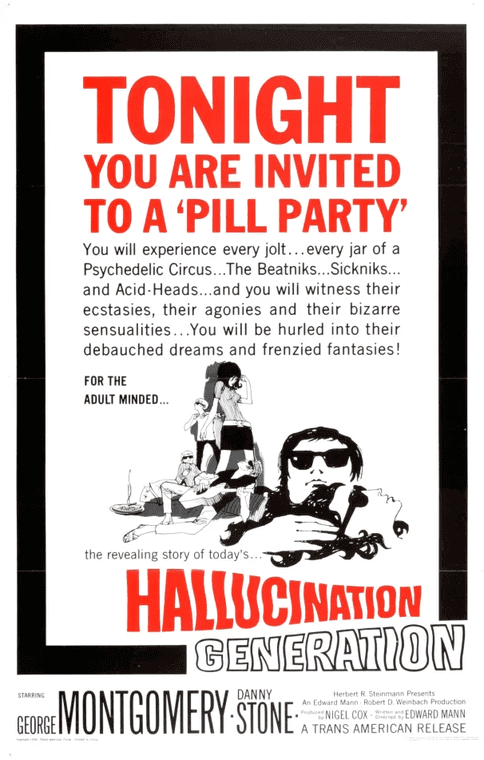
• Hallucination Generation (1966): a low-budget American drama set among expatriate beatniks on the white island. Presented as a cautionary tale “about the dangers of going on vacation to Ibiza, taking free drugs, and falling in love,” the film follows a disillusioned young man who joins a drug-dealing guru. Notably, its black-and-white scenes suddenly explode into psychedelic colors during an LSD trip sequence. Although sensationalist in execution, Hallucination Generation stands as a testament to the emerging counterculture on the island in the 1950s and 1960s, depicting Ibiza as a refuge for beatniks and bohemians living on the fringes of society.
• More (1969): Barbet Schroeder’s directorial debut, More is a cult classic of 1960s counterculture cinema. A German student and a free-spirited American woman travel to Ibiza, where their love story becomes entangled with heroin addiction amid the sun-drenched beauty of the island. With a soundtrack by Pink Floyd and dreamlike cinematography by Néstor Almendros, More was controversial for its frank depiction of drugs and sex, and was even censored in several countries. Beyond the tragic love story, the film is appreciated for its authentic portrayal of Ibiza in the late 1960s: an island “populated by locals, bohemian hippies, and strange characters,” untouched by mass tourism. The camera lingers on Ibiza’s landscapes—whitewashed villages, sunny coves, and ruins atop cliffs—giving the film an organic, almost mystical atmosphere that reflects the hedonistic paradise sought by the characters.
• F for Fake (1973): Orson Welles’ ingenious docudrama features Ibiza in a true story about art and deception. The film portrays the famous art forger Elmyr de Hory at his home in Ibiza, alongside writer Clifford Irving (author of a biography of Elmyr entitled Fake). Welles uses the Ibiza setting as more than just a picturesque backdrop: it symbolizes the island’s role as a refuge for the marginalized and creative con artists of the 1960s. In F for Fake, parties in sunny Ibizan villas host debates about truth and illusion in art. This entertaining “essay film” blurs reality and fiction, just as Ibiza blurred the boundaries between legend and reality for the many eccentrics who found refuge there. Welles’ description adds a new dimension to Ibiza’s cultural image: not only as a hippie paradise, but also as a refuge for artistic rebels who live by their own rules.
The 1980s: Comedy and chaos in paradise
In the 1980s, Ibiza’s reputation as a party destination began to appear in more commercial films, often in the form of light comedies. These films may not have been cult classics, but they reflect how the world at large began to see Ibiza: as a sunny land of bikinis, beach bars, and fun misadventures, capturing the birth of the electronic music club scene that would soon dominate its identity abroad.
• Beautiful and Wild on Ibiza (1980): This West German comedy (original title Die schönen Wilden von Ibiza) follows a young couple on vacation who discover that their hotel room has been double-booked, leading to a series of hilarious antics on the island. Like many European “sunny comedies” of its era, the film is based on sex, sand, and silliness. Although culturally superficial, it is revealing that Ibiza was chosen as the setting, emblematic of uninhibited fun. The German title of the film literally means “The Beautiful Savages of Ibiza,” a phrase that in itself hints at how outsiders viewed the island’s free-spirited atmosphere.
• Sunshine Reggae auf Ibiza (1983): Another example of 1980s kitsch, this German musical comedy revels in the hedonistic stereotypes of Ibiza. It features a mix-up that sends a straight-laced bank clerk to the island, where he encounters nudist beaches, nightclubs, and flamboyant characters under the Mediterranean sun. With a reggae-pop theme song and broad humor, the film is not exactly a nuanced view of life on the island. However, it cemented the pop culture caricature of Ibiza as the ultimate party island, full of eccentric expats and anything-goes adventures. As frivolous as they were, these films indicate that by the 1980s, Ibiza’s appeal for its “sun, beach, sex, and party” had spread around the world.
In the 1980s, other productions were filmed in Ibiza, but in most cases the island served as a sunny backdrop rather than a true cultural setting. Films such as the spy comedy The Trouble with Spies (1987) and the Welsh television movie Ibiza, Ibiza (1986) used its beaches and streets to add color, without engaging with local life or the island’s identity. These titles illustrate how, during that decade, Ibiza was often portrayed as an interchangeable Mediterranean postcard rather than for its unique character.
The rave revolution and DJ culture (1990s–2000s)
In the late 1980s and throughout the 1990s, the island was transformed by the explosion of electronic music and club culture. Filmmakers responded with documentaries and dramas that captured Ibiza’s new role as a mecca for clubbers. At the same time, some films nostalgically recalled the hippie era or explored other facets of Ibizan life, allowing the island’s cultural mosaic to continue to be represented in diverse ways.
• A Short Film About Chilling (1990): this British television documentary (Channel 4) is an essential snapshot of Ibiza at the dawn of the rave era. Filmed in the summer of 1990, just as acid house and Balearic beats were putting Ibiza on the map, it follows a group of British DJs, club promoters, and young people on their pilgrimage to the island. What makes this documentary particularly interesting is its juxtaposition of nightlife and local life: it alternates between scenes of all-night clubs and quiet moments in the daily lives of the island’s inhabitants. This contrast vividly conveys “the magic of the island”: the beauty of the Ibizan countryside is always present in the background, even when the DJs’ beats are thumping in the foreground. The film captures a golden age, now past, of innocence, and captures the club culture before the scene became commercialized, making it a must-see for anyone curious about how Ibiza became the party capital of the world.
• El tiempo de la felicidad (1997) – In the 1990s, Spanish cinema reflected on the early days of Ibiza. The Time of Happiness is a Spanish comedy-drama set in the summer of 1970, at the height of the hippie movement. Directed by Manuel Iborra, it follows an eccentric family from Madrid who spend their holidays in Ibiza amid a backdrop of free love and counterculture. The parents and their teenage children become involved in romantic and sexual adventures with the island’s hippies. Through a nostalgic lens, the film portrays the island as a place of self-discovery and social liberation, contrasting the traditional family dynamic with the unconventional lifestyle they encounter. For Spanish audiences, Tiempo de felicidad offered an endearing (albeit slightly bittersweet) look at how the hippie invasion of Ibiza affected everyday life, all against the backdrop of the idyllic beaches and carefree atmosphere of 1970s Ibiza. (Fun fact: although set in Ibiza, much of the film was shot on the neighboring island of Mallorca, but it still exudes the authentic charm of the Pitiusan Islands).
• Kevin & Perry Go Large (2000)– Not all portrayals of Ibiza’s club scene were serious. This British teen comedy (a spin-off from a TV sketch) became a cult film in the UK for its funny and affectionate take on Ibiza’s DJ culture. Kevin and Perry are two clumsy London teenagers who fly to Ibiza with a single goal: to “make it” as DJs (and maybe lose their virginity). The film satirizes the clubbing experience, from the superstar DJs at Amnesia to the embarrassing antics on the dance floor, but it also celebrates the island’s appeal to young music lovers. Culturally, it shows how in 2000 even conventional British teenagers saw Ibiza as the ultimate destination for rites of passage. Although it is full of crude humor and clichés, the soundtrack (featuring tracks by Ibiza DJ Judge Jules) and filming in real locations give it an air of authenticity amid the laughs.
• Sex and Lucía (2001) – Although set mainly in Formentera (Ibiza’s smaller sister island), this Spanish film by Julio Medem is often celebrated alongside films centered on Ibiza for its sensual depiction of the island atmosphere. In this erotic and sensual drama, a grieving young woman (Paz Vega) escapes to tranquil Formentera after the death of her lover. There, among secluded beaches and sunsets at the lighthouse, she rediscovers herself and uncovers secrets about her late partner’s past. Sex and Lucía uses the island’s serene beauty as a mirror for its characters’ emotional journey: the tranquil coves and blinding sun become symbols of both healing and passion. Medem’s non-linear, dreamlike narrative blurs reality and imagination, just as Ibiza and Formentera blur the line between vacation and real life. By including this film, we see how the Pitiusas Islands as a whole inspire stories of love, loss, and liberation far deeper than any disco anthem.
• It’s All Gone Pete Tong (2004)– A mockumentary drama that offers a more poignant look at the excesses and dangers of DJ nightlife in Ibiza. This Canadian-British film follows the fictional DJ, named Frankie Wilde, a superstar on the Ibiza club circuit who tragically loses his hearing due to years of loud music and substance abuse. What follows is a darkly comical and ultimately uplifting story about Frankie’s fall and redemption: from cocaine-fueled despair (haunted by a hallucinatory “cocaine badger”) to his reinvention as a deaf DJ who mixes using vibrations. Shot entirely on location in Ibiza at venues such as Pacha, Amnesia, Privilege, and the iconic Pike’s Hotel, the film is brimming with local color and cameos. It’s All Gone Pete Tong balances outrageous humor with heartfelt moments, and won awards at international festivals for its portrayal of one man’s connection to music against all odds. It highlights Ibiza’s cultural status as a place where music is life, and offers a clever moral fable about the ups and downs of fame in the clubbing world.
• Aislados (2005)– This film by Ibizan director David Marqués stands out as a local independent production that captures the voice of the island from within. Shot entirely in Ibiza, Aislados is a minimalist work with a well-written script that focuses on two friends who spend their days engaging in witty, often absurd conversations about life, relationships, and the peculiarities of their existence in a small world. Marqués uses the island’s landscapes sparingly, allowing the coves and countryside to pepper the dialogue-rich narrative, and in doing so, reflects a side of Ibiza far removed from tourist clichés. The cult following the film has garnered in Spain is largely due to its deadpan humor and authenticity, reminding us that Ibiza’s creativity is not only imported but also cultivated by its own storytellers.
Throughout the 1990s and early 2000s, Ibiza also appeared in numerous international B movies, thrillers, and romances, from American direct-to-video action films (Welcome 2 Ibiza) to Dutch romantic comedies (Loving Ibiza). Although many of them are forgettable, they underscore Ibiza’s global reputation as the ideal setting for adventure and romance. Even when treated superficially, the island’s backdrop, with its blue seas and legendary nightlife, remains a major draw for filmmakers looking to inject exotic energy into their stories.
Modern reflections and documentaries (2010–2020)
In recent years, filmmakers have approached Ibiza with a more reflective eye, recognizing its nuanced history and the contrasts between its hedonistic image and local reality. From thought-provoking dramas to comprehensive documentaries, the 2010s and 2020s have produced works that examine Ibiza’s cultural legacy, building bridges between the past and the present, fiction and reality.
• Ibiza Occident (2011) – This documentary delves into the island’s legendary nightlife, tracing the roots of its club culture from the free-spirited gatherings of the 1960s to the rise of the superclubs that define its current global reputation. Directed with the eye of a connoisseur, Ibiza Occident combines archival footage, interviews with pioneering DJs, club owners, and residents, and evocative shots of both the dance floors and the island’s serene landscapes. Rather than portraying nightlife as a superficial party scene, the film explores its evolution as a cultural phenomenon, shaped by hippie ideals, Mediterranean openness, and the convergence of music, fashion, and art. In doing so, it positions Ibiza’s nightlife culture not as an imported fad, but as an indigenous movement born from the island’s unique history of creative and social freedom.
• Bluu, Last Days of Ibiza (2013) – Despite its English title, this little-known French-Spanish drama by Alain Deymier combines suspense with the island’s most esoteric traditions. The story follows Nat, a Parisian who arrives in Ibiza during a heavy storm and is reunited with her childhood friend, Sandra, only to be drawn into the orbit of a strange sect led by a charismatic figure who preaches the “last days” of the island. Although fictional, the film is inspired by authentic aspects of Ibiza’s identity: its long history as a refuge for spiritual seekers, alternative communities, and outsiders pursuing radical transformation. Although it never reached a wide audience, Bluu functions as a “hidden gem” of Ibizan cinema, offering a darker and more mystical counterpoint to the sun-and-music narratives that dominate representations of the island.
• Amnesia (2015): Directed by Barbet Schroeder (who returns to Ibiza decades after his film More), Amnesia is a quiet and captivating drama set in 1990, just as Ibiza’s club scene was taking off. Jo, a young German DJ and composer, moves to the island hoping to join the nascent electronic music revolution and befriends Martha, a much older German expatriate who has been living in seclusion in Ibiza for decades. Their platonic friendship becomes an intergenerational dialogue about history and identity. Martha refuses to speak German or acknowledge her homeland, having fled the horrors of World War II: she carries the weight of Holocaust trauma and guilt, something Jo’s post-war generation struggles to understand. As their bond deepens, the film explores the contrasts between Jo’s progressive optimism and Martha’s tormented past. Ibiza, “the idyllic island,” serves as neutral ground for this emotional reckoning. Through stunning coastal imagery and intimate performances (by Marthe Keller and Max Riemelt), Amnesia also shows an Ibiza beyond the party scene, a place where people go to forget or to heal.
• Ibiza (2019) – Arnaud Lemort’s comedy focuses on the culture shock experienced by a stuffy Parisian doctor (Christian Clavier) who goes on vacation to the island with his new partner’s teenage children. What begins as a reluctant family vacation turns into a series of chaotic encounters with Ibiza’s nightlife, beach mishaps, and eccentric locals. While relying on easy laughs and slapstick humor, the film also addresses how Ibiza’s energy can disrupt routines and push people, even the most uptight, toward unexpected personal discovery. Although clearly a comedy, it offers a lighthearted counterpoint to more serious portrayals of the island, reminding viewers that Ibiza’s appeal works for all generations.
• Ibiza: The Silent Movie (2019) – A truly unique documentary by director Julien Temple, this film ambitiously tells the entire history of Ibiza, from ancient times to the present day, without any spoken dialogue. Instead, Temple uses archival footage, stylized reconstructions, on-screen text, and a continuous soundtrack (created by DJ Fatboy Slim) to create a “silent” and sensory cinematic experience. The result is a concise, entertaining, and yet profound history of the world’s most famous hedonistic island. Temple traces the history of Ibiza from the Phoenician settlers in 654 BC, through the Roman, Moorish, and Catalan eras, to the arrival in the 20th century of beatniks, hippies, rock stars, and ravers. The film highlights the patterns of Ibiza’s history: how each wave of newcomers sought utopia, whether spiritual or psychedelic. With vivid images and ironic juxtapositions, Temple celebrates Ibiza’s free-spirited legacy, while criticizing the price its culture and landscape have paid for exploitation. He has described the film as a “cinematic essay” and even an intervention, hoping that today’s partygoers will pause to reflect on “the land on which they dance.” Ibiza: The Silent Movie stands out as a comprehensive tribute: by covering the myths and realities of the island, it sums up why Ibiza is not just a party destination, but a phenomenon of cultural fusion and reinvention.
• Un tiempo precioso (2020)– Directed by Spanish filmmaker Miguel Molina, this intimate drama is set primarily in Ibiza, interweaving themes such as family ties, mortality, and the transience of life. The film follows a man facing a terminal diagnosis who decides to return to the island, where the vivid landscapes and tranquil Mediterranean light frame his personal reflection. By setting his story in Ibiza, Molina takes advantage of the island’s duality—a place of carefree beauty, but also of reflection and closure—using its quieter, off-season settings rather than its festive side. This makes Un tiempo precioso part of the more contemplative side of Ibizan cinema, where the location serves as a backdrop for human truths rather than tourist spectacles.
• The Europeans (2020)– This Spanish film offers a nostalgic look even further back, to the late 1950s, when Ibiza was first “discovered” by Spaniards during the Franco era and other Europeans as a permissive paradise. Two young people from Madrid arrive in Ibiza in 1958, attracted by stories of sun, sea, and sexual freedom with tourists from northern Europe. Hoping to find an easy place for holiday romances, they instead face unexpected realities and heartbreak. The Europeans is based on a 1960 novel by Rafael Azcona and portrays the island in the late 1950s as a meeting point between conservative Spanish society and liberal foreign influences. The film’s period details and dramatic comedy tone earned it critical acclaim and several Goya Award nominations in 2020. Culturally, it is fascinating because it shows Ibiza just before the hippie explosion, a rustic canvas on which early tourists and locals negotiated different morals. Watching it after seeing films from the 1960s and 1970s, one appreciates how quickly Ibiza’s culture changed. In essence, Los europeos allows us to witness the prologue to Ibiza’s countercultural era: those first sparks of change when an isolated island began its transformation into an icon of freedom.
• Disco, Ibiza, Locomía (2024) – The island’s club scene in the 1980s comes to life in this recent Spanish biographical drama. It tells the story of Locomía, the eccentric electro-pop band famous for their extravagant costumes and fan choreography, which began its journey on the Ibiza club circuit. Set on the vibrant island in the 1980s, the film follows a group of fashion-obsessed friends who arrive in Ibiza and form the band under the wing of a local music producer. The true story of Locomía is intertwined with the club culture of Ibiza in the 1980s—they were resident artists at the super-disco Ku (now Universe)—making this biopic an extravagant but insightful look at a unique chapter in the island’s nightlife. From shoulder pads to synth-pop anthems, Disco, Ibiza, Locomía revels in the details of the era. It also doesn’t shy away from the drama of clashing egos and industry pressures that led to the band’s collapse. More broadly, it highlights the island as a cradle of creative experimentation, where even a group of unconventional glam artists could become an international sensation, embodying the mantra that anything can happen in Ibiza.
• The Evolution of Ibiza: Can the White Isle Retain Its Legendary Magic? (2024) – This hour-long documentary, produced by AlphaTheta (the parent company of Pioneer DJs), offers a contemporary overview of Ibiza’s cultural arc. Directors Dan Tait and Laurence Koe interweave interviews with pioneering DJs (including Carl Cox, Norman Cook, Chloé Caillet, and Franky Wah), local authorities, and long-time residents to trace Ibiza’s evolution from its countercultural and hippie roots in the 1960s to becoming the world’s premier destination for electronic dance music. Importantly, the film does not limit itself to nostalgia: it explores the challenges the island now faces—rising costs, overtourism, and pressures toward exclusivity—and ultimately asks whether Ibiza can preserve its spirit of creative freedom and community access in a rapidly changing world.
From poetic documentaries to riotous comedies, the films of the last six decades collectively weave a narrative about Ibiza’s unique place in the cultural imagination. They show us an island continually redefined by those who arrive on its shores, whether humble peasants, marginalized hippies, visionary artists, superstar DJs, or ordinary families. For cinephiles interested in Ibiza, these films offer more than scenic escapism; they are windows into the island’s soul, each capturing a different facet of its ever-evolving identity.
Therefore, watching these films in chronological order can feel like a time-travel trip through Ibiza’s history. You’ll witness the quiet innocence of a 1960s Mediterranean village, the psychedelic freedom of the 1960s, the absurdist, sun-drenched antics of the 1980s, the revolutionary raves of the 1990s, and the thoughtful nostalgia and modern complexities of the new millennium. Throughout it all, Ibiza remains a charismatic character, sometimes serene and natural, other times vibrant with music and neon lights, but always a catalyst for personal transformation. In the end, that may be its greatest role in film and in life: a magical island that represents escape and rebirth. Each of these films, in its own way, invites viewers to experience that magic, under the sun and stars of the Balearic Islands.
Houses are a product of design, just like places in the digital world, because they determine how we move, feel, and function every day. Just as UX (User Experience) focuses on making experiences intuitive and satisfying in the digital world, UX applied to architecture and interiors can improve spaces to suit our lives in the physical world. It is about creating environments that not only look good but also work for living in, something that has always been the domain of architects. Therefore, in this sense, it can be enriching to look at other interprofessional disciplines to see what new perspectives, techniques, and principles they can bring to us that we can apply. Today we will look at user experience, which is a primarily digital discipline that has much in common with architecture and design in the physical world, both of which are interdisciplinary and closely related, as we will see below.
What is user experience (UX) and where does it originate?
Most people associate the term UX with websites and apps. UX is a field born out of the digital revolution with the goal of ensuring that products, interfaces, and services meet real human needs in an intuitive and enjoyable way. Essentially, it’s about how a person feels when interacting with something, from ease of use to emotional satisfaction.
Donald Norman at UCSD in the mid-1980s
The roots of UX go beyond the Internet. This discipline is based on psychology, cognitive science, design, and ergonomics. It took shape in the 1990s, when Don Norman, professor emeritus of psychology and founding director of the cognitive science department at UCSD (University of California, San Diego), began working at Apple and coined the term “user experience design” to encompass more than just usability; rather, it refers to the entire journey a person takes with a product or system.
But user experience is not limited to screens. In fact, UX has become a crucial part of many industries today, directly linked to the success of countless products and applications, shaping how we shop, communicate, and live more comfortably. It can be said that many of the trends that originated in digital format are being transferred to design in the physical world.
The same principles that guide the design of a frictionless, seamless online shopping experience can help us shape our physical spaces. Think of the home not just as a structure, but as a living interface that you navigate, and where habits are created every day.
Why interrelate UX with architecture?
Both UX and architecture are based on psychology, design theory, ergonomics, and even sociology. Being inherently interdisciplinary, they can powerfully inform and enrich each other. Applying UX thinking to architecture can help create spaces that respond more intricately to human behavior, while lessons from physical space can also inspire better digital experiences. If there is one thing that all fields related to architecture and UX have in common, it is that they create environments, or rather, modify them in certain ways. In fact, in its early days, UX borrowed many of its skeuomorphic decisions from physical architecture (website backgrounds that look like brick walls, columns, arches, or even the structure of buildings to create a sense of scale and depth).
It is also a different approach to user needs. Traditional architecture tends to place a lot of emphasis on context: how a building fits into its surroundings, how it relates to neighboring structures, or how it shapes the urban landscape. While this perspective is important, it sometimes overlooks the user’s daily experience. Research into human needs can be overshadowed by commercial interests, aesthetic statements, or zoning requirements. The result is that user-centered considerations do not always receive the priority they deserve.
In contrast, UX design starts with the user, and does so in a radical way. It is based almost entirely on detailed user research, empathy maps, iterative prototypes, and constant testing in the real market. Products are launched with solid analytics to understand exactly how people behave, and thanks to the granularity of analysis that the digital format allows, much more detailed and up-to-date data is obtained. Business objectives continue to play an important role, but user experience and satisfaction are key metrics of success. Attention, retention, and longevity are the maxims to which we aspire. For this reason, user experience routinely provides new insights into human behavior, insights that could significantly enrich architectural thinking if borrowed more directly.
Furthermore, UX evolves at a faster pace than architecture, which can take years to go from design to construction and testing. This accelerated learning loop means that UX often discovers new human-centered ideas; ideas that architecture can borrow to improve the way we shape physical spaces. In a way, user experience becomes a rapidly advancing laboratory for understanding how people navigate, feel, and behave in design environments.
How can UX be applied to physical spaces in practice?
Surely, potential future applications go much further, but based on the main conceptual pillars of UX today, we will describe some examples of how they can be directly applied to architecture.
A house or apartment is the quintessential product that is used on a daily basis. It influences mood, stress levels, productivity, and even health. When we look at our home from a user experience perspective, we begin to ask ourselves different questions:
– Does the design support my habits and routines? (User flows)
– Does each room clearly communicate its function? (Accessibility)
– Are there clear focal points in the environment, or is it cluttered? (Visual hierarchy)
– Is it easy to navigate my space? (Information architecture and accessibility)
– How does my space make me feel? (Emotional design)
Let’s explore these UX concepts and see how they apply to your living environment.
1. User flows: design for natural movement
In UX, user flows map out how someone moves through an app to complete a goal: buying a product, booking a ticket. In a home, daily flows might be:
* Wake up → bathroom → kitchen → office
* Come home → put down keys → hang up jacket → relax in living room
Good design makes these movements effortless. For example:
– Keep frequently used items within easy reach. Don’t put everyday dishes on the top shelf. Keep a small tray next to the bed for glasses and water.
– Place a console table or hooks next to the entrance for keys and bags. Add a bench for comfortable shoe changing. Install a small mirror for last-minute checks.
– Make sure that paths are not blocked by furniture so you don’t have to zigzag awkwardly. Put chairs away after use. Place baskets under tables instead of next to them to keep hallways clear.
When these flows are intuitive, you save energy (mental and physical) and reduce frustration (sometimes subconscious).
2. Accessibility: spaces that indicate their use
Accessibility is a clue to how something works. A button on a website looks like it can be clicked. The handle of a cup invites you to pick it up.
At home, accessibility helps spaces communicate their purpose:
– A plush armchair next to a lamp invites you to read.
– A bench near the door invites you to put on your shoes.
– A kitchen island with stools says, “Gather here.”
– A cozy window filled with cushions invites you to relax.
– A wall-mounted chalkboard next to the kitchen reminds you to plan meals.
– A large mirror in the hallway invites you to take a look before you leave.
– Hooks next to the door invite you to hang hats and bags.
– A small shelf with chargers next to the sofa says, “plug in here.”
– A brightly colored rug under the dining table makes the area a gathering place.
– A bookcase with a comfortable chair next to it suggests, “sit down and browse.”
If a space doesn’t have a clear function, it can feel uncomfortable or underutilized. Think about how a dining table buried under clutter is no longer inviting for eating.
3. Visual hierarchy: guiding the eye and the mind
On a website, visual hierarchy uses size, color, and placement to indicate what is important. Headlines are large. Calls to action are in bright colors.
Our home also has a hierarchy. Certain features first attract the eye: a fireplace, a large window with a view, a striking piece of art.
You can design this intentionally:
– Place seating in front of the best view or focal point.
– Use lighting to highlight artwork or architectural features.
– Keep main lines of sight uncluttered; let storage hide clutter.
– Hang curtains higher and wider to draw the eye upward.
– Use contrasting cushions or blankets to highlight a chair.
– Arrange decor in odd numbers for a natural focus.
– Place a plant near windows to draw attention to the outdoors.
– Choose a striking rug to visually anchor the space.
– Add mirrors to reflect light and multiply focal points.
– Store clutter in decorative baskets so that the eyes are drawn to the intended highlights.
– Use layered lighting (floor lamps, wall sconces, candles) to create visual depth.
A solid hierarchy calms the mind. Without it, rooms feel chaotic and stressful.
4. Feedback: lighting, textures, and emotional responses
In UX, feedback indicates that an action has worked: a button changes color when pressed. In homes, feedback is more subtle but powerful.
– A light that turns on instantly reassures us.
– The soft textures of a bedroom indicate that it’s time to relax.
– The echo of an empty hallway can be cold and unsettling.
– A gentle breeze from a window tells you that you can open up.
– The warmth of a sunlit floor invites you to sit down.
– The soft click of a latch indicates privacy.
– The soft scent of a diffuser or incense indicates relaxation.
– The muffled silence of a thick carpet underfoot calms your pace.
– The silence of thick curtains muffles outside noise, conveying calm.
– A soft creak on old wooden floors indicates that the house is “alive.”
Choose materials, colors, and lighting that send the right signals. Warm, dimmable lights offer a soft response at night. Smooth handles, plush rugs, or cool stone underfoot influence the perception of space.
5. Accessibility: designing for all users
Although UX also attempts to tailor the design to a specific audience in each case, a good user experience will always tend to appeal to a wider audience than a private home. It will depend greatly on the particular tastes of its residents, but you can draw inspiration from some of these aspects to consider:
– Essential items should be at an accessible height.
– Make sure that hallways are wide enough for strollers or mobility aids.
– Avoid slippery floors in wet areas.
– Install grab bars in bathrooms.
– Use lever handles instead of knobs for easier grip.
– Make sure light switches are at an accessible height.
– Include seating in long hallways or near entrances.
– Choose contrasting colors for the edges of steps to prevent tripping.
– Opt for flush or low-profile thresholds to reduce tripping.
– Keep hallways free of rugs that can slip or bunch up.
– Add motion-activated lights in dark areas.
Accessibility is not a new issue in architecture, and you may not need to consider these factors now, but when designing a new construction or renovation, they may provide us with a home that is suitable for all stages of life in the future.
6. Emotional design: the joy factor
Don Norman spoke of three levels of emotional design:
1. Visceral: Immediate impact, such as colors, shapes, textures.
2. Behavioral: How it works in everyday use.
3. Reflective: The meaning or memories it evokes.
At home:
– Visceral: A sunlit room can make us smile as soon as we walk in, a work of art catches our eye, the soft feel of the bedding can instantly calm us.
– Behavioral: The workflow in the kitchen is so fluid that cooking is effortless, drawers open with one hand while stirring, light switches are perfectly placed when moving from room to room.
– Reflective: Family photos, travel souvenirs, and heirlooms connect us to our history; a bookshelf filled with our favorite novels tells the story of who we are; a classic chair brings back fond memories.
A truly satisfying space is the one that involves all three levels.
7. How to apply UX thinking at home
Here’s a simple way to get started:
1. Observe your daily routines, what frustrates you, where clutter accumulates.
2. Try small changes. Rearrange furniture to improve flow (for example, adding a side table where you always end up leaving your cup).
3. Use zones, clearly defining those for work, play, and rest. Even in small apartments, rugs or lighting can define different spaces.
4. Clear your lines of sight. Make sure that when you look across a room, there is something pleasant to catch your eye.
5. Personalize thoroughly. Mix soothing neutral bases with personal and meaningful accents.
The principles mentioned in this article are surely only the most obvious and general ones that we can transfer from UX to physical architecture. Some of them are not necessarily new discoveries, but there are undoubtedly more layers of knowledge behind the façade, and if one delves into the concept of UX and its principles, one will find inspiration for more practical applications in one’s own home or in the profession of architecture and interior design.
Ultimately, we can all design our own personal, individualized user experience. Our home is more than just walls and furniture; it is the place where we live our lives. Applying UX principles to architecture and interior design helps to create spaces that are not only beautiful, but also intuitively support our routines, our well-being, and even our happiness.
So the next time we consider renovating our home, let’s not just think about style. Let’s think about usability, fluidity, and the joy it can bring us.
Welcome to the step-by-step guide for property buyers in Ibiza in 2026
With this article we want to provide you with the most complete information possible and prepare you for the process of purchasing a home on the island.
Whether you’ve done it before or not, it’s always a challenge to buy a property. For that reason, the more informed you are about the process beforehand, the more relaxing it is and the most likely you are to get the property you want, in turn reducing unforeseen expenses and setbacks.
With more than 30 years of experience in the Ibiza real estate market, we have assisted hundreds of clients in purchase and sale operations of properties of all types. Based on our experience and the doubts that our clients usually have, we have created this complete guide to resolve common questions and begin the search process as best prepared as possible.
This guide is quite long, ordered by the different phases of the purchasing process. You can jump directly to a section or point by clicking on the link in the table of contents.
Which taxes and fees do you pay when buying property in Ibiza?
First of all, let’s get an idea and understand the costs and taxes of buying a property in Ibiza. Among them we have fixed or essential costs, such as taxes, and others that are variable and depend on the circumstances.
A summary of the taxes and costs when buying a property in Ibiza:
• Property Transfer Tax (ITP)
• Value Added Tax (IVA)
• Legal costs (lawyers)
• Mortgage fees and appraisal expenses
• Notary and Property Registry Fees
• Processing fees (gestoría)
• Banking expenses
When purchasing property in Ibiza, it is important to take into account the various tax implications. The Value Added Tax (VAT) is applied to land, commercial premises, garages and any type of newly built property, while the Property Transfer Tax (ITP) is paid on the rest of the properties for residential use. Let’s start with this last one, since it is the most common case on the island:
Let’s start with the latter, since it is the most frequent case:
The Property Transfer Tax (ITP)
This tax is levied on second-hand properties and is calculated as a percentage of the purchase price.
The tax must be paid at the Tax Office of the municipality where the property is located within one month from the date of granting the title of the property. In the Balearic Islands, the tax rate ranges between 8% and 13% depending on the value of the property being transferred.
The ITP tax is cumulative, so the first €400,000 is taxed at 8%, and the rest that exceeds that amount will be charged at the percentage corresponding to its bracket.
As an example, the ITP of a property with a sale price of 2,500,000€ will be calculated as follows:
• Up to 400,000 €, at 8% = 32,000€
• 200.000 €, at 9% = 18.000 €
• 400,000 €, at 10% = 40,000€
• 1,000,000 €, at 12% = 120,000€
• 500.000 €, at 13% = 65.000 €
Total: 275.000€ of ITP for a total purchase value of 2,500,000€
Value Added Tax (IVA) and Stamp Duty (AJD)
When it comes to the purchase of a newly built home as the first occupancy transferred by the promoter or builder, the Property Transfer Tax (ITP) does not apply. Instead, the buyer must pay two other taxes: Value Added Tax (VAT) and Documented Legal Acts (Stamp Tax or AJD).
1. Value Added Tax (IVA/VAT)
The VAT is paid by the buyer (together with the purchase price) to the seller and the seller must transfer the VAT directly to the Tax Agency.
• 10% for newly built properties, including up to two parking spaces and outbuildings transferred together with the property.
• 21% for land, commercial premises and garages or outbuildings not linked to the property under the above conditions.
2. Stamp tax (“Documented Legal Acts Tax” or AJD)
Where the purchase of a property is subject to VAT, the buyer must also pay Stamp Duty, known as AJD (Actos Jurídicos Documentados). In the Balearic Islands, the standard rate applicable to notarial deeds is 1.5%. However, where the actual or declared value of the property is €1,000,000 or more, a special rate of 2% applies.
There is also a reduced rate of 1.2% for the purchase of a first home where the actual or declared value of the property is €270,151.20 or less and the necessary requirements are met. Furthermore, a rate of 2.5% applies to documents where the VAT exemption has been waived, a scenario more common in certain business transactions.
Legal costs (lawyers)
Involving legal professionals during the property acquisition process is essential to ensure a smooth transaction and protect your interests. Legal costs typically include hiring an experienced attorney who specializes in real estate law. These legal experts will guide you through every step of the process, ensuring that all necessary paperwork is completed accurately and advising you on any legal implications related to your purchase. Lawyers established in Ibiza normally charge 1% of the property sales price.
Mortgage fees and appraisal expenses
If you require financing for the purchase of your property, it is essential to consider the additional expenses associated with mortgages. These costs often include property appraisal fees, which determine the market value of the property and help the lender evaluate its suitability as collateral. While these fees vary depending on the complexity and value of the property, it is essential to budget for this expense during the purchase.
The expenses surrounding the appraisal required by the credit institution are an official property evaluation document carried out by a surveyor or architect selected by the lender. Depending on the value and size of the property, the price can vary between €400 and €3000.
The mortgage loan in Spain may have an opening fee to contract it, but it varies depending on the bank, if at all. If this extra cost exists, it would be between 0.5-3% of the total amount of the loan.
Notary and Property Registry Fees
To finalize a property transfer, you will need to hire a notary public who will oversee the legal aspects of the transaction. The notary is responsible for preparing the official deed, verifying its legal accuracy, and ensuring that it is signed correctly. Notary fees are generally calculated based on the purchase price of the property. Additionally, there are property registration fees that cover the cost of registering your property with the appropriate authorities. These fees vary depending on factors such as property value and location and whether you have a mortgage, but typically are no more than 0.2% of the purchase price.
Processing Fees (Gestoría)
A gestoría is a management company and an administrative agency that helps in managing procedures and administrative tasks related to the purchase of your property. Hiring an accredited agency can simplify bureaucratic processes, ensuring compliance with all legal requirements and saving you time and effort. The fees charged by the agencies may vary according to the services provided, depending on the complexity of the process involved.
Banking expenses
They vary depending on the bank and the payment method. Mostly these are costs for bank transfer, foreign currency exchange, opening a bank account, etc. We recommend that you take the time to study the payment methods, especially when it comes to large amounts, since you can save unnecessary costs imposed by banks and/or savings banks.
Summary of taxes and expenses of buying a property in Ibiza:
–Taxes: ITP 8-13% or 10% of VAT plus 1.5-2% stamp duty (AJD)
–Notary and Property Registry Fees: range between 0.1% and 0.5%.
–Processing agency fees: depending on services required (variant)
–Banking charges: depending on payment method (variant)
A2. Necessary documents
Which documentation is needed to buy a property in Ibiza?
Before signing the property title:
The personal documents required for signature before a notary are the following:
• The original DNI or passport
• A personal NIE number (if you are a foreigner)
The NIE is the identity number of foreign residents who carry out an economic activity in Spain. The NIE must be presented before a notary and is necessary to pay taxes. The processing period to obtain a NIE usually takes no more than a month. Your gestoría or lawyer can assist you with this process; or visit this page for further guidance on the process of obtaining a NIE and this page for information for UK citizens.
• If the buyer is a Spanish company, it must present the CIF number. If the company is foreign, it must obtain a Spanish tax identification number.
• A Spanish bank check or proof of bank transfer, depending on the payment conditions agreed between the parties. Foreigners who buy for the first time in Spain must open an account in a national bank, which after the purchase is used to direct debit the costs of telephone, electricity, etc.
• A receipt or proof from the bank of any transfer or payment made for signature before a notary. These proofs are necessary to comply with the requirements of the origin of the funds.
To sign the property title:
• Private purchase and sale contract or deposit contract: The private or deposit contract is a document that describes the terms and conditions agreed upon between the buyer and the seller. Include details about the property, purchase price, payment schedule, and any additional clauses or agreements. This contract can be prepared by a qualified attorney or gestoria.
• Deed of sale: Once all the legalities are completed, the property deed is signed before a notary public. This document officially transfers ownership from the seller to the buyer. The deed includes detailed information about the property, including boundaries, specifications, and any liens, if applicable.
* Buying a house in Ibiza requires careful preparation and compilation of the necessary documentation. We recommend that buyers prepare the documentation and means of payment well in advance, so that the purchase of the property is successful and without setbacks. If specific questions arise, you can consult your real estate agent or attorney.
A3. Mortgage / secure funding
¿Qué papel juega la hipoteca en la compra de una propiedad en Ibiza?
Get Pre-approved
It’s important to get pre-approved as it not only gives you clarity on how much you can pay, but it also shows sellers that you are a serious and qualified buyer.
Understand pre-approval.
Pre-approval is essentially an evaluation of your financial situation by the bank to determine how much they are willing to lend you. It involves submitting necessary documentation, such as income verification, credit history, and employment details. Please note that pre-approval is different from pre-qualification: while pre-qualification provides an estimate based on self-reported information, pre-approval carries more weight as it involves extensive verification.
Benefits of pre-approval:
1. Know your budget: By getting pre-approved, you will have a clear understanding of your budget range. This knowledge allows you to focus on properties within your financial means and avoid wasting time on homes that may be out of your reach.
2. Greater bargaining power: With a pre-approval letter in hand, sellers and real estate agents will consider you a serious buyer. This can give you an advantage in negotiations, especially in a competitive market like Ibiza.
3. Faster Closing Process: Since much of the paperwork and verification has already been completed during the pre-approval stage, the mortgage process will likely move more quickly once you find your dream property.
Finding the right bank for your mortgage
Choosing the right financial institution is essential when it comes to obtaining financing for the purchase of your property. Here are some key considerations to keep in mind:
Search for a Lender
Take the time to research different financial institutions and compare their offers. Look for an entity with experience in offering mortgages for international buyers.
Don’t settle for the first candidate you find. Instead, get quotes from multiple entities to compare the interest rates, fees, and terms they offer. Remember, even a small difference in interest rates can result in substantial savings over the life of the loan.
Understanding mortgage options
There are several mortgage options available, so it is important to understand which one best suits your needs. Some common options include fixed-rate mortgages, adjustable-rate mortgages, adjustable-rate mortgages (ARMs) or “mixed” mortgages, interest-only mortgages, and government-backed loans, such as youth or group mortgages. Here is a reference article that explains various types of mortgages.
Evaluation of interest rates and terms
Interest rates play an important role in your monthly mortgage payments. Compare interest rates offered by different candidates and pay attention to any additional fees or charges that may apply.
If the search seems daunting, consider consulting a mortgage broker. Brokers have connections with multiple banks and can guide you to those that best suit your financial situation and property preferences.
Evaluate customer service
A reputable bank should provide excellent customer service throughout the mortgage process. This includes clear communication, quick responses to queries, and transparency regarding rates and terms.
Search recommendations
Don’t hesitate to look for recommendations from friends or family who have recently bought houses in Ibiza or even your real estate agent. Their first-hand experiences can help you find the best option.
Closing of the mortgage
Once your application is approved, the final step is to close the mortgage. This involves signing the mortgage contract in a public deed before the notary, paying the closing costs and receiving the funds from the bank. It is important to carefully review the mortgage agreement before signing it to make sure you understand all the terms and conditions. Once the agreement is signed and the transaction is completed, you officially become a homeowner.
A4. Market situation and regulatory environment
Ibiza market outlook (2025-26)
The beautiful island of Ibiza has long been recognized as a premier tourist destination, attracting visitors from all over the world. However, beyond its vibrant nightlife and stunning beaches, Ibiza is also an increasingly desirable place to call home. In this property market outlook for 2025, we will delve into few of what we consider key points driving valuation trends, like lifestyle, property listing volume, buyer nationalities and the construction regulatory environment in Ibiza, among others.
If you are a prospective homeowner or simply curious about the real estate landscape of this stunning island, join us as we explore why Ibiza remains an object of desire for many.
Who is buying property in Ibiza in 2025?
The buyer profile in Ibiza has evolved significantly in recent years. In 2025, demand continues to be led by international buyers with high purchasing power, mainly from Germany, France, the Netherlands, the United Kingdom and, to a lesser extent, Switzerland, Italy and the United States. They are joined by national buyers, mainly from Madrid, Barcelona and the Basque Country, interested in a second residence for long-term use or in profitable investments through tourist rentals (where regulations allow).
Another recent trend is that buyers are looking for properties with year-round potential. The improved direct flight schedule (which in 2025 starts earlier than ever before even on low season routes), has meant that Ibiza is perceived not only as a summer destination, but as a viable location for regular getaways or long stays. This has increased interest in homes with good insulation, efficient heating and favorable solar orientation.
Many of the new owners are already repeat visitors to the island, with an emotional and cultural link to Ibiza. Some are looking for lifestyle; others are looking to diversify their assets. In all cases, location, year-round connectivity, privacy and urban legality of the property remain key factors in the purchase decision.
Ibiza: a tourist destination and a place to live
Ibiza’s popularity as a tourist destination has seen a steady rise for at least 5 decades and has skyrocketed in recent years. Its picturesque landscapes, crystal-clear waters and vibrant culture have captivated travelers seeking relaxation and excitement. However, what sets Ibiza apart is its growing reputation as a great place to live all year round.
The island offers an incredible quality of life with its mild Mediterranean climate, known for its long, sunny days and mild winters. Outside of the peak season, this climate allows residents to enjoy a variety of outdoor activities, from relaxing on the beach to exploring the stunning natural landscapes, but also sees a growing cultural and culinary offering throughout the year.
The island’s unique culture and lifestyle also contribute to its appeal. Ibiza is a melting pot of influences that combines traditional charm with modern cosmopolitan style. Its diverse community welcomes people from all walks of life, creating a vibrant, liberal atmosphere that increases the island’s appeal and creates a unique blend of cultures that enriches daily life.
Quality infrastructure and amenities
Residents can enjoy a relaxed lifestyle while having access to modern amenities such as top-notch healthcare facilities and international schools. Ibiza has an international airport, with direct flights to many destinations throughout the year, and a wide network of roads in good condition. Additionally, the island is home to world-class restaurants, extensive wellness offerings, high-end fashion boutiques and vibrant nightlife venues, providing its residents with a luxurious lifestyle if they so please. Living here becomes comfortable and convenient.
Valuation trends: a steady rise in property prices
An important aspect of the real estate market in Ibiza is the constant increase in property prices. In recent years, demand has consistently exceeded supply due to the limited availability of land on the island. As a result, property values have seen continued growth.
Although price dynamics by themselves can never be considered a compelling argument for making a future forecast, it nevertheless has a certain meaning to observe how this phenomenon has come to take hold in the mind of the international investor and, so to speak, certain types of properties in Ibiza have been elevated to the status of safe or refuge assets, tested by crises such as the great recession of 2008; especially severe in the rest of Spain, while Ibiza property prices remained practically unchanged and simply stopped appreciating for about 2-3 years.
A noticeable trend in 2025: Real estate portals no longer reflect the whole market
In recent years, the real estate market in Ibiza has changed discreetly but profoundly. It has become especially noticeable this year, that many of the most attractive properties never get publicly advertised on portals such as Idealista or Fotocasa.
This is not so much a shortage of product, but rather a transformation in the way deals are closed, especially in the upper-middle and high end segment. More and more owners are opting to sell discreetly, through private networks or trusted agents, thus avoiding certain public exposure.
In this context, exclusivity ceases to be a commercial tactic and becomes a real filter. As a result, the most active buyers do not wait for opportunities to appear online. They gain access before anyone else thanks to personal relationships, local contacts or off-market property listings.
For foreign buyers with no local orientation, it may seem that nothing is available or that everything is inaccessible, as more deals are closed before properties hit the portals and become public. Real estate portals no longer reflect the real market as a whole.
Construction regulatory environment: balance between growth and preservation of limited space
Preserving the natural beauty and cultural heritage of Ibiza is a priority for both local authorities and residents. Consequently, the building regulatory environment is carefully managed to balance growth with sustainable development while protecting the island’s unique ecosystem.
Strict regulations exist to protect Ibiza’s unique landscapes, while also ensuring that new construction aligns with the aesthetic appeal of the island. This commitment to maintaining the charm of the island and enhances the overall appeal of properties in Ibiza.
Limited land supply and strict building regulations contribute to a greater property shortage, creating a unique dynamic where supply struggles to keep pace with demand. With high demand from domestic and international buyers, it can be difficult to find properties in prime locations.
However, this scarcity has created a feeling of exclusivity and appeal around real estate in Ibiza. Furthermore, the reaction of developers to respond to this challenge has been to focus on high-quality projects that maximize space and offer innovative designs.
Although the volume of property listings may not be as extensive as other markets, the focus on quality ensures that buyers can find exceptional options tailored to their preferences.
Nationalities of owners and buyers: an increasingly diverse mix
The Ibiza property market has always attracted a diverse range of nationalities looking for a piece of paradise. In recent years, there has been an increasing influx of international buyers from various parts of the world.
Traditionally dominated by European buyers, especially those from countries such as Germany and the United Kingdom, the Ibiza buyer profile has become more cosmopolitan and diverse over time. In recent decades, we have observed that nationalities such as French, Italian, Belgian, Dutch, Scandinavian, American and even from the east have increased their presence in the island’s real estate market, contributing to further diversifying the proportion of different nationalities of buyers in the island. This diversity not only adds vitality to local communities but also ensures a healthy market with a wide range of perspectives and preferences.
A diverse real estate market: something for everyone
The Ibiza property market offers a wide range of properties to suit various preferences and budgets. From luxurious villas and apartments with stunning views to quaint townhouses in charming villages, there is something for everyone on the island. This diversity makes Ibiza an attractive destination for both permanent residents and investors looking for the holiday home of their dreams.
High rental yield: a lucrative investment
Property in Ibiza also presents a lucrative investment opportunity due to the potential for high rental returns. With one of the most popular tourism markets in the world, owners have the option of renting out their properties to tourists when they are not using them. The high demand for vacation rentals, combined with the luxury status of most properties on the island, can generate significant vacational rental income. We have even seen a growing trend in medium and long-term rental demand aswell, both in season and the rest of the year. Anything that is a rental for less than a month’s stay is considered a vacation rental and a tourist license is required. Properties must meet certain requirements (which we will explain in the next section) and all those that have a current license are considered an extra value to their sale price.
End of the “Golden Visa”
As of 2025, Spain has officially eliminated the possibility of obtaining residency through the “Golden Visa” program for investment in real estate. This means that non-EU citizens can no longer access a residency permit simply by purchasing a property worth €500,000 or more.
Holders of visas granted in previous years retain their rights, provided they meet the renewal requirements. However, those wishing to reside legally in Spain will now have to resort to other avenues, such as non-profit residency, a visa for teleworkers (digital nomads), or investments in strategic sectors, such as technological innovation or public debt.
This change responds to a broader European trend that seeks to limit access to residency through exclusively patrimonial mechanisms.
Property without restrictions, but with formal requirements
In 2025, there are no legal restrictions for foreign citizens to purchase property in Ibiza, whether they are residents in the European Union or from third countries. Despite occasional political debates about the possibility of limiting purchases to non-residents, as is already the case in some regions of Europe, no such measures have been approved in Spain.
This means that foreign buyers enjoy the same acquisition rights as Spanish citizens. However, they must comply with a series of formal requirements before closing the transaction:
– Obtain a NIE (Foreigner’s Identification Number), which is mandatory for any legal transaction in Spain.
– Proof of the lawful origin of the funds used in the purchase, in accordance with European regulations on the prevention of money laundering.
– Make the bank transfers from verified accounts and in the name of the registered buyer.
In addition, although ownership is free, legal residence in Spain is not guaranteed by the purchase of the property. This is especially important following the abolition of the “Golden Visa” program. To reside more than 90 days in the country, non-residents will need to arrange a valid visa.
* Tip: Make sure you have specialized legal and tax advice from the beginning of the process, especially if you are a non-resident, to avoid delays or bank blockages.
Conclusion
Ibiza’s real estate market in 2025 remains strong and attractive, sustained by a unique combination of high international demand, with an increasingly diversified range of nationalities, limited supply and strict regulation. Despite recent changes in residency and taxation, such as the elimination of the “Golden Visa”, interest in acquiring property on the island has not waned.
Buyers, especially non-residents, should be well informed and well advised, as access to the best opportunities depends largely on local contacts, legal planning and knowledge of the regulatory environment. With the right guidance, investing in Ibiza remains a sound decision, whether for personal enjoyment, long-term residence or as a diversified asset strategy within the European market. Undoubtedly, Ibiza will continue to stand out as an object of desire for those looking to make a good investment in one of the most sought after locations in the Mediterranean.
Vacation Rental License
A lucrative option is to offer your property as a tourist or vacation rental, ranging from a minimum stay of 3 days to a month. With the increasing popularity of short-term rentals, it is crucial to obtain a tourist rental license to ensure that you operate within the regulations set by local authorities.
For years, local authorities have been under pressure due to the problem of the lack and rising prices of housing on the island, therefore they have had to increasingly restrict vacation rentals, which is seen as one of the main causes of the problem and pursue with more means activities of this type that do so without a license. Only advertising properties that operate without a license on tourist offer channels can result in heavy fines and penalties.
A number of properties for sale already have licenses and are of two types: ET and ETV. ET licenses generally allow short-term rentals (up to three months per year), have less strict requirements, and owners can manage their rentals independently or through an agency. ETV licenses, on the other hand, allow for longer rental periods or year-round operations, require stricter regulations, professional management, and often require the property to meet higher standards, including environmental and accessibility commitments.
The following prerequisites must be met to obtain a tourist or holiday rental license in Ibiza:
1. Only independent properties can request them, that is, neither townhouses nor apartments can apply.
2. The property must have a valid certificate of occupancy (occupancy certificate) and must meet certain safety standards outlined by local authorities.
3. The property must be located within a designated tourist area.
4. The Property must not have previously violated vacation rental licensing laws.
5. The property must be at least five years old and have previously been used as a private residence.
6. The property must possess a relevant active energy certificate.
7. Note that inspections will be carried out at a later stage. Any inaccuracies or omissions found during these inspections may result in cancellation of registration and immediate suspension of vacation rental activity.
8. The next change in the Island Territorial Plan (PTI) restricts the number of eligible homes to only 1,000 on the entire island. From then on, only homes built before 1956 that meet specific conditions will qualify. The Plan also mentions the implementation of increased inspections and stricter penalties for renting without a license.
With all this, it is evident that having a valid tourist rental license has a substantial value that must be taken into account, since it allows the property to access the increasingly exclusive vacation rental market in Ibiza; a market that today is considered “luxury” by default and this is well reflected if a price comparison is made, for example, with other similar islands such as Mallorca or Menorca.
* New developments (2025):
– VAT on vacation rentals is increased to 21% (previously at 10%) and the new levy on unoccupied dwellings also seeks to discourage tourism pressure on residential supply.
– Since April 3, 2025, the approval of the tourist use of dwellings in communities of owners requires a qualified majority of 3/5 votes. In addition, the Consell intensifies regulation: this summer (2025) a plan has been activated with 13 specific inspectors against illegal tourist rentals.
A5. Why go with an agent
Why is it a good idea to go with an estate agent in Ibiza?
The property market in Ibiza can often be a challenge without the guidance of a professional. In this section, we will explore the advantages of hiring the services of a competent real estate agent in Ibiza.
Extensive knowledge of the local market
The most obvious reason is that navigating the property market in Ibiza requires a deep understanding of its complexities and trends. A competent real estate agent has extensive knowledge of the local market that goes beyond what can be found through simple online research.
The real professionals in this sector are well versed in the different neighborhoods and areas of the island and can provide valuable information about the characteristics and suitability of each area based on your preferences. They understand which neighborhoods offer proximity to services and infrastructure tailored to their needs and lifestyle. Additionally, they stay up to date with developments that could affect property values and investment potential.
Expert negotiation skills
When it comes to buying property, negotiation skills are vital to getting the best deal. A skilled real estate agent has negotiation skills honed through years of experience in the industry. Understanding the local market dynamics gives them a comprehensive knowledge of property values, allowing them to negotiate on your behalf effectively.
Access to exclusive off-market properties
One of the important benefits of working with a well-established and reputable agent in Ibiza is that you often gain access to exclusive off-market properties. These are properties that are not openly posted online or advertised to the general public. Instead, they are discreetly offered to trusted agents who have established relationships within the local market.
By choosing an experienced and well-connected professional, you open yourself up to a world of hidden gems that would not otherwise be accessible. These off-market properties can often provide unique opportunities.
Access to trusted professionals
Buying property involves several additional services beyond simply finding the right home. These can include legal assistance, mortgage advice, property inspections and more. A professional real estate agent has a wide network of trusted professionals within their sphere of influence.
By utilizing their network, they can connect you with renowned lawyers, mortgage brokers, architects, contractors and other experts who specialize in serving clients within the Ibiza property market. This access to trusted professionals streamlines the property purchasing process and ensures that every aspect is diligently handled by qualified individuals.
Guidance throughout the entire process
Buying property is not simply a transaction; It is a complex process that requires careful attention to details. An experienced real estate agent will be your trusted guide throughout this journey, supporting you at every stage.
From understanding your specific requirements and conducting customized property searches to arranging viewings, negotiating offers, overseeing due diligence processes, and facilitating a smooth closing process, an experienced agent will be by your side from start to finish.
Understanding building regulations in Ibiza
Before thinking of renovating, modifying or extending your newly acquired property in Ibiza, it is important to understand local building regulations. These regulations exist to ensure structural integrity, safety and aesthetic continuity within the island’s unique environment. An agent with deep knowledge of local laws can guide you in advance through the rules and restrictions that could affect your renovation or expansion plans. This experience can prevent complications down the road and ensure your projects align with local standards and requirements, saving you time, money, and potential legal issues. This understanding of Ibiza building regulations is another invaluable asset of working with local experts in your property buying process.
In conclusion, working with a real estate agent is essential when looking for the house of your dreams in Ibiza. Their access to exclusive off-market properties, extensive knowledge of the local market, expert negotiation skills, network of trusted professionals, and guidance throughout the process are invaluable assets that can save you time, money, and unnecessary stress. When choosing a real estate agent in Ibiza, make sure you opt for a reputable professional who understands the complexities
B. THE SEARCH PROCESS
B1. Portals
What role do real estate portals play in Ibiza?
In general, property portals offer a wide range of properties and can be a useful resource for anyone looking to buy a property in Ibiza. However, it is important to note that not all properties are listed on these platforms, so it is always a good idea to work with a local agent who has access to a wider variety of properties and can provide personalized assistance during the purchasing process.
Make sure you take advantage of all the options available to find properties on the market. The agent you choose should have access to all types of properties for sale on the island, including those that are not published (also called “offmarket”).
It is recommended that you yourself visit the real estate portals to have an overview of the market. You can even ask your trusted agent to arrange a visit to properties you don’t have listed, for privacy reasons.
There are several real estate portals that are widely used for Ibiza, both by local and international buyers looking for properties on the island. However, the portals where you will find more properties in Ibiza right now in 2024 are the following two:
Due to its good positioning in Germany, it is also worth considering ImmoScout24 [Link >Ibiza]
B2. Know what you want
What type of house best suits your needs?
When you are about to start looking for a new home, it is important to take a moment and consider what type of property would be best suited for your needs and preferences. Additionally, you should jointly evaluate how much you can realistically afford in terms of a home, as well as how much financing you can obtain.
We all have a different idea of what constitutes the perfect property. To help us to make your wish list, write down your likes and dislikes, then pass this information on to your agent after your first visit. This information will be useful for both of you.
You can, for example, take notes in a notebook or your device with all the details that come to mind. You can create a “must have” list and a “nice to have” (non-essential) list to clarify priorities, or if you have questions about how to do it, simply ask for our notes. An example of common priorities would be:
Property type: Apartment, semi-detached house, independent house, etc.
Size: House and Land
Location: Area, neighborhood, surroundings, etc.
Views: Sea, countryside, mountains, height, etc.
Distance to all amenities and services
Distance to town or city: usually Ibiza City
Minimum number of bedrooms and bathrooms
Distribution: open-plan interiors or independence of rooms
Architectural style: modern, estate, classic, minimalist, etc.
Kitchen separate from the dining room
Private garden, land for orchard or fruit trees
Piscina, privada o comunitaria, etc.
Guest or employee house
This is a general list, but there are some requirements that are more personal, such as:
– Are you worried about interior space?
– Is gardening one of your hobbies?
– Do you need separate guest house due to your family’s needs?
Another option is to remodel an existing property, whether to take advantage of the opportunity of a lower price, invest in its potential or simply to modify it to your liking. However, it is crucial to consider the substantial amount of time, effort and money required for this transformation. We recommend carefully planning the expenses associated with renovating a property in Ibiza from the beginning and studying the case with a legal advisor. A competent and experienced real estate agent can give you an initial estimate of the remodeling costs, the legal status of the house and whether there is the possibility of expanding or even modifying anything. In any case, once you have identified a property of interest and it is certain that licenses can be obtained, it is recommended that the buyer visit the property with a builder to obtain a more accurate estimate.
Whenever questions arise, simply ask us, without obligation. We understand the importance of local knowledge when it comes to finding the right place to live. Whether it’s weather, traffic conditions, or amenities, we have the experience to guide you in your search for the perfect home. If you come across something you haven’t seen during visits with us, don’t hesitate to ask. Even if you are exploring on your own, we may be able to help you obtain the needed information.
And if you’re struggling to find a property that ticks all the boxes on your list, ask about our design and build service as we can also help you find the ideal land to build on.
The individual nature of the homes on the island makes accurate valuation an inexact science. Quoted prices are often the owner’s aspiration, rather than based on a proper evaluation of sales data. However, properties in Ibiza are generally worth what someone is willing to pay for them, so be prepared to negotiate.
B3. The areas of Ibiza
What distinguishes the different areas of Ibiza?
The island is divided into five municipalities, each with its own unique characteristics. In fact, it is common to hear among people who know Ibiza that each area is like a microcosm within a small island. However, the fact that Ibiza is quite mountainous expands the feeling of its real size.
With the following descriptions we want to describe a little the “character” of each subarea to give a good idea beforehand. That being said, we want to clarify that many of the zones are not mutually exclusive. We have observed that buyers have started looking in a very specific area and after a while have changed their preferences to another area on the other side of the island. Ibiza has many charming places and initial preferences are never final.
It is recommended to do your research and choose the most attractive locations yourself before viewing properties. Here is a brief summary of each municipality and some subzones, to further help you choose your preferred locations:
1. San Jose (Southwest / West / Northwest)
Sant Josep de Sa Talaia (its official name) covers the entire west of the island and is perhaps the most varied municipality, meaning that the culture, community and lifestyle vary greatly depending on the area. The territory of the municipality is mostly mountainous, and, therefore, offers spectacular landscapes and beautiful coasts, with beaches and cliffs with panoramic views.
The municipality also exhibits a diverse culture and style, ranging from authentic charm, a rich historical heritage, to popular party destinations frequented by high-profile celebrities like the beach of Playa den Bossa. Some notable beaches in the area include the natural park of Ses Salines and Es Cavallet, Cala Tarida, Cala Vadella, Cala Jondal, Cala Conta and Cala Bassa, and another notable natural park in Cala d’Hort, where the geological monument of the Es Vedrà islet is located. In addition, the region is made up of four charming villages: Sant Josep, Sant Jordi, Sant Agustí and Es Cubells.
Buyers interested in purchasing a property in San Jose often classify their preferences into three distinct sub-areas: The interior (The villages of Sant Josep, Sant Agustí or Benimussa), the west (Cala Tarida, Cala Molí, Cala Conta or Cala Vadella) or the south (Ses Salines, Cala Jondal, Es Cubells). There are also five gated communities, arranged here according to their size: Vista Alegre (Es Cubells), Cala Conta 33 (Cala Comte), Parques Cubells (Es Cubells), Sabina Estates (Cala Tarida) and White Angel (Cala Comte).
Properties in the south of San Jose tend to attract buyers looking for more modern villas close to Ibiza Town, popular beaches and popular spots. However, the west coast of San Jose, the small villages and their fincas are usually more sought after by families. Es Cubells and Porroig have been known for decades as being among the most high end areas of the island, and the coast between Cala Tarida and Cala Comte has become a high end area in recent years. If sunset views are a priority, you should consider the west coast from Cala d’Hort north to San Antonio Bay and the surrounding area towards north.
2. Santa Eulalia (Southeast / East / Northeast)
Located on the east coast and in the center of the island, the municipality of Santa Eulària des Riu, by its official name, is known for being the favorite of family tourism and couples looking for tranquility on their vacations. It stands out for its beautiful beaches, a very picturesque countryside and a great gastronomic variety. Although these are qualities that also appear in other municipalities on the island, the main difference that makes Santa Eulalia stand out is that for decades it has followed a policy in contrast to partying, nightclubs and mass tourism, which has resulted in a type of public that provides a particular atmosphere of tranquility and relaxation.
Santa Eulalia consists of a small town (or a large village) that bears the same name, with a marina and atmosphere throughout the year, and three more villages with a lot of charm and a great gastronomic variety: Santa Gertrudis, Sant Carles and Jesus. Santa Eulalia also offers historical heritage, such as Puig de Misa and the village churches, and alternative culture, such as the two hippie markets on the island: Las Dalias and Es Canar. The most notable beaches in the municipality are Aigües Blanques, Es Figueral, Cala Nova and several coves on the picturesque northeast coast, from the town of Santa Eulalia to Es Canar.
The municipality is culturally diverse and attracts local and international residents. Lifestyle in Santa Eulalia offers opportunities for families, couples and high profile tastes. Buyers interested in purchasing a property in Santa Eularia often classify their preferences into five distinct sub-areas: Santa Eulalia Town (and Siesta), northeast coast (Sargamassa, Cala Martina, Cala Llenya, Es Canar), east coast (Cala Llonga, Roca Llisa), the interior (Santa Gertrudis, Sant Carles, Morna Valley) and proximity to Ibiza Town (Jesus, Talamanca, Can Pep Simó, Cap Martinet, Can Furnet). There are also five gated communities, listed here according to their size: Roca Llisa (east coast), Can Furnet (Jesus), Can Rimbau (Jesus), Es Pouet (Talamanca) and White Angel (Talamanca).
The type of buyer who is interested in properties in the interior of the municipality usually comes from a special enthusiasm for the character of the island’s iconic countryside, its tranquility, and additionally the proximity to the unique beaches, the hippie culture, the gastronomic offer or simply being away from the hustle and bustle of the other side of Ibiza. This type of buyer is not usually limited to the interior of Santa Eulalia only, but also considers the municipality of Sant Joan, since it is geographically close and shares many of the characteristics in the rural and bohemian atmosphere of Ibiza. A second group searches for proximity or direct views of the sea, and in turn searches in areas near the coast and in an environment with neighbors, which includes Santa Eulalia town, Siesta, Cala Llonga (east coast), Cala Llenya (northeast coast) and the urbanization of Roca Llisa. There is a third profile that also looks for the coast, but does not look for neighbors but for privacy and a larger plot of land, in which case it will prefer sub-areas such as the northeast coast and some parts of the east coast. Finally, there is another type of buyer who has a preference for proximity to Ibiza City and will look in areas such as Jesús, Talamanca or the developments of Can Furnet and Can Rimbau.
3. San Juan (North / Northeast)
The municipality of Sant Joan de Labritja, by its official name, is located in the northernmost part of the island and is the least populated municipality by far. Its extensive mountain ranges, agricultural valleys, extensive forests and small towns together show a municipality with a rustic character, wild nature and a varied coast between cliffs, hidden coves and few larger beaches. In San Juan, visitors will find nature excursions, impressive landscapes and panoramic views, both inland and on the coast.
The municipality’s culture and lifestyle attracts both locals and an international audience, often associated with a relaxed, bohemian atmosphere that feels like a world of its own, separate from the rest of the island. San Juan has four traditional towns (San Miguel, San Vicente, San Lorenzo and San Juan) and an urbanized and tourist area in Portinatx.
Buyers interested in a property in San Juan often classify their preferences into four distinct sub-areas: The interior of the island (San Lorenzo, San Miguel, San Juan and surrounding areas), the northern coast (Puerto de San Miguel, Benirrás, Portinatx), the mountains of Morna and San Vicente. There is no gated community in the municipality of San Juan, the most similar would perhaps be the neighborhoods of Portinatx and Cala San Vicente.
The type of buyer who is interested in properties in the interior of the municipality of San Juan is similar to the character of the interior of the municipality of Santa Eulalia; perhaps with the difference that the distance to an urban center matters less to them. In the case of interest in the northern coast, it is probably a preference for panoramic sea views, as occurs in Na Xamena, with cliffs more than 100m high and that mark the character of almost the entire stretch of the north coast. The mountains of Morna, San Vicente and Cala San Vicente, are the most isolated and least developed areas of the entire island, therefore they attract a type of people who enjoy tranquility, wild nature and do not need proximity to the urban center but more the opposite of that.
4. San Antonio (North/Northwest)
The municipality of Sant Antoni de Portmany is famous for its sunsets, its beaches, its vibrant nightlife and the great influx of tourism. The beauty that permeated the region was captivating and was highly sought after by the first tourists in the 1960s. However, the lack of conscious regulation in the 60s/70s reveals a certain overexploitation and malpractice in its urban development. Along almost the entire stretch of coast there are buildings from a time when occupation was rewarded rather than avoiding the visual impact on the natural environment. However, when you move a little away from the city, you will find very charming places, coves, mountains and the most charming rustic areas of the island.
The culture and lifestyle of the municipality shows a contrast between the bay and everything outside of it. For at least five decades, the urban area and the bay of San Antonio have been oriented towards mass tourism, mainly young and low-budget, attracted by partying and fun. However, in this last decade, San Antonio has suffered an identity crisis: while large hotels and tour operators continued to base their business model on the previous standard, initiatives have emerged from municipal politics and some businessmen to take another course, to elevate the level and nature of tourism. Although it cannot be said that they have yet been completely successful in their initiative, green shoots of change are beginning to be seen thanks to certain public works, new gastronomic and hotel offers by mainly young entrepreneurs, attracted by the lower land prices of the island.
As for the rest of the territory outside the bay, the character tends to be almost the opposite, with some of the enclaves being the quietest, most isolated and most rural in all of Ibiza. Sant Antoni de Portmany has three traditional towns with a lot of charm: Santa Inés, San Mateo and San Rafael.
Buyers interested in a property in San Antonio often classify their preferences into three distinct sub-areas: The coast north of San Antonio (Can Germà, Cala Salada and Punta Galera, all with direct access to the sunsets and the sea), the mountains of the north coast (the stretch of coast that goes from the north of San Antonio to Santa Inés) and the entire interior of the municipality (all the rural areas of Santa Inés, San Mateo and San Rafael). There is no gated community in the municipality of San Antonio, the most similar would perhaps be the neighborhoods of Can Germà and Punta Galera, both in the same area.
The type of buyer who is interested in coastal properties north of San Antonio has a predilection for ocean views, sunsets and proximity to the city. This is followed by the mountains of the north coast to Santa Inés, which is proposed for a client profile looking for isolated villas, with a lot of land, a private road, privacy and, in most cases, spectacular views. Regarding the interior of the municipality, it can be said that it is the same profile as in the two previous municipalities, with a special attraction for the rustic atmosphere of Ibiza. Perhaps it is worth mentioning that these properties, as they get closer to San Antonio, have a tendency to be cheaper than in rural areas like Santa Eulalia, but it will always depend on many other factors, such as tranquility and proximity to a highway with traffic, for example.
5. Ibiza Town – Eivissa (South)
Eivissa, by its official name, does not seem like a large city by population (around 80,000 inhabitants throughout the year), but without a doubt it is a vibrant city and that is becoming increasingly more so. Over the decades it has attracted a more cosmopolitan group of people that has come to stay all year round, opening local businesses and enriching the place even outside of the high season. It is a dynamic city, but at the same time offers the tranquility of a small town in certain areas, especially in the old town, the citadel of Dalt Vila.
The old town, which is divided into Dalt Vila, the large walled citadel, designated as a UNESCO World Heritage Site, and the vibrant old port. The latest public developments there and on Passeig de Vara de Rey have created a mainly pedestrian center and have undoubtedly beautified the entire place. In addition to its rich cultural heritage, Ibiza has two popular beaches, Talamanca and Figueretas within walking distance of the center. A little further along the stretch of coast is the Paseo Maritimo, with an ample long reaching promenade, famous for its collection of luxurious apartments, the marinas and the nightlife of clubs and high-end gastronomic offerings.
The profile that is interested in Ibiza Town undoubtedly seeks the urban environment and is mainly differentiated by an interest in the charm of the old town or, on the other hand, by the modern and luxurious Paseo Maritimo, which also offers proximity to the beach of Talamanca, the marinas and the frontal views of Dalt Vila. Within the old town, there is an audience that specifically seeks to live within the citadel of Dalt Vila and another that seeks it outside, such as the port or the center. It can be said that the port of Ibiza has its own character due to its particular atmosphere.
B4. Get most out of your viewings
Viewing properties is an exciting experience, but it is also an important decision that must be approached with care and attention to detail. Here are some tips on how to make the most of viewing a home to buy:
1. Prepare in advance: Before visiting a property, be sure to do your research and prepare a list of questions to ask your real estate agent or the seller, if he/she is present during the visit. Additionally, you should have a clear idea of your budget, so you can focus on properties that meet your needs.
2. Take your time: When viewing a property, take your time and explore every room and corner. Try to imagine yourself living in that space and think about how it would fit into your lifestyle. If possible, visit the property more than once at different times of the day to get a better idea of the lighting, noise level, and surrounding area.
Asking questions is easier when you are there and if you need an explanation, you can see it while you are there. Don’t be afraid to ask.
Some examples of questions that are usually asked of the owner or his representative:
-Reason for sale: Ask why the current owners are selling the property. Understanding their motivations can provide useful context.
-The property’s history: Find out about any renovations, repairs or updates made to the property. Knowing when they were completed can give you an idea of possible future maintenance requirements.
-Area information: ask about community services, distance to shopping areas, schools, beaches and other options that may interest you. Gathering information about the area will help you imagine what it would be like to live there.
3. Look beyond the decor: Try to look beyond the decor and furnishings of the property. Instead, focus on the basics of the property, such as layout, natural light, and overall condition.
Some more specific examples:
-Good air circulation is essential to maintain a pleasant living environment.
-Look for potential problems, such as leaks, cracks or moisture, and ask the seller or agent about any renovations and/or repairs that have been made to the property. Ceiling cracks or wet spots could mean a problem that needs to be resolved or it could simply be condensation or poor decorating, both of which can be easily remedied.
-Consider whether the kitchen layout suits your culinary needs. Kitchens and bathrooms are often the most expensive to renovate, so take the time to look them over carefully.
-You can also check the exterior of the house by walking around the building and the boundary walls. Find out where the sun rises and sets. If the yard has a pool or spa, check the pumps/plumbing.
-Outdoor seating areas can expand your living space and provide a quiet place to enjoy the fresh air, especially in favorable climates like Ibiza. If the property has a patio or garden, evaluate its size and maintenance requirements. Consider whether it suits your lifestyle or gardening ambitions.
4. Explore the surrounding area: be sure to explore the surrounding area, including the neighbourhood, amenities and transport links. Think about how the location would fit your lifestyle and consider factors such as commute times, school districts, and local attractions.
5. Take notes: During the visit, take notes and, if the property allows, photographs so you can refer to them later. This can help you compare properties and make an informed decision.
At the end of your visits we will list the properties seen along with their details and price. Its very useful to letting us know what you like and don’t like or if you’ve re-evaluated your original requirements. It will help us evaluate your tastes more precisely, which will allow us to offer you a product that is more tailored to your preferences. There may be other houses or apartments within our portfolio that better suit your needs and we will inform you of new interesting products that enter the market.
By considering factors such as location, structural integrity, natural lighting, storage space, outdoor areas, and asking relevant questions during viewings, you will be well equipped to make an informed decision when purchasing. Remember that each property is unique – finding one that fits your needs and preferences may take time, but it is worth the effort.
B5. Negotiation
Once you have identified a property you are interested in, the following steps follow:
Make an Offer
Your agent will help you decide how much money you want to offer for the home, along with any terms you want to request. Your agent will then present the offer to the seller; the seller will accept his offer or issue a counteroffer. Then you can accept or continue going back and forth until you reach an agreement or decide to leave it.
Also, think ahead: It’s easy to get ambushed by higher or unexpected utility costs, property taxes, or neighborhood association fees… You can request the last 12 months of water and energy bills to have an idea of the average monthly or annual disbursement.
If you reach an agreement, the parties will sign a pre-contract with a deposit, usually 10% of the agreed price.
Home Inspection & Legal Checks
At this stage of the transaction, whether you are in the middle of the negotiation process or if the seller has communicated acceptance of your offer, you can make certain checks before moving on to the next step (which is usually signing a pre-agreement or reservation contract).
Get a home inspection
If you wish, you can request a home inspection by an engineer, architect or builder. Even if the home you plan to purchase appears to be immaculate, it is recommendable to have a trained professional inspect your potential new home for quality, safety and overall condition. If the home inspection reveals serious defects that the seller did not disclose, you will generally be able to rescind your offer and get your deposit back or negotiate for the seller to make repairs or discount the sales price are other options if you find yourself in this situation.
Essential legal checks before buying a house:
To protect your investment and ensure a smooth transition to home ownership, it is essential to carry out thorough legal checks before signing on the dotted line. This is where a lawyer or a gestoria is helpful.
Your lawyer is usually cheking the following:
-Verification of property title: review of the title of the property to confirm that the seller actually has the right to sell the property and that there are no mortgages or liens outstanding against it.
-Check building permits and licenses: evaluation of all building permits and approvals to see if all existing structures on the property have been made in compliance with local building codes and regulations. This includes renovations, additions or any other modifications made to the house. This step can save you from potential legal problems or costly repairs in the future.
-Zoning restrictions: zoning laws regulate how land can be used within a particular area, such as residential, commercial, or mixed-use. The zoning regulations for your desired property will be researched to ensure they fit your intended use. For example, if you plan to establish a home-based business or build an additional structure on the premises. Consulting with local planning authorities or zoning experts can provide clarity on any potential limitations or future development possibilities.
-Check the rules and regulations of the Homeowners Association: in the case of purchasing a property within a planned community or a condominium complex (neighborhood community or gated community), governed by a homeowners association, be familiar with its rules and regulations, through which specific guidelines are imposed that the Residents must comply with regards to property maintenance, exterior modifications, noise restrictions and more. Additionally, the bylaws will be reviewed to inform you about your expectations and ensure they align with your lifestyle preferences. Additionally, knowing any associated fees or assessments required will avoid unexpected financial obligations after moving into your new home.
Close or move on
At this stage of the home buying process, you’re ready to decide if this is the place for you or if it’s time to move on and look at other homes.
If you can reach an agreement with the seller and the inspection did not reveal any major problems, you should be ready to close the deal. Closing basically involves signing a variety of documents in a very short period of time and hoping that nothing falls through at the last minute.
The following you will need to deal with and pay for in the final stages of your purchase may include having the home appraised if you need a mortgage (bank’s require this and instruct their own appraisal firms).
C. THE BUYING PROCESS
Once the ideal property in Ibiza has been chosen, how is the purchase process carried out?
The process of buying a property can be basically divided into three phases: reservation contract or pre-agreement, due diligence and finally the deed of sale.
C1. Standby and pre-settlement contracts
The phases and contracts of the process of buying a property in Ibiza
Once you have decided on a property and have reached a pre-agreement on price and conditions with the seller, the buying process begins.
Basically, in a nutshell, it is about reserving the property for a period of time so that the buyer can do due diligence (check that everything is in order) in exchange for some guarantees for both parties.
* Before making a pre-agreement or reservation, it is essential to see the simple note (in Sp.: nota simple) of the property, since the most relevant information is described there: owner, characteristics, dimensions and encumbrances. Even so, due diligence allows to go deeper and confirm that the information in the simple note is 100% correct, as it is not always up to date and/or omits details that may be important, as we will see below.
Earnest money contract and private purchase contract
The first contract you are likely to encounter as part of the process of buying your property is some form of earnest money contract or private purchase contract, backed by a deposit or legal liabilities or both.
In other words, this contract serves as a contractual agreement between the buyer and seller to reserve the property exclusively for a specific period in order to do due diligence, to check that everything is in order as agreed between both parties, before taking the final step which is the title deed, i.e. the final transfer of the property.
The main objective of this contract is to assure both parties that the process of the purchase and sale is started in a serious way, with legal or economic assurances that both parties would have the right to claim in case of non-compliance with what has been agreed.
The earnest money contract normally requires the payment of a deposit by the buyer (usually 10% of the total purchase amount) to secure his interest in the property. This amount can be transferred to the seller or an intermediate party, such as your lawyer or a notary, depending on how it is agreed between the two parties.
These contracts set out specific terms such as:
-Purchase Price: The price agreed to acquire the property.
-Payment terms: Details of deposits, payment schedules and penalties for late payments.
-Completion Date: The date set for completing the purchase and transferring the property.
-Property details: Full description, including size, location, amenities and associated rights or restrictions.
-Liabilities and Warranties: Clauses specifying liabilities, existing debts and warranties on the condition of the property.
-Provisions for non-compliance: Consequences of non-compliance, including financial penalties and dispute resolution mechanisms.
-Other agreements: Any additional conditions agreed between buyer and seller.
* Make sure all terms are clearly defined to avoid misunderstandings or future disputes.
There are two main types of reservation contract:
1.1 Private purchase contract
You can choose to sign a private purchase contract (PPC) directly, where the seller agrees to deliver the property and the buyer agrees to pay a certain price for it. The buyer can pay the seller an agreed amount after signing this contract, usually 10%, as a down payment, good faith deposit or guarantee.
Once the agreement is signed, both parties are obliged to honour it on the agreed terms and conditions. Breach by either party entitles the other to demand performance of the contract or its unilateral termination, with the right to damages.
1.2 Deposit contract / purchase option
The most common private contract with payment of a deposit is known as a ‘deposit contract‘ or ‘purchase option contract‘. In this, a partial amount (usually 10%) is given as a deposit. The terms of the contract state that if the buyer withdraws, the seller may retain the deposit. However, if the seller withdraws, the buyer is entitled to receive double the deposit paid.
The main difference with the private purchase contract is that the deposit contract or purchase option gives comparatively more freedom to both parties, as there is the possibility to withdraw from the purchase with a financial penalty but without legal consequences. It can be said to be a more “flexible” binding contract for both parties.
C2. Due diligence
What is due diligence and what is it for?
After signing the pre-agreement, it is time to make the necessary checks. It is necessary to verify that what the seller says coincides with reality, both in the legal situation of the house, the administrative or economic burdens, as well as in the conditions of the construction. These verifications can vary according to the priorities of each one.
The due diligence phase is fundamental and involves a thorough investigation of several key aspects related to the property, including a thorough legal review and a detailed assessment of its current status. While due diligence is not a contract in itself, it is an integral part of the purchase process that can help identify and mitigate any potential issues or risks associated with the subject property. By investing the necessary time and resources at this stage, buyers can make an informed decision with greater confidence, allowing them to avoid unpleasant surprises and ensure a smooth and successful transaction.
* Check the title deeds: If you have not already done so, now is the time for the seller to provide the buyer with a copy of the title deeds so that his lawyer can confirm the correct description of the property. The deeds contain details such as the amount of land, boundaries, built-up area, internal divisions, external areas and other highlights of the property.
For a proper due diligence, consider exploring:
2.1 Review the property documentation
What aspects of the property should be reviewed for due diligence?
Your lawyer will play a vital role at this stage by examining various legal documents relating to the property. These may include:
-Title deed: The title deed provides proof of ownership and contains essential information about the property, including its boundaries and any recorded restrictions or encumbrances.
-Land registry: Your lawyer will search the local land registry to verify that all necessary records are in order. This search helps to uncover potential problems or discrepancies relating to existing property rights or mortgages on the property.
-Cadastral registration: Unlike the land registry, the cadastre records the dimensions, location and classification of the property. It displays information such as maps, plans and some aerial photographs. For example, your lawyer may be able to identify if the cadastre shows discrepancies between the property documents and the deeds.
-Newly built properties: If the property has been built within the last five or six years, make sure that both the certificate of completion (certificado de final de obra) and the licence of first occupation (licencia de primera ocupación) have been obtained. These documents guarantee that the construction has been carried out legally and with all the corresponding permits.
-Urban properties: if it is an urban property, it is important to understand the urban planning regulations and zoning restrictions specific to your area, i.e. information should be consulted with the town planning department. Your lawyer should inspect the town council’s urban plan detailing what can and cannot be built around the property, and ensure that there are no future developments or road extensions planned that could affect your investment.
-Rural properties: If you are dealing with a rural property, it is essential that your lawyer carry out a thorough investigation of the different easements associated with this type of property. You should pay attention to such things as road easements, view easements, hunting rights, and even the right to draw water from private wells or streams that run through your property.
-Properties on the coast: If the property is less than 500 metres from the coast, it is necessary for your lawyer to verify that the property does not infringe the Coastal Law.
-Irregular extensions: There are frequent cases of irregular documentation on properties in Ibiza. Your real estate agent should inform you in advance about the legal situation of the property, but a lawyer is needed to help you confirm the situation before you buy. It is recommended to seek advice from a specialised lawyer or a gestoría.
2.2 Construction inspection
If you have not done so during the negotiation phase, now may be the time to carry out a building survey. Hiring a professional surveyor can provide valuable information about the physical condition of the property. Examples include inspecting the structure, plumbing, electrical systems and general condition of the building. This survey will help assess its structural integrity and highlight any existing defects or areas that require attention. This information can be crucial in identifying potential structural problems or needed repairs, allowing you to make an informed decision on the value of the property, future maintenance costs and negotiate final terms with the seller.
2.3 Financial evaluation
Conducting a financial check involves reviewing documentation related to expenses such as community fees, utility bills and local taxes associated with the property. It is essential to ensure that there are no outstanding debts or liabilities associated with the property before finalising the purchase.
Some important aspects to consider:
-Taxes paid: it is important to check that you are up to date with your municipal tax payments, such as Property Tax (IBI).
-Checking that the property is free of debts, charges and liens: this is crucial, as in Spain debts are held against the property, not the seller. This means that any liens or encumbrances on the property are transferred to the new owner.
-Check for tax retentions: your lawyer should check the background of the property, such as the number of owners in the last 4 years and whether any were non-resident. If there has been a change of non-resident ownership, you will need to check that the 5% withholding tax was paid to the authorities. If the property has not changed hands in the last 4 years and 1 month, there will be nothing to check.
-Advance succession planning: Property can be registered in different forms, such as in the name of a single person, a couple or joint purchasers, or a company. Before registering, it is important to consider the tax and inheritance consequences.
-Furniture: When the property is sold including furniture of any value, it is important to request a signed inventory detailing these items.
-Bills: It is advisable to verify that all utility bills are current. This includes water, gas, electricity and telephone. To do this, it is suggested to obtain copies of the most recent receipts provided by the seller.
2.4 Mortgage Contract
If you are financing the purchase of your property through a mortgage, you will need to sign a mortgage contract. This contract outlines the terms and conditions agreed between you and the bank providing the mortgage. Key aspects normally covered in this agreement include:
-Loan amount: the total amount being borrowed to finance the purchase of the property.
-Interest rate: The agreed interest rate for the loan, which determines the cost of the loan.
-Payment terms: details on payment schedules, instalment amounts and applicable penalties or fees.
-Insurance requirements: Specifics on the insurance coverage required by the lender to protect its investment.
-Default provisions: Consequences and actions that can be taken in the event of default or non-payment of the loan.
Be sure to carefully review all the terms of the mortgage contract to understand your financial obligations and rights as a borrower.
C3. The Deed of Sale
3.1 Signature at the notary
The Escritura de Compraventa, also known as Escritura Publica, is the final contract that officially transfers ownership from the seller to you as the buyer. In Spain, this contract is signed before a notary public and requires the presence of both parties (or their legal representatives) for its execution.
The key elements included in this deed are:
-Identification details of the buyer and seller
-Description of the property and registration information
-Confirmation of the purchase price
-Payment details, including any outstanding balance settled during the signing
-Statements by both parties of their legal capacity to enter into this transaction
Once signed, this contract is registered with the Spanish Land Registry, officially documenting your ownership of the property.
* Buying from a non-resident (3% withholding)
If you buy your Ibiza property from a person who is not a tax resident in Spain, you must withhold 3% of the purchase price and pay it to the Spanish Tax Agency within 30 days of the transaction. The payment, a kind of deposit, is a “guarantee” against the seller’s attempt to avoid paying capital gains and other taxes. As long as you pay it to the Hacienda within 30 days, the capital gains tax (CGT) cannot be reclaimed from you even if the seller’s debt is more than the 3% withheld.
If you, as the buyer, do not withhold and pay the 3%, you will have to pay capital gains tax on the sale and could be fined.
A resident must have a certificate proving tax residency in Spain. Check with your gestoría or lawyer whether you are buying from a resident or not. Most of the time your gestoría will check this before the notary appointment and inform you of this.
3.2 Procedures after the signing of the title deed
After the signing of the public deed before the notary, the acquisition of the property by the buyer becomes official. There are now certain post-writing steps to be taken in order to anchor everything, which are as follows:
1. Change of ownership in the Land Registry
After the signing, the notary will immediately send an electronic copy to register the deed in the Land Registry in the name of the buyer. The land registry will open a filing entry that is valid for 60 days. This obliges the buyer (through a gestoría, for convenience) to register the property in his name, with the same encumbrances existing at the time of signing.
2. Pay the taxes
In the case of the purchase of a second-hand property, the buyer must pay the Transfer Tax (ITP). On the other hand, in the case of the purchase of a newly constructed plot of land or building, the buyer will have to pay Value Added Tax (VAT) as well as Stamp Duty (Impuesto sobre Actos Jurídicos Documentados). Both are explained in the first section of the guide.
3. Notifying the town hall
The buyer must notify the town hall of the transfer of the property by presenting a copy of the title deed (normally this is done at the notary’s office, electronically) and, *if the property is on urban land, the capital gains tax must be paid. This is a relatively very low tax that must be paid by the seller, but in case of non-payment the debt remains with the property. Here the buyer only has to bear in mind that either the seller presents a receipt that this tax has been paid, or, alternatively, a reduction is applied to the sale price to compensate for this amount and is paid by the buyer.
Final steps after acquiring the property
Once the tax and registration payments for the property have been settled, it is beneficial to carry out a few simple final steps:
• Register the property’s utilities or change them to your name: electricity, water, gas, telephone, internet. If it is a newly-built property, make sure that when the keys are handed over, you also receive the bills for contracting electricity, water and gas.
• Keep copies of the deeds and mortgage, it is important that these documents are always at your disposal and in a safe place.
• Keep all the documents, invoices and guarantee receipts that have to do with the purchase, as they may be needed if you decide to sell the property.
• Present yourself to the president or administrator of the community so that they can identify you as the new owner.
• You can check the ownership in the land registry, by means of a letter confirming the change.
D. AFTER ACQUIRING THE PROPERTY
What to consider after buying a property in Ibiza?
If you are a first time buyer, you will be interested to know some of the responsibilities that come with a property in Ibiza. To finish this guide in a complete way, we will explain the most essential aspects to take into account after buying a house in Ibiza.
D1. Property taxes and costs
What taxes and expenses are there when owning a property in Ibiza?
While owning a piece of this beautiful island brings a good deal of joy and excitement, it is important to understand the financial obligations. This article looks at the taxes associated with owning property in Ibiza, both for residents and non-residents. A thorough understanding of these taxes will enable you to deal with your financial responsibilities diligently.
Annual costs
1. Annual Property Tax (IBI)
The Property Tax (IBI – Impuesto de Bienes Inmuebles) is a tax that affects all property owners, regardless of whether they are residents or non-residents. In order to calculate this tax, the cadastral value of the property is used as the taxable base, which is determined by the town hall of the corresponding municipality. It is important to note that this cadastral value is generally significantly lower than the real market value of the property.
The IBI rate varies between 0.3% and 1.1% of the cadastral value. This variation depends on two main factors: first, whether the property is located on rural or urban land, and second, the municipality in which it is located. Each municipality has the power to set its own rates within this range, which explains the differences that may exist between different localities.
2. Wealth tax
If you own real estate in Spain, whether you are a resident or non-resident, you may also be subject to Wealth Tax.
Spanish tax legislation is very regionalised, so wealth tax rates vary from one autonomous community to another.
* As the tax situation is constantly changing, we recommend that you consult a tax advisor or lawyer to get all the information at first hand.
3. Non-Residents Income Tax
If you are a non-resident property owner in Ibiza and you generate rental income from your property, you will also need to consider Non-Resident Income Tax (IRNR). This tax applies to rental income earned by non-residents in Spain.
The tax rate applicable to non-residents is usually 19% of the net rental income received. However, it is essential to bear in mind that this rate may vary depending on the double taxation agreements between Spain and your country of residence.
4. Community fees
If your property is part of a community or residential complex with shared amenities or services, such as a swimming pool or security, you may have to pay monthly or annual community fees. These fees contribute to the maintenance and upkeep of the common areas.
D2. Typical maintenance costs
What kind of maintenance costs are to be expected in Ibiza?
Owning a property in Ibiza comes with ongoing maintenance costs that are important to consider. While these costs can vary depending on the size and condition of your property, here are some common expenses to anticipate:
Property insurance
Protecting your investment is crucial, so it is recommended that you have property insurance to cover possible damage caused by natural disasters, theft or accidents. The cost of insurance will depend on factors such as the value of your property and its location.
Utilities
Don’t forget to budget for utilities such as electricity, water and gas. It is advisable to set up automatic payment plans for these services to ensure timely payments.
Maintenance and Repairs
Regular maintenance is essential to keep your property in good condition. This includes routine tasks such as cleaning, gardening and pest control. In addition, unexpected repairs may arise from time to time, so it is advisable to have a contingency fund for such situations.
Property management fees
If you do not live in Ibiza on a permanent basis or prefer not to take care of the day-to-day management of your property yourself, you might consider hiring a property management company. Their services may include key holding, rental management (if applicable), regular inspections and arranging any necessary repairs. Please note that there is a cost for these services.
To conclude, buying a property is a crucial step that requires a clear definition of personal needs and priorities. This will allow you to effectively filter the options available in the Ibiza property market. It is useful to thoroughly research the market, know the current prices and the various factors that influence the value of properties. Visiting and carefully examining each option is essential in order to make a decision. In addition, financing alternatives should be explored and a realistic and well-defined budget should be maintained. Having the advice of industry experts can also make a difference and greatly increase the chances of finding the ideal property.
Buying a home represents a major investment and a significant step. With careful planning and the right support, your chances of success will be greatly increased. At Kelosa, we are here to answer any questions you may have, and we hope this guide has been helpful.
Ibiza’s transformation from a quiet Mediterranean island into a countercultural phenomenon can be said to have begun in the second half of the 1960s, with the arrival of the hippies. Unlike the beatniks, who frequented the island in the 1950s and early 1960s, this new wave of free spirits brought about more profound changes in Ibiza’s culture, society and economy. Over the course of three decades, the hippie movement left an indelible mark: it founded colorful markets and communes, introduced new music and fashions, and ultimately helped turn the island into a world-famous destination. This article chronicles Ibiza’s hippie era in the 1960s, 1970s and 1980s, focusing on documented history over myth, and will attempt to illustrate the enduring legacy on the island’s modern identity.
The 1960s: An island refuge for the hippie influx
In the early 1960s, Ibiza was a remote, sunny haven in the shadow of Francisco Franco’s conservative Spain. Ironically, the island’s isolation during Franco’s rule made it attractive to outsiders in search of freedom. Beginning in the late 1950s and continuing through the 1960s, foreign artists, intellectuals, beatniks and hippies began flocking to Ibiza in large numbers. They came for many reasons. Some were political exiles or draft dodgers: young Americans escaping the Vietnam War draft, but also young Europeans disillusioned by post-war social conformity. Others were creatives and drifters attracted by the promise of a simple life in beautiful surroundings. Ibiza had what their home countries did not: relative freedom from scrutiny, political tolerance (or disinterest), a place to experiment with alternative lifestyles (even when mainland Spain remained repressive) and, not least, a very affordable cost of living if one was willing to give up some modern 20th century luxuries.
What these newcomers found was a Mediterranean paradise almost untouched by modern development. Ibiza in the early 1960s had little tourist infrastructure: few hotels, little electricity in the rural villages and a traditional agrarian society. For hippies it was ideal. The island’s rugged natural beauty – turquoise waters, pine forests and hidden coves – provided an inspiring backdrop. Life was extremely cheap by European standards, which meant one could rent a century-old farmhouse or camp on the beach for next to nothing. According to one contemporary account, it was a “sunny and charming” life of “cheap good wine” and “artistic flourishing among friendly Spanish peasants.” This promise of freedom and affordability made Ibiza a magnet for hippies seeking a utopia away from the pressures of modern society.
The early 1960s saw an eclectic mix of personalities. Alongside young idealists came established bohemians and even some fugitives from convention. For example, the famous art forger Elmyr de Hory settled in Ibiza in the early 1960s, living as a quirky local character on the bohemian scene. Writers such as Clifford Irving, who would later make headlines with a fake biography of Howard Hughes, also made Ibiza their home and fondly described the island’s primitive simplicity and labyrinthine hamlets. These expatriates mingled with young hippies arriving with backpacks and guitars. By the mid-1960s, the beatnik artists of the 1950s were giving way to a much larger hippie community. Not everyone welcomed this change: Beat Generation figure Carolyn Cassady later dismissed the late 1960s influx of hippies as “stupid,” underscoring the cultural shift from the introspective bohemianism of the beatniks to the flamboyant communalism of the hippies. Nevertheless, the tide of long-haired youth continued to rise.
Hippie enclaves took root around Ibiza town and in the rural villages. In the port of Ibiza town and in the winding streets of Dalt Vila, international drifters could be found exchanging art, music and ideas. In the north, villages like Sant Carles became famous hippie hangouts. At the rustic Bar Anita (Ca n’Anneta) – one of the oldest taverns on the island – hippies would collect their mail (using the bar’s address as an informal post office box, as they had no fixed address) and share community news. Communes formed in the lush countryside, where groups of hippies rented farms or camped out under the stars, living off the land. In these makeshift communes, daily life centered on creative expression and harmony with nature. Many spent the day painting, making jewelry, playing music or practicing meditation in the quiet hills. As one witness recalls, “everyone seemed to arrive in search of something: inspiration, reinvention or just a life of cheap leisure among like-minded souls.” By the late 1960s, the island’s reputation as a “haven for free spirits” was cemented.
At the same time, during those years, iconic personalities of the time, such as the group Pink Floyd, who also composed the soundtrack for what would later become the film that would catapult Ibiza’s fame: More (1969). According to the testimony of José Padilla (Founder of Café Del Mar). “To get an idea of what life was like in Ibiza and Formentera in the 60’s, you have to see More, the Barbet Shroeder movie that had a Pink Floyd soundtrack (…) The movie More, that’s what made Ibiza famous forever (…) That describes what life was like in those years, the Ibizan white house with no water or electricity, hanging out in the dust, Vietnam boys, girls, there was also a lot of heroin. You can tell the members of Pink Floyd were on a lot of acid… but the landscape must have affected the music as well. Also listen to King Crimson’s Formentera Lady, with evocative lyrics by Peter Sinfield, who often visited the island. As a result, there is now a street named after King Crimson on the small island.”
According to another testimony of the time: “The members of Floyd spent time on Formentera in the 1960s, Syd Barrett was sent there to recuperate after his acid attacks, accompanied by the ever fascinating Sam Hutt, the hippie doctor who later became the country singer Hank Wangford. (…) Aubrey Powell, co-founder of the Denmark Street (London) based designers Hipgnosis, also spent a lot of time on Formentera and told me how the island’s landscape influenced the works of the designers Hipgnosis. ) Aubrey Powell, co-founder of Denmark Street (London) based designers Hipgnosis, also spent a lot of time on Formentera and told me how the island’s landscape influenced the artwork he later made for Led Zeppelin and Pink Floyd, in particular the weathered sandstone Syd Barrett looked at while unconscious under the effects of LSD.”
Cover of the soundtrack album of the film More (1969)
However, as the hippie population grew, the Franco regime took notice and local tensions occasionally flared. At first, many Ibicencos regarded the newcomers with a mixture of curiosity and caution. Although islanders were traditionally hospitable and tolerant, some conservative locals – alarmed by public nudity, drug use and unconventional behavior – became uneasy. In 1969, this unrest culminated in what became known as the “Great Hippie Expulsion.” That summer, under pressure from Francoist officials, the police carried out a crackdown to “cleanse the island of hairy people.” The conservative Madrid daily ABC published in August 1969 a sensational series describing Ibiza and Formentera as a “paradise for drug addicts”, which fueled social alarm. As a result of these articles, the authorities acted swiftly, expelling hundreds (some sources say thousands) of foreign hippies for visa violations or minor infractions. Even ultra-conservative local vigilante groups were formed to help remove hippies from beaches and squares. This purge, orchestrated at the end of Franco’s regime, was a dramatic moment: many peace-loving expatriates were shipped or expelled from Ibiza. However, it was short-lived. The mayor of Ibiza protested the mass expulsions, and the heavy-handed campaign soon subsided. By the end of the decade, hippie travelers were returning to Ibiza, and the flower power experiment would continue into the 1970s, albeit with lessons learned about balancing freedom with local sensibilities.
1970s: Flower Power flourishes – Communes, markets and cultural exchange
Despite the repression of the late 1960s, Ibiza’s hippie scene re-emerged in the early 1970s with renewed energy. The new decade saw the flourishing of hippie culture across the island and the beginning of its integration into Ibiza’s emerging tourist economy. With Franco’s dictatorship coming to an end (he died in 1975), the seventies were a time of relative openness and creative ferment in Ibiza. Community life and artistic experimentation continued, but now hippies also began to contribute to local commerce and forge ties with Ibizan residents. This era gave rise to iconic institutions – from hippie flea markets to fashion trends – that still survive today, practically as part of the island’s cultural heritage.
One of the most enduring legacies of the hippie era of the 1970s was the rise of craft markets. As scores of penniless hippies settled in Ibiza, many took to making and selling handmade goods to make ends meet. Seeing an opportunity to help newcomers and entertain curious tourists, a local resort launched the island’s first official “hippie flea market” in 1973. That year, the Hotel Club Punta Arabí, near Es Canar on Ibiza’s east coast, invited hippies to set up stalls on its grounds and sell their wares to hotel guests. What began as a few young artisans spreading their dyed clothes and jewelry on blankets under the pine trees quickly became a bustling weekly bazaar. The Punta Arabí Hippy Market (or “Es Canar flea market” as it is commonly known), held every Wednesday, became a multicultural gathering where travelers from all over the world sold leather goods, dyed fabrics, batik prints, beads and fresh fruit to curious visitors. This market, the oldest on the island, began with a handful of vendors in 1973 and grew to hundreds of stalls over the years. It was a place not only of commerce, but also of celebration: live music, street performers and a friendly jumble of languages filled the air. The market’s success was transformative. It provided an economic livelihood for hippy artisans and became a tourist attraction in its own right, giving visitors a taste of the island’s bohemian soul. To this day, the market remains a must-see Ibizan experience for many, a testament to the entrepreneurial spirit of those early hippies.
Community living also reached its peak in the 1970s. Hippie communes proliferated in rural areas such as Sant Carles and Sant Joan, where groups of expatriates rented old fincas or built simple huts on vacant lots. In Sant Carles de Peralta, often dubbed Ibiza’s “original hippie village,” several communes coexisted peacefully with local farmers for years. Residents of these communes practiced collective farming, held group meditations and bonfires, and preached a gospel of peace and love. Meanwhile, the town’s Sunday gatherings at Bar Anita and nearby Las Dalias became hotspots for the hippie community. Las Dalias, originally a roadhouse and dance hall since 1954, became famous in the 1970s as a venue for late-night jam sessions and art events. In the early 1980s, it even hosted rock concerts, but in the 1970s it was known for its bohemian charm, welcoming hippies and locals alike to enjoy live music under the stars.
The relationship between the hippies and the Ibicencos evolved into mutual respect and exchange. Although some locals were initially skeptical of these eccentric, long-haired foreigners, many others accepted their presence. Islanders observed with interest the craftsmanship and music of the hippies, who in turn showed an unusual appreciation for Ibicenco’s own traditions. Over time, a cultural mix took place. A vivid example of this is the birth of Ibiza’s unmistakable Adlib fashion. In the early 1970s, inspired by the island’s traditional white cotton and lace garments, a group of designers began to create a style that fused Ibizan folk attire with bohemian hippie style. They called it Adlib (from ad libitum, Latin for “at pleasure”), reflecting the freedom to dress as you please. Adlib fashion was characterized by flowing white dresses, peasant blouses and rich embroidery, a carefree, free-spirited look, ideal for Ibiza’s climate. The first Adlib fashion show was held in 1971, even with the support of the Spanish Ministry of Tourism, which saw in this trend a promotional value. It was a true collaboration: the hippies adopted elements of local dress, and the locals embraced the new aesthetic, giving rise to a style that can still be seen today in Ibiza’s boutiques. As one account notes, Adlib was “an outgrowth of the hippie movement, and the self-proclaimed legacy of this countercultural community,” touted as a unique Ibizan attraction.
The creative arts also flourished during this decade. Painters, sculptors and musicians from all over the world made Ibiza their home, finding endless inspiration in its landscapes and atmosphere. Galleries were opened in Ibiza Town, exhibiting avant-garde art created on the island. One notable figure was Yves Ury, a French artist, and the collective of painters that formed “Ibiza 59” (an artists’ group created in 1959 that continued into the 1960s and 1970s), which included influential expatriate artists whose work put the island on the cultural map. The European media began to take notice of the island’s artistic birth: throughout the 1960s and 1970s, magazines published frequent reports on the island’s unconventional art scene and debauched atmosphere, which in turn boosted its mystical aura abroad.
Perhaps the most celebrated artistic contribution of the hippie era was music and nightlife. The 1970s also laid the foundations for what would become Ibiza’s global identity as a music mecca. At hippie camps and beaches, impromptu jam sessions and drum circles were the order of the day. Guitars and bongos were as common as sun hats. On full moon nights, large gatherings would form on beaches like Benirràs, where people would dance around bonfires to the beat of drums, a tradition that, in some form, continues today. These free parties were the precursors of Ibiza’s famous discotheques. In fact, the island’s first authentic discotheques opened their doors in the early to mid-1970s, often founded or frequented by members of the hippie community who had a flair for partying. The iconic Pacha Ibiza opened in 1973 in a former farmhouse near Ibiza Town. Its founder, Ricardo Urgell, an entrepreneur from Barcelona, imbued the club with a “flower power” spirit – bohemian decor, open-air terraces and a “come as you come” policy – directly influenced by the island’s hippy culture.
Not far away was Amnesia, which opened in 1976 in another old finca near Sant Rafel, founded by Antonio Escohotado, a philosopher who explicitly wanted to create a “Oblivion Workshop” where people could experience liberation and altered states. In its early days, Amnesia was literally an extension of the hippie commune atmosphere: an open-air venue where dawn broke on the dance floor and anything seemed possible. Small at first, these venues grew into world-renowned nightclubs by embracing the communal, free-spirited atmosphere that the hippies had cultivated. As the story points out, clubs like Pachá and Amnesia “started out as small venues” that later achieved great popularity “thanks to the island’s free spirit” inherited from the hippie era. In the late 1970s, Ibiza had a unique nightlife: part rustic hippy hangout, part sophisticated disco, a combination that attracted adventurous partygoers from all over Europe.
Another event of the time, with great international expectation and it may have been a highlight of this heyday, was the fact that Bob Marley chose Ibiza as the first and only place to play in Spain in his entire European tour of 1978. It was his first time in Spain and he would only return to the country once more, in 1980, for a concert in Barcelona. The Spanish public television went to receive and interviewed him.
Arrival of Bob Marley at Ibiza airport.
Meanwhile, the impact of the hippies on tourism and real estate was becoming evident. Ironically, the very success of the counterculture began to attract mainstream tourism. What had been an open secret in the early 1960s was now “a haven of freedom. In the late 1970s, package tours began to arrive, hoping to cash in on the island’s legend. The Spanish government and local businesses enthusiastically promoted Ibiza’s bohemian image (when it suited them), as it set the island apart from other resorts. Tourist guides extolled its “relaxed and free” atmosphere, and brochures used images of hippies and their crafts. Some hippies lamented this commercialization, although others took advantage of the new opportunities. On the other hand, several foreign hippies who remained in Ibiza until the late 1970s switched to more conventional jobs in order to survive as the cost of living on the island increased; some became small business owners, others became tour guides or even civil servants, and integrated into Ibicencan society. Some savvy hippie entrepreneurs bought or rented properties when they were cheap and later saw them appreciate in value. In fact, many of the island’s charming fincas and villas that they acquired for little money in the 1960s and 1970s became coveted real estate in later decades, laying the foundations for the luxury villa market. By 1980, Ibiza was no longer just a hippy haven: it was on the cusp of a tourist boom, and the carefree 1970s were ushering in a new era.
The 1980s: Transition from hippie paradise to party capital of the world
The early 1980s marked a turning point in Ibiza. As the last hippie communes faded away and many of their inhabitants left, the island’s bohemian spirit did not disappear, but evolved. The spirit of peace, love and music introduced by the hippies was woven into Ibiza’s next chapter as a party capital and chic tourist destination. In many ways, the 1980s saw the mainstreaming of hippie culture in Ibiza, as well as its nostalgic revival, while new influences, such as electronic music and luxury tourism, took hold.
With Spain’s return to democracy and economic growth in the 1980s, Ibiza experienced a tourist boom. The island’s population increased every summer with European vacationers, and the construction of hotels and resorts accelerated. Some feared that Ibiza would lose its magic with mass tourism. However, the hippie legacy helped Ibiza retain an identity of its own in the midst of development. The open-air party concept promoted in the 1970s became the model for the new Ibiza superclubs. The nightlife became increasingly famous: clubs like Ku (opened in 1978, later known as Privilege) became the world’s largest open-air discotheque, attracting the jet set and celebrities to extravagant parties under the stars. In the mid-1980s, DJs like Alfredo at Amnesia mixed rock, pop and world music in an eclectic style dubbed “Balearic Beat,” a direct descendant of the musical spirit of hippie gatherings.
In the midst of this explosion of clubs, many “old hippies” remained on the periphery of the island, and their presence was still felt. Some had settled in quieter places, in the hills of Sant Joan, Sant Carles or even Formentera, but came out from time to time for parties. Others opened businesses based on the hippie aesthetic. Las Dalias, in Sant Carles, reinvented itself in the 1980s to keep the hippie flame alive. In 1985, faced with a weak winter, the owner of Las Dalias (Juan Marí, known as “Juanito”) decided to set up a small flea market in the garden of the premises, in the hope of recovering the spirit of the craft market and attracting visitors. On a cold February day in 1985 they opened with only 5 stalls, but it was a success; a year later, dozens of artisans were already selling there every Saturday. Thus was born the Las Dalias Hippy Market, a decade after Punta Arabí, proving that Ibiza’s hippie trade had not only endured, but was expanding again. The Las Dalias flea market, like that of Punta Arabí, would grow during the 80s and 90s to become a beloved institution, ensuring that new generations could experience the island’s 60s and 70s artisanal heritage. Meanwhile, Las Dalias hosted concerts at night in line with the trends of the time: during the Movida Madrileña (Spanish cultural movement after the dictatorship), Spanish rock and new wave groups performed there for free, mixing modern music with the bohemian atmosphere.
By the late 1980s, Ibiza’s global image had been completely transformed. The island was now famous for its hedonistic nightlife, but the recurring theme of “flower power” remained a key element of its brand image. Clubs organized themed parties to celebrate the music and décor of the 1960s, a tradition started at Pachá that continues today. The very term “hippie” became enshrined in local lore: certain beaches and markets were constantly labeled with that image in tourist guides. Visitors could buy dyed T-shirts, peace-sign jewelry and even copies of ’68 Woodstock posters in Ibiza’s stores.
In 1986, the British TV series “Ibiza Uncovered” (and similar travel reports) often juxtaposed the island’s hippie past with its current rave scene, portraying Ibiza as a place where pastoral bliss and wild partying coexist. Interestingly, the late 1980s also saw the arrival of a second wave of counterculture – the UK acid house movement – which many saw as a revival of hippie values (peace, love, unity) through electronic music. It is said that around 1987-88, young British DJs and clubbers coming to Ibiza were directly inspired by the hippie vibe and Balearic openness, and brought that spirit back to start the rave revolution in England. Thus, the hippie legacy fed the DNA of modern clubber culture: as one writer noted, there was a “circular journey” in which the British expatriates of the 1960s influenced Ibiza, Ibiza in turn influenced the clubbers of the 1980s, also British, and those clubbers spread a new “neo-hippie mutation” around the world during the 1990s and 2000s.
Presentation photo of the Amnesia club during the 80s.
Economically, the real estate boom that began in the 1980s was another result of the island’s fame, and many of the early hippie homes changed hands for staggering prices. The plots and fincas that adventurers rented or bought for cheap prices became prime real estate for wealthy foreigners. By the late 1980s, Ibiza already had a luxury real estate market, especially in the picturesque north and along the coast, forever altering the rural landscape that the hippies had enjoyed in solitude. Some of the original hippie owners cashed in, while others lamented the changes.
However, despite all the changes, the Ibiza of 1989 still retained remnants of its original spirit. You could still find veteran hippies in the chiringuitos of places like Es Canar or Cala Benirràs, playing guitar and telling stories of the “good old days”. They had become part of Ibiza’s human landscape. The cultural exchange had also changed Ibicencos: many of the younger ones had grown up with hippie neighbors and had adopted more liberal attitudes than their parents. Ibiza’s reputation as a tolerant and open place was already ingrained.
The enduring legacy of the hippie era on Ibiza
The hippie era, from the 1960s to the 1980s, fundamentally transformed Ibiza, laying the foundation for much of the island’s modern identity. Their legacy is visible and still celebrated today. Culturally, they instilled in Ibiza a spirit of freedom, creativity, and tolerance that remains an essential part of its charm. “That special attitude and magnetic good vibe among residents is the result of many decades living in a society where the hippie philosophy was truly alive: freedom, love, joy, nature, uniqueness, and community,” describes one chronicler of the island. Indeed, the values championed by hippies—from environmental awareness to holistic wellness—are now ingrained in the lifestyle, seen in yoga retreats, organic farms, and a thriving wellness tourism sector that attracts those seeking a relaxed, natural escape. What’s more, it wouldn’t be surprising if the environmental awareness instilled by hippie culture largely influenced local policymakers to realize that the overexploitation of urban development that was occurring on the island during the tourist boom of the 1980s was not going to be sustainable at the rate it was occurring and that, sooner or later, it would destroy Ibiza’s main attraction: its natural charm.
Las Dalias street market nowadays
The tangible contributions of the hippie era continue to thrive. The markets are a prime example, still brimming with color and activity, decades after their founding. Tourists and locals browse the stalls of handmade clothing, jewelry, and crafts that “echo the island’s bohemian past.” These markets are now mainstays of Ibizan tourism, direct descendants of the impromptu markets that hippies created to support themselves. In the fashion world, Adlib has become an official Ibizan fashion brand: Adlib fashion shows are held every year in Ibiza, featuring local designers who continue the style invented in the 1970s, keeping Ibiza on the map of boho-chic design. The music and nightlife, of course, are the most internationally known legacy. Ibiza’s evolution into the “club capital of the world” can be traced back to the hippie spirit of communal celebration. The inclusive, open-air party model established by its gatherings directly informed the design of its nightclubs and beach clubs. Even the musical genres for which Ibiza is known—chill-out, trance, Balearic beat—emphasize a unity and blissful escape reminiscent of a 1960s love affair on the beach. It’s no coincidence that one of Pacha’s most popular long-running events is the Flower Power party, which explicitly pays homage to the Summer of Love with retro tunes and psychedelic decor, demonstrating how the 1960s live on in the heart and soul of Ibiza.
The hippie era also had lasting effects on Ibiza’s economy and real estate sector. By attracting the first wave of international travelers for reasons unrelated to conventional tourism, the hippies unwittingly contributed to Ibiza’s development as a cosmopolitan destination. What was once a poor, agrarian island found new life as a global countercultural hotspot, soon followed by more profitable mainstream tourism. Today, Ibiza’s tourism offerings continue to rely on its countercultural cachet: visitors are sold not just sun and sand, but a promise of “freedom” and “magical vibes” inherited from the 1960s and 1970s. The real estate sector, for its part, has converted many former communes into luxury retreats. The rustic houses and quiet beaches of the north so beloved by hippies are now among Ibiza’s most expensive and exclusive areas, as wealthy buyers seek to grab a piece of that bohemian idyll (ironically, paying millions of euros for the simple life the hippies once led). This gentrification was a double-edged sword: it brought prosperity, but it also meant the expulsion of many hippies. Still, Ibiza has managed to preserve some of its natural beauty (partly thanks to early environmental awareness spurred by hippie influence), and movements to maintain sustainable tourism continue, echoing the back-to-nature mentality of the past.
Perhaps the clearest recognition of the importance of the hippie era is that Ibiza has commemorated it in public art. In 2016, Ibiza Town unveiled a bronze monument to the hippie movement in the port area, donated by Pachá founder Ricardo Urgell. The life-size sculpture—depicting a long-haired father holding his young daughter’s hand—was inspired by an iconic 1970s photo of a hippie family and symbolizes the “freedom and love” that the movement represented. At the statue’s feet is a world map highlighting San Francisco, Amsterdam, Kathmandu, Goa, and Ibiza—key centers of the global hippie phenomenon. It is a permanent reminder that Ibiza was, and remains, part of a worldwide community of free spirits. Indeed, without hippies, modern Ibiza wouldn’t have its unique blend of glamour and peace, partying and spirituality.
Monument to the hippie movement in Ibiza’s harbor
In conclusion, the hippie era transformed Ibiza, transforming it from an isolated haven into an “island of freedom” with unparalleled charm. The period from the 1960s to the 1980s witnessed profound cultural exchanges: foreign hippies found a welcoming sanctuary and, in turn, introduced new ways of life that Ibizans adopted and adapted. From this fusion, enduring institutions were born. Historically, the impact of those decades is well documented and remains palpable: Ibiza’s identity as a tolerant, creative, and hedonistic paradise was forged in that crucible of “peace and love.” Myths and legends abound (cheerfully told in beach bars at dusk), but it is the documented contributions—the businesses started, the art created, the music played, and the communities formed—that best tell the story. Ibiza’s modern prosperity and worldwide fame for tourism, music, and lifestyle owe a great debt to its pioneers who, with flowers in their hair and ambitious dreams in their heads, made the white island their home. Every time a drum beats in Benirràs, a boutique sells a white cotton dress, or a DJ plays Balearic music at dawn, the spirit of the hippie era lives on, the island forever changed by “freedom, love, joy, and nature.”
Ibiza’s reputation as the sun-drenched party capital of the world is rooted in a rich countercultural history. Long before the disco era, this Balearic island was a haven for beatniks and other bohemians in the 1950s and 1960s. The beatniks – members of the Beat Generation and their bohemian followers – found in Ibiza a unique refuge during Franco’s Spain, where artistic freedom, cheap living and the carefree attitude of the locals converged. Their presence, less well known than that of their hippie successors, undoubtedly left a permanent cultural imprint on Ibiza, which went from being an isolated backwater to becoming an “island of freedom” in the popular imagination.
The city and the port of Ibiza: a contemporary postcard as they were in the early 1960s. [Source]
This article explores the historical accounts of the beatniks in Ibiza in the 1950s-60s, the notable figures who visited, the cultural impact they had, and the evidence – documented and anecdotal – of their time on the White Isle.
To situate the reader, since these two concepts are sometimes used interchangeably, it is worth explaining the differences and similarities between beatniks and hippies:
Differences and similarities between beatniks and hippies
The beatniks, a subculture that emerged in the 1950s, laid the foundations for the countercultural explosion of the 1960s, which eventually developed into the hippie movement. Although both groups shared a rejection of the dominant values of the United States and the West in general, their approaches, aesthetics and philosophy diverged in some fundamental aspects. The beatniks, influenced by writers such as Jack Kerouac, Allen Ginsberg and William S. Burroughs, advocated spontaneity, existential exploration and raw, unfiltered artistic expression. They found inspiration in jazz, Eastern philosophy and a deep skepticism of materialism and conformity. The Beatniks, who preferred a minimalist, bohemian lifestyle, often lived in urban environments and frequented cafes and poetry readings where they dissected the meaning of existence and modern alienation.
By the 1960s, beat values had evolved into the hippie movement, which shared the anti-establishment stance of the beatniks but took a more communitarian, colorful and politically active approach. Whereas the beatniks were intellectuals, with melancholy tendencies, who sought personal enlightenment through literature, travel and solitude, the hippies were vibrant, free-spirited idealists who prioritized love, peace and collective social change. The beats’ love of jazz and smoky cafes gave way to the hippies’ psychedelic rock and outdoor music festivals. Drugs played an important role in both subcultures: beatniks were known for their use of Benzedrine and marijuana, while hippies turned to LSD and other hallucinogens to expand their consciousness.
Ultimately, the hippie movement can be seen as an evolution of the Beat Generation, which took its basic ideas of nonconformism and rebellion and amplified them into a full-fledged cultural revolution. While the Beatniks paved the way with their introspective, avant-garde sensibility, the hippies transformed those ideals into a noisy, colorful and politically charged movement that reshaped the landscape of Western society.
Postwar sanctuary: Ibiza’s bohemian charm
Already in previous decades, Ibiza had served as a sanctuary for outsiders. In the 1930s, the island’s remoteness attracted European intellectual exiles such as German philosopher Walter Benjamin and French writer Albert Camus, who mingled in Ibiza Town’s cafés. After World War II, Ibiza remained largely “forgotten” by General Franco’s regime, which focused on the mainland, making it an attractive escape route despite the dictatorship. In the 1950s, this forgotten quality, combined with the beautiful beaches, mild climate, tolerant atmosphere and cheap cost of living, began to attract artists, writers and vagabonds from all over the world. Everyone seemed to arrive in search of something: inspiration, reinvention, or simply a life of cheap leisure among like-minded souls. As one account points out, “everyone was, or aspired to be, a writer, poet or painter” in 1950s Ibiza.
A store in the port of Ibiza (1960s)
In the late 1950s, the stage was set for the Beat Generation to arrive on Ibiza’s shores. Franco’s authoritarian government paid little attention to the goings-on in Ibiza during this period. The island was impoverished and provincial, which strangely allowed a degree of freedom. According to a later resident, Damien Enright, the native population of Ibiza was passive and did not object to foreigners doing as they pleased, nor did the authorities really interfere with the Bohemians. In part, this was because Ibiza was desperate enough economically to tolerate eccentric foreigners spending money. The result was a de facto enclave where alternative lifestyles could flourish under the radar.
Birth of a beatnik haven
The Beat Generation – writers and nonconformists typified by figures such as Jack Kerouac and Allen Ginsberg – inspired many young Americans and Europeans to travel in search of meaning and adventure. Ibiza’s nascent bohemian scene was already underway by the late 1950s, although the first arrivals did not yet call themselves “beatniks.” A turning point came thanks to a somewhat unusual origin: a jazz club in Barcelona. In the late 1950s, a couple of American mavericks ran the jazz club “The Jamboree” in Barcelona, and when life got too hot (or debts too high) on the mainland, they would escape to Ibiza for a break. “It was they who ‘started’ the Ibiza myth,” recalls Damien Enright, noting that in this small early colony there were ”more Americans than Europeans.” By 1959, a small but vibrant expat community had settled on the island.
One of the first epicenters of the beatnik scene was the Domino Bar in Ibiza Town. Opened in the late 1950s near the harbor, the Domino was a scruffy harbor-side joint where the cosmopolitan mix of expatriates gathered nightly.It was run by a motley trio – a French-Canadian (Alfons Bleau), a German (Dieter Loerzer) and an Englishman, Clive Crocker – and became the gathering place for writers, artists, drifters and dreamers. Crocker, who had arrived in 1959, openly described himself as a “beat”, inspired by reading Kerouac. In true beatnik style, he and his companions spent the day in existential debates and long games of chess, and the nights immersed in jazz, cheap wine and the occasional joint or sugar cube of LSD. The bar’s record player (one of the only amplifiers on the island) played a soundtrack of American jazz – John Coltrane, Chet Baker, Billie Holiday, Charles Mingus, etc. – that gave Ibiza an unlikely bebop vibe. In Enright’s words, “jazz was pouring out of the one amplifier…it was jazz jazz jazz jazz jazz in anyone’s house,” which contributed to the scene’s heady atmosphere.
Domino Bar, (right) inside and (left) at the terrace. [Source]
In the late 1950s and early 1960s, a wide variety of characters passed through Ibiza. Several American writers made the island their temporary home -among them Clifford Irving, Harold Liebow, Steve Seeley and John Anthony West- “many of whom documented their stay on the island” in memoirs or fiction. Irving, for example, arrived in the 1950s and stayed for two decades, later gaining notoriety for his Howard Hughes hoax, but also writing novels inspired by the people of Ibiza. From further afield came Janet Frame, the New Zealand novelist who found inspiration in Ibiza, and Damien Enright, an Irish writer who arrived in 1960 and would recount the era in his memoir Dope in the Age of Innocence. Enright was both observer and participant – he was even involved in a famous smuggling adventure; and he later described Ibiza in 1960 as “beyond the reach of imagination,” a tropical bohemia come to life.
Not all were literary; there were also artists and intellectuals among the first expatriates. In 1959 the Ibiza 59 Group was formed, an avant-garde artistic collective of European and American painters settled on the island. Its members included German abstract artists (Erwin Bechtold, Heinz Trökes and others), a Swede, a Spaniard and even an African-American painter, all attracted by the light and solitude of Ibiza. These artists predated the true “beatnik” influx, but they helped cement Ibiza’s image as a creative paradise. In fact, one scholar points out that many foreign artists, writers and intellectuals in Ibiza in the 1950s “belonged to the beatnik universe,” laying the groundwork for the hippie wave that followed.
Well-known visitors and beatnik personalities
The Ibizan scene of the sixties featured an eccentric mix of notables from the worldwide Beat movement. One of them was the Danish duo Nina and Frederik, a pair of folk singers who were also Baron and Baroness van Pallandt. Known for songs like “Listen to the Ocean,” Nina and Frederik perfectly embodied the international beatnik jet set: bohemian in style but aristocratic by birth. In 1960 publicity photos, they sported matching black turtleneck sweaters and carefree smiles, looking every bit the elegant beatnik troubadours. The couple performed throughout Europe and resided frequently in Ibiza in the early 1960s. Their story took a strange turn later in the decade – Frederik van Pallandt even used his yacht to smuggle marijuana – underscoring how intertwined Ibiza had become with the drug culture of the time.
Another colorful character attracted to the island was Christa Päffgen, better known as Nico, the German singer and model who became Warhol’s muse. After a small role in Fellini’s La Dolce Vita, Nico moved to Ibiza with her mother in 1960 and bought a house on the beach. For a time she had a tempestuous affair with Clive Crocker of the Domino Bar. Nico’s presence added a touch of underground celebrity to the scene: she would later gain fame as a singer with The Velvet Underground, but in Ibiza she was just another bohemian embracing island life.
Ibiza also attracted established figures in British culture. Actors Terry-Thomas (known for his gap-toothed comic roles) and Denholm Elliott visited and resided on the island in the early 1960s. Their presence blurred the boundaries between high society and counterculture: they were genuine movie stars mingling with barefoot beatniks and local fishermen. English writer Laurie Lee, who had fought in the Spanish Civil War, also visited them. After a trip in the 1950s, Laurie Lee wrote about “playing dice and drinking bad wine” on the ferry to Ibiza and observed how the influx of foreigners was already changing the island, with each nationality forming its own expat enclave. His observation was prescient: in the 1960s Ibiza became a veritable cosmopolitan mosaic, a “Babel” of languages and cultures, as one Spanish author later described it.
Some notorious characters also arrived in Ibiza. Hungarian art forger Elmyr de Hory, fleeing legal problems elsewhere, settled in Ibiza in the early 1960s. He threw lavish parties and sold fake Picassos to gullible tourists until his story was immortalized in Orson Welles’ film F for Fake. Through de Hory, the Ibizan bohemians became acquainted with writers of the stature of Clifford Irving (who befriended de Hory and later plotted the Howard Hughes hoax) and even Orson Welles himself.
Not all of Ibiza’s notable “beats” were famous in a traditional sense. Some were legendary within the subculture. The Dutch poet Simon Vinkenoog, a key figure in Amsterdam’s counterculture, spent a stint in Ibiza around 1961, but his colleague, the famous writer and artist, Jan Cremer satirized him as a self-proclaimed guru leading pot-smoking sessions on the beach. Cremer’s account (which disguises Vinkenoog as “Simon the Soggy Noodle”) pokes fun at the earnest budding hippie, instructing him on how to look stoned and blurt out “love, love, love” in order to “look cool.” This humorous anecdote, published in Cremer’s autobiography, Barbaar Op Ibiza, offers a rare glimpse of the early 1960s Ibizan scene from a participant’s perspective.
Photo of the writer Jan Cremer, during his stay in Ibiza.
Jan Cremer, in turn, came to Ibiza by chance, a story that repeats again and again throughout the biographical history of many visitors of that time. In his autobiography, he describes himself as “destitute” at the time, but happy to leave “oppressive Holland” behind. Gallery owner Ivan Spence provided him with accommodation and some money to work with. This leads to an unprecedented creative outburst: at the opening of his first exhibition in Ibiza, practically all his works are sold. Cremer decides to stay on the island and starts working there in 1962 on the book that marks his breakthrough as a double talent: Ik Jan Cremer, the relentless bestseller that shook the culture of his homeland Holland.
Life on the Island: A Clash of Cultures and Influences
For the beatniks, Ibiza was idyllic: a “Casablanca of the mind” where “madmen” from abroad lived out their fantasies in a picturesque Spanish fishing village. They reveled in the laid-back atmosphere: days were spent lounging or creating art, and nights were spent exchanging poetry and philosophy over bottles of local wine. Marijuana was available (if you knew who to ask), and by the early 1960s even LSD had made inroads, reportedly introduced by a Dutch contingent led by Bart Huges – famous for advocating trepanation – who camped near the beach at Platja d’en Bossa. Even before the hippie era began, Ibiza’s bohemians were already experimenting with psychedelics.
Ibicencos, for their part, watched with a mixture of tolerance, curiosity and occasional bewilderment. Ibiza in the 1950s was poor and largely rural; many Ibicencos were still recovering from the hardships of the Civil War and postwar rationing. To them, foreign beatniks seemed like exotic, perhaps even irresponsible weirdos: young people rejecting a modern society of prosperity (however illusory that prosperity might be) at a time when most Spaniards were struggling to escape poverty. As a result, interactions between the local population and the expatriate Bohemians were limited. Historians note that the native population and the hippies/beats “had little contact and different values,” making meaningful exchange rare. Many Ibicencos simply left outsiders alone, following a live-and-let-live ethic. Enright observed that locals hardly interfered as long as basic respect was maintained. Some enterprising locals interacted with the newcomers by opening guesthouses, bars or services for them, quietly kick-starting a tourist economy.
The Spanish authorities, for their part, maintained an ambivalent stance. On the one hand, the Franco regime’s press and some officials condemned the beatniks and, later, the hippies as “international hooligans” who threatened public order and hygiene. A 1965 government campaign entitled “Keep Spain Clean” was understood as an attack on the scruffy, long-haired youths arriving on the coasts. On the other hand, Ibiza’s leaders realized that the island’s growing bohemian mystique was good for business. By the late 1960s, local tourism promoters prided themselves on Ibiza’s image as an island of freedom, using the avant-garde art scene and hippie flea markets as selling points. As one study notes, Ibiza’s authorities “supported the artistic avant-garde and activities stemming from the hippie movement to… publicize [the island],” actively cultivating its reputation as a countercultural paradise. This helped to consolidate an “intangible cultural heritage”-a myth of Ibiza as a free-spirited paradise-that persists in the island’s brand image even today.
Culturally, the beatnik presence also left more subtle traces. Ibiza’s artistic heritage was enriched by the many painters and writers who settled there, some of whom left works of art and literature. As for fashion, an interesting footnote links Ibiza’s beatniks to the birth of the island’s iconic Adlib style, the white cotton garments that today are emblematic of Ibizan boho-chic. According to local lore, German designer Dora Herbst launched the Adlib fashion movement around 1970. The idea of all-white, free-flowing clothing probably came after seeing a pioneering American beatnik couple in 1963 who dressed head-to-toe in white “symphony-in-white” outfits. Apocryphal or not, the story highlights how local entrepreneurs absorbed the eccentric style of the bohemians and reinvented it with a touch of glamour.
“Beatnik Central”: Ibiza in the mid-60s
In the mid-sixties, the word was spreading in European underground circles that Ibiza was “beatnik central”, a permissive playground for those looking for a “go” and a cheap life. What had been a small group of intellectuals became a wave of young adventurers. Summer brought with it an influx of transient beatniks, and soon the beat scene evolved into the hippie scene as the broader countercultural currents of the decade reached the coast. “As the decade progressed, beatniks became hippies,” writes one Ibiza chronicler, noting the influence of LSD, Eastern mysticism and the anti-war movement on the newcomers. In 1966 and 1967, Ibiza was already a well-worn stop on the “hippie route”: for many traveling from Western Europe to India (or vice versa), Ibiza was a convenient and idyllic stopover, being “as close to Algiers as to Barcelona,” making it a gateway between Europe and North Africa. A contemporary observer recalls that Ibiza became one of the three main hippie destinations along with Tangier and Goa.
The media also took notice of Ibiza’s burgeoning counterculture. In 1966, a low-budget American film called Hallucination Generation was shot in Ibiza, exploiting its reputation as a haven for beatniks and experimental drug users. The film (for “adult minds,” its poster advertised) promised audiences an immersion into the “psychedelic circus” of Ibiza’s youth, with “beatniks, sickniks and acid-heads” indulging in “unbridled dreams and frenzied fantasies.” The poster’s lurid invitation – “Tonight you are invited to a pill party…” – enhanced the island’s wild image. Although a B cartoon, Hallucination Generation is evidence of Ibiza’s notoriety in the mid-1960s. Even Spanish newspapers of the time published alarmed articles about the “new plague” of beatniks, especially when larger groups of hippies began camping on the beaches at the end of the decade.
Headline of a Spanish mainstream publication, in 1969.
However, despite the growing influx of hippies, the original Ibizan bohemians remained a distinct and smaller group, what one local historian called the “genteel” artistic community, suddenly outnumbered by a less cultured and more rowdy hippie crowd. Carolyn Cassady, an American writer who knew the beats, visited Ibiza years later and bluntly commented that “the hippie movement was stupid” compared to the beatnik intellectual scene. “The hippie movement was a vulgarization…of the Beat movement, but with more light, sound and color,” wrote a Spanish academic, quoting the sardonic assessment of an Ibizan artist. Indeed, in 1968-69, many of the original beatniks either blended in with the hippie wave or left, as in their eyes Ibiza was no longer the “secret, quiet haven” it had been.
Legacy and sources on the beat era
The Beatnik era of 1950s-60s Ibiza, though relatively brief, had lasting consequences for the island’s cultural identity. It established the enduring brand of Ibiza as a bohemian getaway, a place where conventions fall away at the water’s edge. Many of the activities and images that are synonymous with Ibiza today – craft markets, art galleries, chill-out music sessions, holistic living – can be traced back to this period or the hippie continuation of it. As scholars have pointed out, the intangible cultural heritage left by artists, beatniks and hippies became a crucial part of Ibiza’s tourist attraction and local culture.
Fortunately, a large number of sources allow us to reconstruct this chapter of Ibiza’s history. Some of the main testimonies come from the literature of the time. Spanish novelist Rafael Azcona wrote Los Europeos (“The Europeans”, 1960), a novel set in Ibiza in the late 1950s that parodies the parade of foreign bon vivants and libertines on the island at the time. Likewise, Hombres varados (“Stranded Men”, 1960, p. 1963), by Gonzalo Torrente Malvido, vividly describes the decadent youth of Ibiza: “a drifting youth given to alcohol, leisure and easy love… among tourists, artless artists and companions of foolish ladies”, as one critic described it. These novels by Azcona and Malvido (recently adapted to film in 2020) serve as witty fictional snapshots of the Ibiza beatnik scene as seen through Spanish eyes of the time.
Memoirs and retrospective writings by foreigners provide further evidence. Damien Enright’s autobiographical book, Dope in the Age of Innocence, offers a first-hand look at 1960s Ibiza and the outrageous adventures (including drug capers) that unfolded. Some of Enright’s story has been shared in interviews, in which he wistfully details the wild freedom of those days, from the jazz-filled nights to the scams hatched with other expats. Other expats, such as Clifford Irving, Janet Frame and Laurie Lee, documented their Ibizan impressions in diaries, travelogues or later writings. Even the biting humor of Jan Cremer’s account of Ibiza’s “beatnik pecking order” is a valuable contemporary reference.
Ibiza’s own historians and lifelong residents have also preserved history. In local publications (for example, the book “El Nacimiento de Babel” – Ibiza años 60, by Marià Planells, 2002), interviews and recollections paint a vivid picture of the time. Writer Guillermo-Fernando de Castro recalled the arrival of what, in his opinion, were the first real beatniks in Ibiza: “a striking American couple” in the winter of 1963-64, the screenwriter husband and his remarkably “soap-averse wife Nora”, both always dressed in white. This same observer identified one Francisco Perez Navarro – a Spaniard who frequented Madrid’s literary cafes and periodically traveled to London – as “the first Spanish beatnik,” known for proclaiming that “the modern thing is not to bathe or brush your teeth.” Such recollections, though anecdotal, have been published and cross-checked with contemporary press reports, lending credence to the “vox populi” memory of Ibiza’s beatnik days.
In short, Ibiza’s experience with the Beat Generation was a unique intersection of time and place. During the 1950s and 1960s, a Spanish island isolated under a repressive regime improbably became a playground for the world’s disaffected creatives. The beatniks brought art, music and liberal ideas, and influenced everything from local fashion to the global perception of Ibiza.
In turn, Ibiza changed them: many found the inspiration they were looking for, others found infamy or tragedy, but few left without stories to tell. When the beatniks gave way to the hippies, and the hippies to the ravers, the cycle of countercultural renewal on the island continued. However, those early beat bohemians laid the groundwork. Today, as Ibiza markets itself as a free-spirited paradise for clubbers and yogis alike, it is echoing the real history forged by the beatniks who once danced under its stars and gazed at its Mediterranean sunrise with dreams of “On the Road” in mind.
Sources:
Enright, Damien. Dope in the Age of Innocence (memoir) and interview in The Ransom Note
Planells, Marià. El Nacimiento de Babel – Ibiza Años 60
This website uses cookies so that we can provide you with the best user experience possible. Cookie information is stored in your browser and performs functions such as recognising you when you return to our website and helping our team to understand which sections of the website you find most interesting and useful.
Strictly Necessary Cookies
Strictly Necessary Cookie should be enabled at all times so that we can save your preferences for cookie settings.
If you disable this cookie, we will not be able to save your preferences. This means that every time you visit this website you will need to enable or disable cookies again.