Category : Culture

HomeArchive by Category "Culture"
more-scene-ibiza-movie_1_1200x801 (1)Ibiza on Film: A Cultural Journey from the 1960s to Today

Ibiza on Film: A Cultural Journey from the 1960s to Today

Ibiza has long attracted filmmakers and travelers alike, serving as a vibrant backdrop for stories about freedom, art, music, and counterculture. From the hippie heyday of the 1960s to becoming the party capital of the 21st century, the island’s atmosphere has been captured in numerous films of different languages and genres. Below, we explore notable films, and some documentaries, that were shot entirely in Ibiza or are largely set on the White Island. Each film is set against the backdrop of the island’s changing culture, offering a cinematic window into the soul of the island over time.

Although more films have been shot in Ibiza than are featured here, ranging from lighthearted romantic comedies to thrillers, this article has focused on those that have at least some cultural resonance. Whether through their portrayal of local life, their engagement with the island’s history, or their reflection of its subcultures, these works go beyond using Ibiza as a mere postcard backdrop. They offer a glimpse into the island’s evolving identity, capturing moments and moods that help define its place in cinema.

The counterculture era (1960s–1970s)

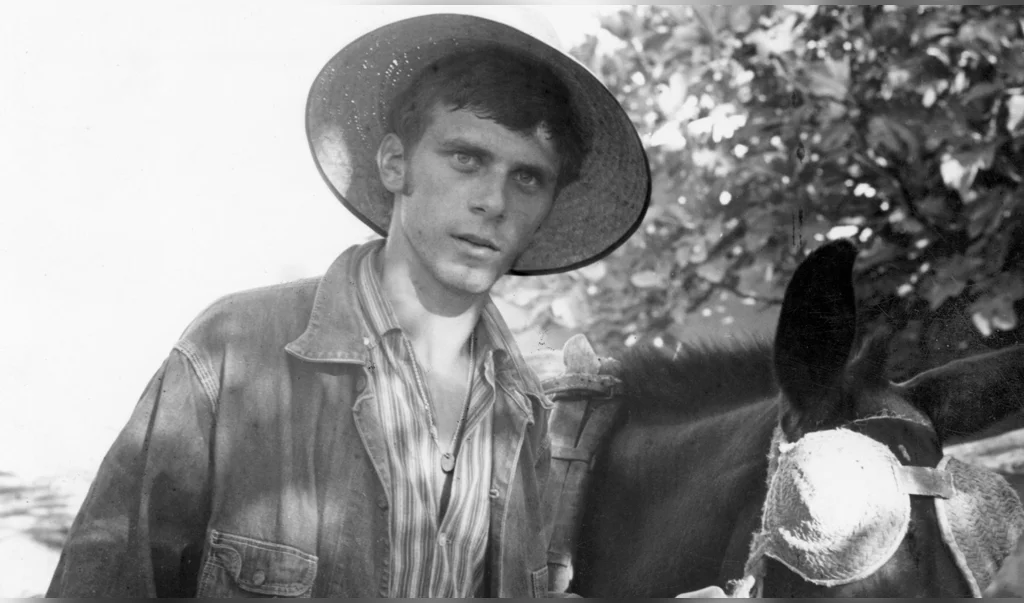
• The Day (1960): One of the first films shot in Ibiza, this 26-minute short film by actor and director Peter Finch is a semi-documentary about the daily life of a young Ibizan. At a time when the island was still quiet and traditional, The Day captures the rustic charm of Ibiza through the eyes of a child, offering a time capsule of local culture before the hippie invasion.

This is one of the rarest and hardest-to-find films ever shot on the island. Although it won awards in Venice and Cork in 1961, it was never commercially released, and today only physical copies are preserved in archives such as the NFSA in Australia and the BFI in the United Kingdom. Public screenings have been few and far between, including a one-off event in Ibiza in 2017, making it a highly coveted gem for both film buffs and lovers of the island’s cultural history.

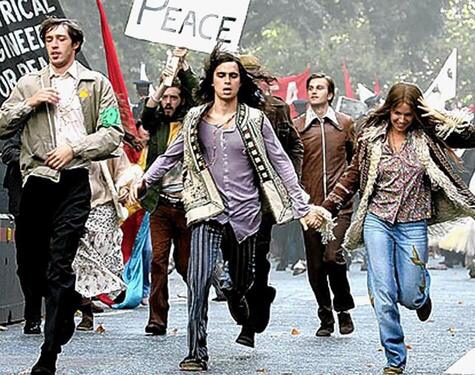
Hallucination Generation (1966): a low-budget American drama set among expatriate beatniks on the white island. Presented as a cautionary tale “about the dangers of going on vacation to Ibiza, taking free drugs, and falling in love,” the film follows a disillusioned young man who joins a drug-dealing guru. Notably, its black-and-white scenes suddenly explode into psychedelic colors during an LSD trip sequence. Although sensationalist in execution, Hallucination Generation stands as a testament to the emerging counterculture on the island in the 1950s and 1960s, depicting Ibiza as a refuge for beatniks and bohemians living on the fringes of society.

More (1969): Barbet Schroeder’s directorial debut, More is a cult classic of 1960s counterculture cinema. A German student and a free-spirited American woman travel to Ibiza, where their love story becomes entangled with heroin addiction amid the sun-drenched beauty of the island. With a soundtrack by Pink Floyd and dreamlike cinematography by Néstor Almendros, More was controversial for its frank depiction of drugs and sex, and was even censored in several countries. Beyond the tragic love story, the film is appreciated for its authentic portrayal of Ibiza in the late 1960s: an island “populated by locals, bohemian hippies, and strange characters,” untouched by mass tourism. The camera lingers on Ibiza’s landscapes—whitewashed villages, sunny coves, and ruins atop cliffs—giving the film an organic, almost mystical atmosphere that reflects the hedonistic paradise sought by the characters.

F for Fake (1973): Orson Welles’ ingenious docudrama features Ibiza in a true story about art and deception. The film portrays the famous art forger Elmyr de Hory at his home in Ibiza, alongside writer Clifford Irving (author of a biography of Elmyr entitled Fake). Welles uses the Ibiza setting as more than just a picturesque backdrop: it symbolizes the island’s role as a refuge for the marginalized and creative con artists of the 1960s. In F for Fake, parties in sunny Ibizan villas host debates about truth and illusion in art. This entertaining “essay film” blurs reality and fiction, just as Ibiza blurred the boundaries between legend and reality for the many eccentrics who found refuge there. Welles’ description adds a new dimension to Ibiza’s cultural image: not only as a hippie paradise, but also as a refuge for artistic rebels who live by their own rules.

The 1980s: Comedy and chaos in paradise

In the 1980s, Ibiza’s reputation as a party destination began to appear in more commercial films, often in the form of light comedies. These films may not have been cult classics, but they reflect how the world at large began to see Ibiza: as a sunny land of bikinis, beach bars, and fun misadventures, capturing the birth of the electronic music club scene that would soon dominate its identity abroad.

Beautiful and Wild on Ibiza (1980): This West German comedy (original title Die schönen Wilden von Ibiza) follows a young couple on vacation who discover that their hotel room has been double-booked, leading to a series of hilarious antics on the island. Like many European “sunny comedies” of its era, the film is based on sex, sand, and silliness. Although culturally superficial, it is revealing that Ibiza was chosen as the setting, emblematic of uninhibited fun. The German title of the film literally means “The Beautiful Savages of Ibiza,” a phrase that in itself hints at how outsiders viewed the island’s free-spirited atmosphere.

Sunshine Reggae auf Ibiza (1983): Another example of 1980s kitsch, this German musical comedy revels in the hedonistic stereotypes of Ibiza. It features a mix-up that sends a straight-laced bank clerk to the island, where he encounters nudist beaches, nightclubs, and flamboyant characters under the Mediterranean sun. With a reggae-pop theme song and broad humor, the film is not exactly a nuanced view of life on the island. However, it cemented the pop culture caricature of Ibiza as the ultimate party island, full of eccentric expats and anything-goes adventures. As frivolous as they were, these films indicate that by the 1980s, Ibiza’s appeal for its “sun, beach, sex, and party” had spread around the world.

In the 1980s, other productions were filmed in Ibiza, but in most cases the island served as a sunny backdrop rather than a true cultural setting. Films such as the spy comedy The Trouble with Spies (1987) and the Welsh television movie Ibiza, Ibiza (1986) used its beaches and streets to add color, without engaging with local life or the island’s identity. These titles illustrate how, during that decade, Ibiza was often portrayed as an interchangeable Mediterranean postcard rather than for its unique character.

The rave revolution and DJ culture (1990s–2000s)

In the late 1980s and throughout the 1990s, the island was transformed by the explosion of electronic music and club culture. Filmmakers responded with documentaries and dramas that captured Ibiza’s new role as a mecca for clubbers. At the same time, some films nostalgically recalled the hippie era or explored other facets of Ibizan life, allowing the island’s cultural mosaic to continue to be represented in diverse ways.

A Short Film About Chilling (1990): this British television documentary (Channel 4) is an essential snapshot of Ibiza at the dawn of the rave era. Filmed in the summer of 1990, just as acid house and Balearic beats were putting Ibiza on the map, it follows a group of British DJs, club promoters, and young people on their pilgrimage to the island. What makes this documentary particularly interesting is its juxtaposition of nightlife and local life: it alternates between scenes of all-night clubs and quiet moments in the daily lives of the island’s inhabitants. This contrast vividly conveys “the magic of the island”: the beauty of the Ibizan countryside is always present in the background, even when the DJs’ beats are thumping in the foreground. The film captures a golden age, now past, of innocence, and captures the club culture before the scene became commercialized, making it a must-see for anyone curious about how Ibiza became the party capital of the world.

El tiempo de la felicidad (1997) – In the 1990s, Spanish cinema reflected on the early days of Ibiza. The Time of Happiness is a Spanish comedy-drama set in the summer of 1970, at the height of the hippie movement. Directed by Manuel Iborra, it follows an eccentric family from Madrid who spend their holidays in Ibiza amid a backdrop of free love and counterculture. The parents and their teenage children become involved in romantic and sexual adventures with the island’s hippies. Through a nostalgic lens, the film portrays the island as a place of self-discovery and social liberation, contrasting the traditional family dynamic with the unconventional lifestyle they encounter. For Spanish audiences, Tiempo de felicidad offered an endearing (albeit slightly bittersweet) look at how the hippie invasion of Ibiza affected everyday life, all against the backdrop of the idyllic beaches and carefree atmosphere of 1970s Ibiza. (Fun fact: although set in Ibiza, much of the film was shot on the neighboring island of Mallorca, but it still exudes the authentic charm of the Pitiusan Islands).

Kevin & Perry Go Large (2000) – Not all portrayals of Ibiza’s club scene were serious. This British teen comedy (a spin-off from a TV sketch) became a cult film in the UK for its funny and affectionate take on Ibiza’s DJ culture. Kevin and Perry are two clumsy London teenagers who fly to Ibiza with a single goal: to “make it” as DJs (and maybe lose their virginity). The film satirizes the clubbing experience, from the superstar DJs at Amnesia to the embarrassing antics on the dance floor, but it also celebrates the island’s appeal to young music lovers. Culturally, it shows how in 2000 even conventional British teenagers saw Ibiza as the ultimate destination for rites of passage. Although it is full of crude humor and clichés, the soundtrack (featuring tracks by Ibiza DJ Judge Jules) and filming in real locations give it an air of authenticity amid the laughs.

Sex and Lucía (2001) – Although set mainly in Formentera (Ibiza’s smaller sister island), this Spanish film by Julio Medem is often celebrated alongside films centered on Ibiza for its sensual depiction of the island atmosphere. In this erotic and sensual drama, a grieving young woman (Paz Vega) escapes to tranquil Formentera after the death of her lover. There, among secluded beaches and sunsets at the lighthouse, she rediscovers herself and uncovers secrets about her late partner’s past. Sex and Lucía uses the island’s serene beauty as a mirror for its characters’ emotional journey: the tranquil coves and blinding sun become symbols of both healing and passion. Medem’s non-linear, dreamlike narrative blurs reality and imagination, just as Ibiza and Formentera blur the line between vacation and real life. By including this film, we see how the Pitiusas Islands as a whole inspire stories of love, loss, and liberation far deeper than any disco anthem.

It’s All Gone Pete Tong (2004) – A mockumentary drama that offers a more poignant look at the excesses and dangers of DJ nightlife in Ibiza. This Canadian-British film follows the fictional DJ, named Frankie Wilde, a superstar on the Ibiza club circuit who tragically loses his hearing due to years of loud music and substance abuse. What follows is a darkly comical and ultimately uplifting story about Frankie’s fall and redemption: from cocaine-fueled despair (haunted by a hallucinatory “cocaine badger”) to his reinvention as a deaf DJ who mixes using vibrations. Shot entirely on location in Ibiza at venues such as Pacha, Amnesia, Privilege, and the iconic Pike’s Hotel, the film is brimming with local color and cameos. It’s All Gone Pete Tong balances outrageous humor with heartfelt moments, and won awards at international festivals for its portrayal of one man’s connection to music against all odds. It highlights Ibiza’s cultural status as a place where music is life, and offers a clever moral fable about the ups and downs of fame in the clubbing world.

Aislados (2005) – This film by Ibizan director David Marqués stands out as a local independent production that captures the voice of the island from within. Shot entirely in Ibiza, Aislados is a minimalist work with a well-written script that focuses on two friends who spend their days engaging in witty, often absurd conversations about life, relationships, and the peculiarities of their existence in a small world. Marqués uses the island’s landscapes sparingly, allowing the coves and countryside to pepper the dialogue-rich narrative, and in doing so, reflects a side of Ibiza far removed from tourist clichés. The cult following the film has garnered in Spain is largely due to its deadpan humor and authenticity, reminding us that Ibiza’s creativity is not only imported but also cultivated by its own storytellers.

Throughout the 1990s and early 2000s, Ibiza also appeared in numerous international B movies, thrillers, and romances, from American direct-to-video action films (Welcome 2 Ibiza) to Dutch romantic comedies (Loving Ibiza). Although many of them are forgettable, they underscore Ibiza’s global reputation as the ideal setting for adventure and romance. Even when treated superficially, the island’s backdrop, with its blue seas and legendary nightlife, remains a major draw for filmmakers looking to inject exotic energy into their stories.

Modern reflections and documentaries (2010–2020)

In recent years, filmmakers have approached Ibiza with a more reflective eye, recognizing its nuanced history and the contrasts between its hedonistic image and local reality. From thought-provoking dramas to comprehensive documentaries, the 2010s and 2020s have produced works that examine Ibiza’s cultural legacy, building bridges between the past and the present, fiction and reality.

Ibiza Occident (2011) – This documentary delves into the island’s legendary nightlife, tracing the roots of its club culture from the free-spirited gatherings of the 1960s to the rise of the superclubs that define its current global reputation. Directed with the eye of a connoisseur, Ibiza Occident combines archival footage, interviews with pioneering DJs, club owners, and residents, and evocative shots of both the dance floors and the island’s serene landscapes. Rather than portraying nightlife as a superficial party scene, the film explores its evolution as a cultural phenomenon, shaped by hippie ideals, Mediterranean openness, and the convergence of music, fashion, and art. In doing so, it positions Ibiza’s nightlife culture not as an imported fad, but as an indigenous movement born from the island’s unique history of creative and social freedom.

Bluu, Last Days of Ibiza (2013) – Despite its English title, this little-known French-Spanish drama by Alain Deymier combines suspense with the island’s most esoteric traditions. The story follows Nat, a Parisian who arrives in Ibiza during a heavy storm and is reunited with her childhood friend, Sandra, only to be drawn into the orbit of a strange sect led by a charismatic figure who preaches the “last days” of the island. Although fictional, the film is inspired by authentic aspects of Ibiza’s identity: its long history as a refuge for spiritual seekers, alternative communities, and outsiders pursuing radical transformation. Although it never reached a wide audience, Bluu functions as a “hidden gem” of Ibizan cinema, offering a darker and more mystical counterpoint to the sun-and-music narratives that dominate representations of the island.

Amnesia (2015): Directed by Barbet Schroeder (who returns to Ibiza decades after his film More), Amnesia is a quiet and captivating drama set in 1990, just as Ibiza’s club scene was taking off. Jo, a young German DJ and composer, moves to the island hoping to join the nascent electronic music revolution and befriends Martha, a much older German expatriate who has been living in seclusion in Ibiza for decades. Their platonic friendship becomes an intergenerational dialogue about history and identity. Martha refuses to speak German or acknowledge her homeland, having fled the horrors of World War II: she carries the weight of Holocaust trauma and guilt, something Jo’s post-war generation struggles to understand. As their bond deepens, the film explores the contrasts between Jo’s progressive optimism and Martha’s tormented past. Ibiza, “the idyllic island,” serves as neutral ground for this emotional reckoning. Through stunning coastal imagery and intimate performances (by Marthe Keller and Max Riemelt), Amnesia also shows an Ibiza beyond the party scene, a place where people go to forget or to heal.

Ibiza (2019) – Arnaud Lemort’s comedy focuses on the culture shock experienced by a stuffy Parisian doctor (Christian Clavier) who goes on vacation to the island with his new partner’s teenage children. What begins as a reluctant family vacation turns into a series of chaotic encounters with Ibiza’s nightlife, beach mishaps, and eccentric locals. While relying on easy laughs and slapstick humor, the film also addresses how Ibiza’s energy can disrupt routines and push people, even the most uptight, toward unexpected personal discovery. Although clearly a comedy, it offers a lighthearted counterpoint to more serious portrayals of the island, reminding viewers that Ibiza’s appeal works for all generations.

Ibiza: The Silent Movie (2019) – A truly unique documentary by director Julien Temple, this film ambitiously tells the entire history of Ibiza, from ancient times to the present day, without any spoken dialogue. Instead, Temple uses archival footage, stylized reconstructions, on-screen text, and a continuous soundtrack (created by DJ Fatboy Slim) to create a “silent” and sensory cinematic experience. The result is a concise, entertaining, and yet profound history of the world’s most famous hedonistic island. Temple traces the history of Ibiza from the Phoenician settlers in 654 BC, through the Roman, Moorish, and Catalan eras, to the arrival in the 20th century of beatniks, hippies, rock stars, and ravers. The film highlights the patterns of Ibiza’s history: how each wave of newcomers sought utopia, whether spiritual or psychedelic. With vivid images and ironic juxtapositions, Temple celebrates Ibiza’s free-spirited legacy, while criticizing the price its culture and landscape have paid for exploitation. He has described the film as a “cinematic essay” and even an intervention, hoping that today’s partygoers will pause to reflect on “the land on which they dance.” Ibiza: The Silent Movie stands out as a comprehensive tribute: by covering the myths and realities of the island, it sums up why Ibiza is not just a party destination, but a phenomenon of cultural fusion and reinvention.

Un tiempo precioso (2020)– Directed by Spanish filmmaker Miguel Molina, this intimate drama is set primarily in Ibiza, interweaving themes such as family ties, mortality, and the transience of life. The film follows a man facing a terminal diagnosis who decides to return to the island, where the vivid landscapes and tranquil Mediterranean light frame his personal reflection. By setting his story in Ibiza, Molina takes advantage of the island’s duality—a place of carefree beauty, but also of reflection and closure—using its quieter, off-season settings rather than its festive side. This makes Un tiempo precioso part of the more contemplative side of Ibizan cinema, where the location serves as a backdrop for human truths rather than tourist spectacles.

The Europeans (2020)– This Spanish film offers a nostalgic look even further back, to the late 1950s, when Ibiza was first “discovered” by Spaniards during the Franco era and other Europeans as a permissive paradise. Two young people from Madrid arrive in Ibiza in 1958, attracted by stories of sun, sea, and sexual freedom with tourists from northern Europe. Hoping to find an easy place for holiday romances, they instead face unexpected realities and heartbreak. The Europeans is based on a 1960 novel by Rafael Azcona and portrays the island in the late 1950s as a meeting point between conservative Spanish society and liberal foreign influences. The film’s period details and dramatic comedy tone earned it critical acclaim and several Goya Award nominations in 2020. Culturally, it is fascinating because it shows Ibiza just before the hippie explosion, a rustic canvas on which early tourists and locals negotiated different morals. Watching it after seeing films from the 1960s and 1970s, one appreciates how quickly Ibiza’s culture changed. In essence, Los europeos allows us to witness the prologue to Ibiza’s countercultural era: those first sparks of change when an isolated island began its transformation into an icon of freedom.

Disco, Ibiza, Locomía (2024) – The island’s club scene in the 1980s comes to life in this recent Spanish biographical drama. It tells the story of Locomía, the eccentric electro-pop band famous for their extravagant costumes and fan choreography, which began its journey on the Ibiza club circuit. Set on the vibrant island in the 1980s, the film follows a group of fashion-obsessed friends who arrive in Ibiza and form the band under the wing of a local music producer. The true story of Locomía is intertwined with the club culture of Ibiza in the 1980s—they were resident artists at the super-disco Ku (now Universe)—making this biopic an extravagant but insightful look at a unique chapter in the island’s nightlife. From shoulder pads to synth-pop anthems, Disco, Ibiza, Locomía revels in the details of the era. It also doesn’t shy away from the drama of clashing egos and industry pressures that led to the band’s collapse. More broadly, it highlights the island as a cradle of creative experimentation, where even a group of unconventional glam artists could become an international sensation, embodying the mantra that anything can happen in Ibiza.

The Evolution of Ibiza: Can the White Isle Retain Its Legendary Magic? (2024) – This hour-long documentary, produced by AlphaTheta (the parent company of Pioneer DJs), offers a contemporary overview of Ibiza’s cultural arc. Directors Dan Tait and Laurence Koe interweave interviews with pioneering DJs (including Carl Cox, Norman Cook, Chloé Caillet, and Franky Wah), local authorities, and long-time residents to trace Ibiza’s evolution from its countercultural and hippie roots in the 1960s to becoming the world’s premier destination for electronic dance music. Importantly, the film does not limit itself to nostalgia: it explores the challenges the island now faces—rising costs, overtourism, and pressures toward exclusivity—and ultimately asks whether Ibiza can preserve its spirit of creative freedom and community access in a rapidly changing world.

From poetic documentaries to riotous comedies, the films of the last six decades collectively weave a narrative about Ibiza’s unique place in the cultural imagination. They show us an island continually redefined by those who arrive on its shores, whether humble peasants, marginalized hippies, visionary artists, superstar DJs, or ordinary families. For cinephiles interested in Ibiza, these films offer more than scenic escapism; they are windows into the island’s soul, each capturing a different facet of its ever-evolving identity.

Therefore, watching these films in chronological order can feel like a time-travel trip through Ibiza’s history. You’ll witness the quiet innocence of a 1960s Mediterranean village, the psychedelic freedom of the 1960s, the absurdist, sun-drenched antics of the 1980s, the revolutionary raves of the 1990s, and the thoughtful nostalgia and modern complexities of the new millennium. Throughout it all, Ibiza remains a charismatic character, sometimes serene and natural, other times vibrant with music and neon lights, but always a catalyst for personal transformation. In the end, that may be its greatest role in film and in life: a magical island that represents escape and rebirth. Each of these films, in its own way, invites viewers to experience that magic, under the sun and stars of the Balearic Islands.

Sources:

1545
Title-pictureIbiza’s hippie era (1960s-1980s): from bohemian refuge to cultural transformation

Ibiza’s hippie era (1960s-1980s): from bohemian refuge to cultural transformation

Ibiza’s transformation from a quiet Mediterranean island into a countercultural phenomenon can be said to have begun in the second half of the 1960s, with the arrival of the hippies. Unlike the beatniks, who frequented the island in the 1950s and early 1960s, this new wave of free spirits brought about more profound changes in Ibiza’s culture, society and economy. Over the course of three decades, the hippie movement left an indelible mark: it founded colorful markets and communes, introduced new music and fashions, and ultimately helped turn the island into a world-famous destination. This article chronicles Ibiza’s hippie era in the 1960s, 1970s and 1980s, focusing on documented history over myth, and will attempt to illustrate the enduring legacy on the island’s modern identity.

The 1960s: An island refuge for the hippie influx

In the early 1960s, Ibiza was a remote, sunny haven in the shadow of Francisco Franco’s conservative Spain. Ironically, the island’s isolation during Franco’s rule made it attractive to outsiders in search of freedom. Beginning in the late 1950s and continuing through the 1960s, foreign artists, intellectuals, beatniks and hippies began flocking to Ibiza in large numbers. They came for many reasons. Some were political exiles or draft dodgers: young Americans escaping the Vietnam War draft, but also young Europeans disillusioned by post-war social conformity. Others were creatives and drifters attracted by the promise of a simple life in beautiful surroundings. Ibiza had what their home countries did not: relative freedom from scrutiny, political tolerance (or disinterest), a place to experiment with alternative lifestyles (even when mainland Spain remained repressive) and, not least, a very affordable cost of living if one was willing to give up some modern 20th century luxuries.

What these newcomers found was a Mediterranean paradise almost untouched by modern development. Ibiza in the early 1960s had little tourist infrastructure: few hotels, little electricity in the rural villages and a traditional agrarian society. For hippies it was ideal. The island’s rugged natural beauty – turquoise waters, pine forests and hidden coves – provided an inspiring backdrop. Life was extremely cheap by European standards, which meant one could rent a century-old farmhouse or camp on the beach for next to nothing. According to one contemporary account, it was a “sunny and charming” life of “cheap good wine” and “artistic flourishing among friendly Spanish peasants.” This promise of freedom and affordability made Ibiza a magnet for hippies seeking a utopia away from the pressures of modern society.

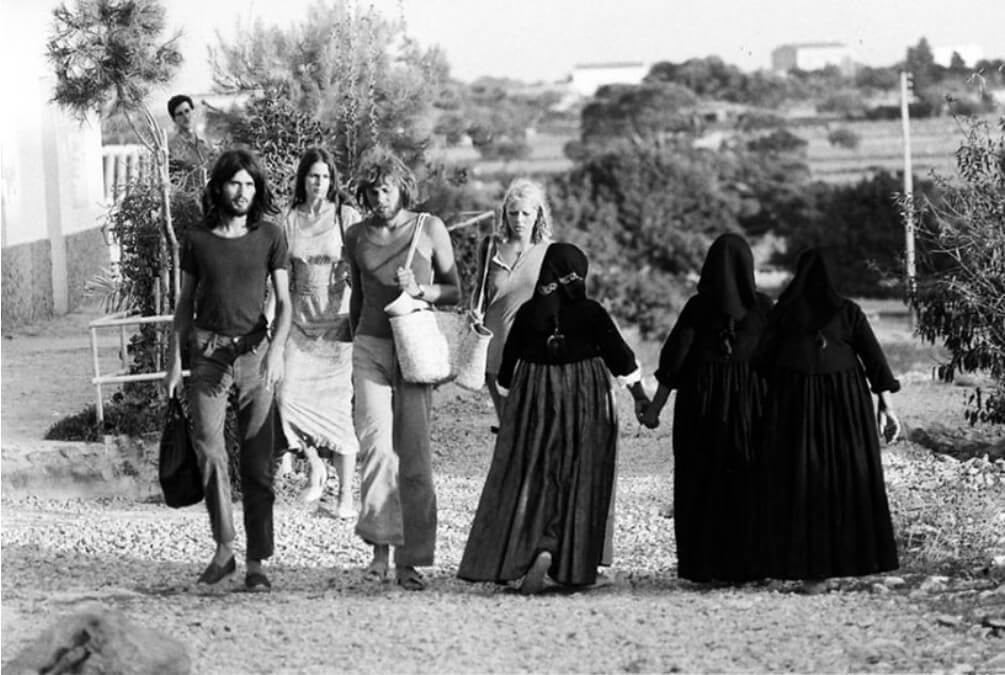
Photography: Josep Soler ©. Website

The early 1960s saw an eclectic mix of personalities. Alongside young idealists came established bohemians and even some fugitives from convention. For example, the famous art forger Elmyr de Hory settled in Ibiza in the early 1960s, living as a quirky local character on the bohemian scene. Writers such as Clifford Irving, who would later make headlines with a fake biography of Howard Hughes, also made Ibiza their home and fondly described the island’s primitive simplicity and labyrinthine hamlets. These expatriates mingled with young hippies arriving with backpacks and guitars. By the mid-1960s, the beatnik artists of the 1950s were giving way to a much larger hippie community. Not everyone welcomed this change: Beat Generation figure Carolyn Cassady later dismissed the late 1960s influx of hippies as “stupid,” underscoring the cultural shift from the introspective bohemianism of the beatniks to the flamboyant communalism of the hippies. Nevertheless, the tide of long-haired youth continued to rise.

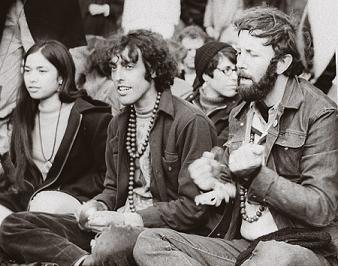
Hippie enclaves took root around Ibiza town and in the rural villages. In the port of Ibiza town and in the winding streets of Dalt Vila, international drifters could be found exchanging art, music and ideas. In the north, villages like Sant Carles became famous hippie hangouts. At the rustic Bar Anita (Ca n’Anneta) – one of the oldest taverns on the island – hippies would collect their mail (using the bar’s address as an informal post office box, as they had no fixed address) and share community news. Communes formed in the lush countryside, where groups of hippies rented farms or camped out under the stars, living off the land. In these makeshift communes, daily life centered on creative expression and harmony with nature. Many spent the day painting, making jewelry, playing music or practicing meditation in the quiet hills. As one witness recalls, “everyone seemed to arrive in search of something: inspiration, reinvention or just a life of cheap leisure among like-minded souls.” By the late 1960s, the island’s reputation as a “haven for free spirits” was cemented.

Photography: Josep Soler ©. Website

At the same time, during those years, iconic personalities of the time, such as the group Pink Floyd, who also composed the soundtrack for what would later become the film that would catapult Ibiza’s fame: More (1969). According to the testimony of José Padilla (Founder of Café Del Mar). “To get an idea of what life was like in Ibiza and Formentera in the 60’s, you have to see More, the Barbet Shroeder movie that had a Pink Floyd soundtrack (…) The movie More, that’s what made Ibiza famous forever (…) That describes what life was like in those years, the Ibizan white house with no water or electricity, hanging out in the dust, Vietnam boys, girls, there was also a lot of heroin. You can tell the members of Pink Floyd were on a lot of acid… but the landscape must have affected the music as well. Also listen to King Crimson’s Formentera Lady, with evocative lyrics by Peter Sinfield, who often visited the island. As a result, there is now a street named after King Crimson on the small island.”

According to another testimony of the time: “The members of Floyd spent time on Formentera in the 1960s, Syd Barrett was sent there to recuperate after his acid attacks, accompanied by the ever fascinating Sam Hutt, the hippie doctor who later became the country singer Hank Wangford. (…) Aubrey Powell, co-founder of the Denmark Street (London) based designers Hipgnosis, also spent a lot of time on Formentera and told me how the island’s landscape influenced the works of the designers Hipgnosis. ) Aubrey Powell, co-founder of Denmark Street (London) based designers Hipgnosis, also spent a lot of time on Formentera and told me how the island’s landscape influenced the artwork he later made for Led Zeppelin and Pink Floyd, in particular the weathered sandstone Syd Barrett looked at while unconscious under the effects of LSD.”

Cover of the soundtrack album of the film More (1969)

However, as the hippie population grew, the Franco regime took notice and local tensions occasionally flared. At first, many Ibicencos regarded the newcomers with a mixture of curiosity and caution. Although islanders were traditionally hospitable and tolerant, some conservative locals – alarmed by public nudity, drug use and unconventional behavior – became uneasy. In 1969, this unrest culminated in what became known as the “Great Hippie Expulsion.” That summer, under pressure from Francoist officials, the police carried out a crackdown to “cleanse the island of hairy people.” The conservative Madrid daily ABC published in August 1969 a sensational series describing Ibiza and Formentera as a “paradise for drug addicts”, which fueled social alarm. As a result of these articles, the authorities acted swiftly, expelling hundreds (some sources say thousands) of foreign hippies for visa violations or minor infractions. Even ultra-conservative local vigilante groups were formed to help remove hippies from beaches and squares. This purge, orchestrated at the end of Franco’s regime, was a dramatic moment: many peace-loving expatriates were shipped or expelled from Ibiza. However, it was short-lived. The mayor of Ibiza protested the mass expulsions, and the heavy-handed campaign soon subsided. By the end of the decade, hippie travelers were returning to Ibiza, and the flower power experiment would continue into the 1970s, albeit with lessons learned about balancing freedom with local sensibilities.

1970s: Flower Power flourishes – Communes, markets and cultural exchange

Despite the repression of the late 1960s, Ibiza’s hippie scene re-emerged in the early 1970s with renewed energy. The new decade saw the flourishing of hippie culture across the island and the beginning of its integration into Ibiza’s emerging tourist economy. With Franco’s dictatorship coming to an end (he died in 1975), the seventies were a time of relative openness and creative ferment in Ibiza. Community life and artistic experimentation continued, but now hippies also began to contribute to local commerce and forge ties with Ibizan residents. This era gave rise to iconic institutions – from hippie flea markets to fashion trends – that still survive today, practically as part of the island’s cultural heritage.

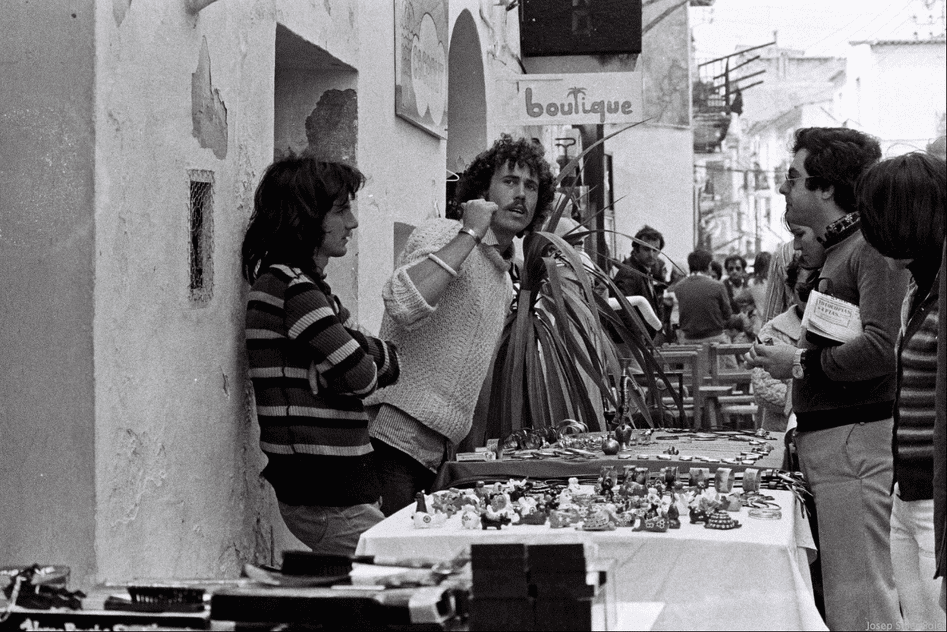
One of the most enduring legacies of the hippie era of the 1970s was the rise of craft markets. As scores of penniless hippies settled in Ibiza, many took to making and selling handmade goods to make ends meet. Seeing an opportunity to help newcomers and entertain curious tourists, a local resort launched the island’s first official “hippie flea market” in 1973. That year, the Hotel Club Punta Arabí, near Es Canar on Ibiza’s east coast, invited hippies to set up stalls on its grounds and sell their wares to hotel guests. What began as a few young artisans spreading their dyed clothes and jewelry on blankets under the pine trees quickly became a bustling weekly bazaar. The Punta Arabí Hippy Market (or “Es Canar flea market” as it is commonly known), held every Wednesday, became a multicultural gathering where travelers from all over the world sold leather goods, dyed fabrics, batik prints, beads and fresh fruit to curious visitors. This market, the oldest on the island, began with a handful of vendors in 1973 and grew to hundreds of stalls over the years. It was a place not only of commerce, but also of celebration: live music, street performers and a friendly jumble of languages filled the air. The market’s success was transformative. It provided an economic livelihood for hippy artisans and became a tourist attraction in its own right, giving visitors a taste of the island’s bohemian soul. To this day, the market remains a must-see Ibizan experience for many, a testament to the entrepreneurial spirit of those early hippies.

Photography: Josep Soler ©. Website

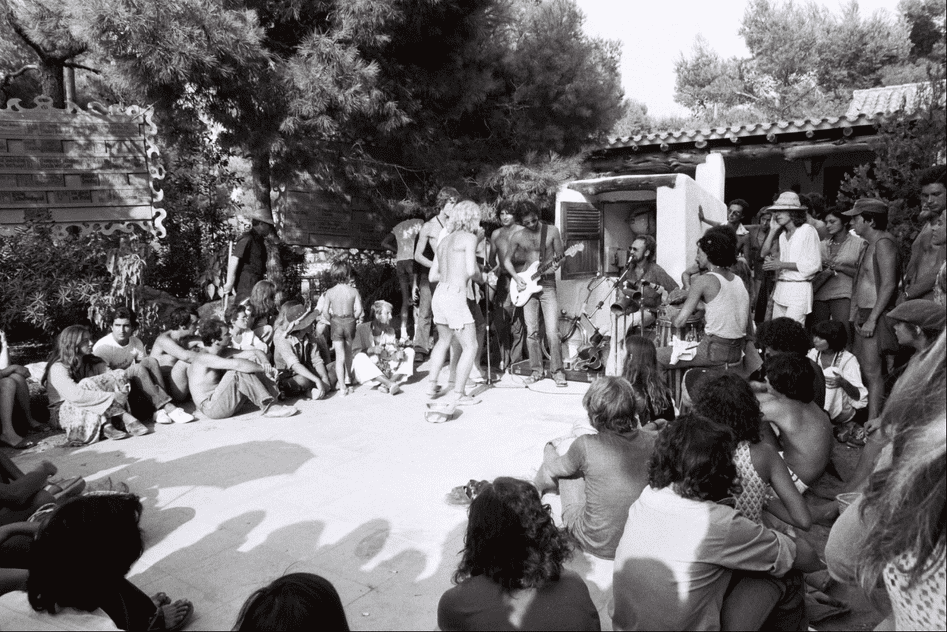
Community living also reached its peak in the 1970s. Hippie communes proliferated in rural areas such as Sant Carles and Sant Joan, where groups of expatriates rented old fincas or built simple huts on vacant lots. In Sant Carles de Peralta, often dubbed Ibiza’s “original hippie village,” several communes coexisted peacefully with local farmers for years. Residents of these communes practiced collective farming, held group meditations and bonfires, and preached a gospel of peace and love. Meanwhile, the town’s Sunday gatherings at Bar Anita and nearby Las Dalias became hotspots for the hippie community. Las Dalias, originally a roadhouse and dance hall since 1954, became famous in the 1970s as a venue for late-night jam sessions and art events. In the early 1980s, it even hosted rock concerts, but in the 1970s it was known for its bohemian charm, welcoming hippies and locals alike to enjoy live music under the stars.

The relationship between the hippies and the Ibicencos evolved into mutual respect and exchange. Although some locals were initially skeptical of these eccentric, long-haired foreigners, many others accepted their presence. Islanders observed with interest the craftsmanship and music of the hippies, who in turn showed an unusual appreciation for Ibicenco’s own traditions. Over time, a cultural mix took place. A vivid example of this is the birth of Ibiza’s unmistakable Adlib fashion. In the early 1970s, inspired by the island’s traditional white cotton and lace garments, a group of designers began to create a style that fused Ibizan folk attire with bohemian hippie style. They called it Adlib (from ad libitum, Latin for “at pleasure”), reflecting the freedom to dress as you please. Adlib fashion was characterized by flowing white dresses, peasant blouses and rich embroidery, a carefree, free-spirited look, ideal for Ibiza’s climate. The first Adlib fashion show was held in 1971, even with the support of the Spanish Ministry of Tourism, which saw in this trend a promotional value. It was a true collaboration: the hippies adopted elements of local dress, and the locals embraced the new aesthetic, giving rise to a style that can still be seen today in Ibiza’s boutiques. As one account notes, Adlib was “an outgrowth of the hippie movement, and the self-proclaimed legacy of this countercultural community,” touted as a unique Ibizan attraction.

Photography: Josep Soler ©. Website

The creative arts also flourished during this decade. Painters, sculptors and musicians from all over the world made Ibiza their home, finding endless inspiration in its landscapes and atmosphere. Galleries were opened in Ibiza Town, exhibiting avant-garde art created on the island. One notable figure was Yves Ury, a French artist, and the collective of painters that formed “Ibiza 59” (an artists’ group created in 1959 that continued into the 1960s and 1970s), which included influential expatriate artists whose work put the island on the cultural map. The European media began to take notice of the island’s artistic birth: throughout the 1960s and 1970s, magazines published frequent reports on the island’s unconventional art scene and debauched atmosphere, which in turn boosted its mystical aura abroad.

Photography: Josep Soler ©. Website

Perhaps the most celebrated artistic contribution of the hippie era was music and nightlife. The 1970s also laid the foundations for what would become Ibiza’s global identity as a music mecca. At hippie camps and beaches, impromptu jam sessions and drum circles were the order of the day. Guitars and bongos were as common as sun hats. On full moon nights, large gatherings would form on beaches like Benirràs, where people would dance around bonfires to the beat of drums, a tradition that, in some form, continues today. These free parties were the precursors of Ibiza’s famous discotheques. In fact, the island’s first authentic discotheques opened their doors in the early to mid-1970s, often founded or frequented by members of the hippie community who had a flair for partying. The iconic Pacha Ibiza opened in 1973 in a former farmhouse near Ibiza Town. Its founder, Ricardo Urgell, an entrepreneur from Barcelona, imbued the club with a “flower power” spirit – bohemian decor, open-air terraces and a “come as you come” policy – directly influenced by the island’s hippy culture.

Photography: Josep Soler ©. Website

Not far away was Amnesia, which opened in 1976 in another old finca near Sant Rafel, founded by Antonio Escohotado, a philosopher who explicitly wanted to create a “Oblivion Workshop” where people could experience liberation and altered states. In its early days, Amnesia was literally an extension of the hippie commune atmosphere: an open-air venue where dawn broke on the dance floor and anything seemed possible. Small at first, these venues grew into world-renowned nightclubs by embracing the communal, free-spirited atmosphere that the hippies had cultivated. As the story points out, clubs like Pachá and Amnesia “started out as small venues” that later achieved great popularity “thanks to the island’s free spirit” inherited from the hippie era. In the late 1970s, Ibiza had a unique nightlife: part rustic hippy hangout, part sophisticated disco, a combination that attracted adventurous partygoers from all over Europe.

Another event of the time, with great international expectation and it may have been a highlight of this heyday, was the fact that Bob Marley chose Ibiza as the first and only place to play in Spain in his entire European tour of 1978. It was his first time in Spain and he would only return to the country once more, in 1980, for a concert in Barcelona. The Spanish public television went to receive and interviewed him.

Arrival of Bob Marley at Ibiza airport.

Meanwhile, the impact of the hippies on tourism and real estate was becoming evident. Ironically, the very success of the counterculture began to attract mainstream tourism. What had been an open secret in the early 1960s was now “a haven of freedom. In the late 1970s, package tours began to arrive, hoping to cash in on the island’s legend. The Spanish government and local businesses enthusiastically promoted Ibiza’s bohemian image (when it suited them), as it set the island apart from other resorts. Tourist guides extolled its “relaxed and free” atmosphere, and brochures used images of hippies and their crafts. Some hippies lamented this commercialization, although others took advantage of the new opportunities. On the other hand, several foreign hippies who remained in Ibiza until the late 1970s switched to more conventional jobs in order to survive as the cost of living on the island increased; some became small business owners, others became tour guides or even civil servants, and integrated into Ibicencan society. Some savvy hippie entrepreneurs bought or rented properties when they were cheap and later saw them appreciate in value. In fact, many of the island’s charming fincas and villas that they acquired for little money in the 1960s and 1970s became coveted real estate in later decades, laying the foundations for the luxury villa market. By 1980, Ibiza was no longer just a hippy haven: it was on the cusp of a tourist boom, and the carefree 1970s were ushering in a new era.

The 1980s: Transition from hippie paradise to party capital of the world

The early 1980s marked a turning point in Ibiza. As the last hippie communes faded away and many of their inhabitants left, the island’s bohemian spirit did not disappear, but evolved. The spirit of peace, love and music introduced by the hippies was woven into Ibiza’s next chapter as a party capital and chic tourist destination. In many ways, the 1980s saw the mainstreaming of hippie culture in Ibiza, as well as its nostalgic revival, while new influences, such as electronic music and luxury tourism, took hold.

With Spain’s return to democracy and economic growth in the 1980s, Ibiza experienced a tourist boom. The island’s population increased every summer with European vacationers, and the construction of hotels and resorts accelerated. Some feared that Ibiza would lose its magic with mass tourism. However, the hippie legacy helped Ibiza retain an identity of its own in the midst of development. The open-air party concept promoted in the 1970s became the model for the new Ibiza superclubs. The nightlife became increasingly famous: clubs like Ku (opened in 1978, later known as Privilege) became the world’s largest open-air discotheque, attracting the jet set and celebrities to extravagant parties under the stars. In the mid-1980s, DJs like Alfredo at Amnesia mixed rock, pop and world music in an eclectic style dubbed “Balearic Beat,” a direct descendant of the musical spirit of hippie gatherings.

In the midst of this explosion of clubs, many “old hippies” remained on the periphery of the island, and their presence was still felt. Some had settled in quieter places, in the hills of Sant Joan, Sant Carles or even Formentera, but came out from time to time for parties. Others opened businesses based on the hippie aesthetic. Las Dalias, in Sant Carles, reinvented itself in the 1980s to keep the hippie flame alive. In 1985, faced with a weak winter, the owner of Las Dalias (Juan Marí, known as “Juanito”) decided to set up a small flea market in the garden of the premises, in the hope of recovering the spirit of the craft market and attracting visitors. On a cold February day in 1985 they opened with only 5 stalls, but it was a success; a year later, dozens of artisans were already selling there every Saturday. Thus was born the Las Dalias Hippy Market, a decade after Punta Arabí, proving that Ibiza’s hippie trade had not only endured, but was expanding again. The Las Dalias flea market, like that of Punta Arabí, would grow during the 80s and 90s to become a beloved institution, ensuring that new generations could experience the island’s 60s and 70s artisanal heritage. Meanwhile, Las Dalias hosted concerts at night in line with the trends of the time: during the Movida Madrileña (Spanish cultural movement after the dictatorship), Spanish rock and new wave groups performed there for free, mixing modern music with the bohemian atmosphere.

By the late 1980s, Ibiza’s global image had been completely transformed. The island was now famous for its hedonistic nightlife, but the recurring theme of “flower power” remained a key element of its brand image. Clubs organized themed parties to celebrate the music and décor of the 1960s, a tradition started at Pachá that continues today. The very term “hippie” became enshrined in local lore: certain beaches and markets were constantly labeled with that image in tourist guides. Visitors could buy dyed T-shirts, peace-sign jewelry and even copies of ’68 Woodstock posters in Ibiza’s stores.

In 1986, the British TV series “Ibiza Uncovered” (and similar travel reports) often juxtaposed the island’s hippie past with its current rave scene, portraying Ibiza as a place where pastoral bliss and wild partying coexist. Interestingly, the late 1980s also saw the arrival of a second wave of counterculture – the UK acid house movement – which many saw as a revival of hippie values (peace, love, unity) through electronic music. It is said that around 1987-88, young British DJs and clubbers coming to Ibiza were directly inspired by the hippie vibe and Balearic openness, and brought that spirit back to start the rave revolution in England. Thus, the hippie legacy fed the DNA of modern clubber culture: as one writer noted, there was a “circular journey” in which the British expatriates of the 1960s influenced Ibiza, Ibiza in turn influenced the clubbers of the 1980s, also British, and those clubbers spread a new “neo-hippie mutation” around the world during the 1990s and 2000s.

Presentation photo of the Amnesia club during the 80s.

Economically, the real estate boom that began in the 1980s was another result of the island’s fame, and many of the early hippie homes changed hands for staggering prices. The plots and fincas that adventurers rented or bought for cheap prices became prime real estate for wealthy foreigners. By the late 1980s, Ibiza already had a luxury real estate market, especially in the picturesque north and along the coast, forever altering the rural landscape that the hippies had enjoyed in solitude. Some of the original hippie owners cashed in, while others lamented the changes.

However, despite all the changes, the Ibiza of 1989 still retained remnants of its original spirit. You could still find veteran hippies in the chiringuitos of places like Es Canar or Cala Benirràs, playing guitar and telling stories of the “good old days”. They had become part of Ibiza’s human landscape. The cultural exchange had also changed Ibicencos: many of the younger ones had grown up with hippie neighbors and had adopted more liberal attitudes than their parents. Ibiza’s reputation as a tolerant and open place was already ingrained.

The enduring legacy of the hippie era on Ibiza

The hippie era, from the 1960s to the 1980s, fundamentally transformed Ibiza, laying the foundation for much of the island’s modern identity. Their legacy is visible and still celebrated today. Culturally, they instilled in Ibiza a spirit of freedom, creativity, and tolerance that remains an essential part of its charm. “That special attitude and magnetic good vibe among residents is the result of many decades living in a society where the hippie philosophy was truly alive: freedom, love, joy, nature, uniqueness, and community,” describes one chronicler of the island. Indeed, the values ​​championed by hippies—from environmental awareness to holistic wellness—are now ingrained in the lifestyle, seen in yoga retreats, organic farms, and a thriving wellness tourism sector that attracts those seeking a relaxed, natural escape. What’s more, it wouldn’t be surprising if the environmental awareness instilled by hippie culture largely influenced local policymakers to realize that the overexploitation of urban development that was occurring on the island during the tourist boom of the 1980s was not going to be sustainable at the rate it was occurring and that, sooner or later, it would destroy Ibiza’s main attraction: its natural charm.

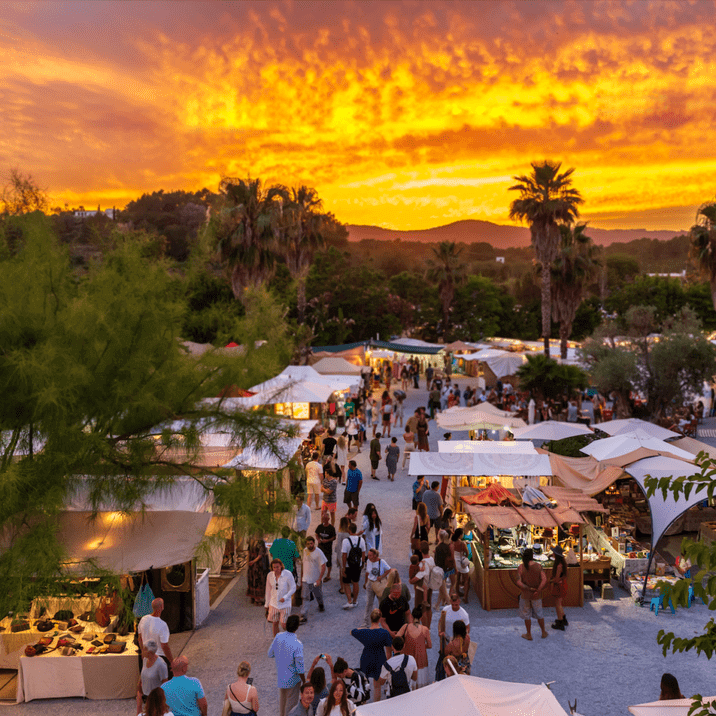
Las Dalias street market nowadays

The tangible contributions of the hippie era continue to thrive. The markets are a prime example, still brimming with color and activity, decades after their founding. Tourists and locals browse the stalls of handmade clothing, jewelry, and crafts that “echo the island’s bohemian past.” These markets are now mainstays of Ibizan tourism, direct descendants of the impromptu markets that hippies created to support themselves. In the fashion world, Adlib has become an official Ibizan fashion brand: Adlib fashion shows are held every year in Ibiza, featuring local designers who continue the style invented in the 1970s, keeping Ibiza on the map of boho-chic design. The music and nightlife, of course, are the most internationally known legacy. Ibiza’s evolution into the “club capital of the world” can be traced back to the hippie spirit of communal celebration. The inclusive, open-air party model established by its gatherings directly informed the design of its nightclubs and beach clubs. Even the musical genres for which Ibiza is known—chill-out, trance, Balearic beat—emphasize a unity and blissful escape reminiscent of a 1960s love affair on the beach. It’s no coincidence that one of Pacha’s most popular long-running events is the Flower Power party, which explicitly pays homage to the Summer of Love with retro tunes and psychedelic decor, demonstrating how the 1960s live on in the heart and soul of Ibiza.

The hippie era also had lasting effects on Ibiza’s economy and real estate sector. By attracting the first wave of international travelers for reasons unrelated to conventional tourism, the hippies unwittingly contributed to Ibiza’s development as a cosmopolitan destination. What was once a poor, agrarian island found new life as a global countercultural hotspot, soon followed by more profitable mainstream tourism. Today, Ibiza’s tourism offerings continue to rely on its countercultural cachet: visitors are sold not just sun and sand, but a promise of “freedom” and “magical vibes” inherited from the 1960s and 1970s. The real estate sector, for its part, has converted many former communes into luxury retreats. The rustic houses and quiet beaches of the north so beloved by hippies are now among Ibiza’s most expensive and exclusive areas, as wealthy buyers seek to grab a piece of that bohemian idyll (ironically, paying millions of euros for the simple life the hippies once led). This gentrification was a double-edged sword: it brought prosperity, but it also meant the expulsion of many hippies. Still, Ibiza has managed to preserve some of its natural beauty (partly thanks to early environmental awareness spurred by hippie influence), and movements to maintain sustainable tourism continue, echoing the back-to-nature mentality of the past.

Perhaps the clearest recognition of the importance of the hippie era is that Ibiza has commemorated it in public art. In 2016, Ibiza Town unveiled a bronze monument to the hippie movement in the port area, donated by Pachá founder Ricardo Urgell. The life-size sculpture—depicting a long-haired father holding his young daughter’s hand—was inspired by an iconic 1970s photo of a hippie family and symbolizes the “freedom and love” that the movement represented. At the statue’s feet is a world map highlighting San Francisco, Amsterdam, Kathmandu, Goa, and Ibiza—key centers of the global hippie phenomenon. It is a permanent reminder that Ibiza was, and remains, part of a worldwide community of free spirits. Indeed, without hippies, modern Ibiza wouldn’t have its unique blend of glamour and peace, partying and spirituality.

Monument to the hippie movement in Ibiza’s harbor

In conclusion, the hippie era transformed Ibiza, transforming it from an isolated haven into an “island of freedom” with unparalleled charm. The period from the 1960s to the 1980s witnessed profound cultural exchanges: foreign hippies found a welcoming sanctuary and, in turn, introduced new ways of life that Ibizans adopted and adapted. From this fusion, enduring institutions were born. Historically, the impact of those decades is well documented and remains palpable: Ibiza’s identity as a tolerant, creative, and hedonistic paradise was forged in that crucible of “peace and love.” Myths and legends abound (cheerfully told in beach bars at dusk), but it is the documented contributions—the businesses started, the art created, the music played, and the communities formed—that best tell the story. Ibiza’s modern prosperity and worldwide fame for tourism, music, and lifestyle owe a great debt to its pioneers who, with flowers in their hair and ambitious dreams in their heads, made the white island their home. Every time a drum beats in Benirràs, a boutique sells a white cotton dress, or a DJ plays Balearic music at dawn, the spirit of the hippie era lives on, the island forever changed by “freedom, love, joy, and nature.”

Sources:

Rodríguez, L. (2025). Why does Ibiza’s hippie movement still captivate free spirits worldwide? Diario de Ibiza – Living

Usó, J.C. (2014). La repressió contra els hippies a Eivissa. LWSN.net

Kirwan, D. (2023). Peace and love and protests: the evolution of Ibiza’s hippies. L’Officiel Ibiza

MDPI (2022). Artistic Expressions in Ibiza: From Counterculture to Heritage

Great Wen Blog (2016). London and the hippies of Ibiza

Ibiza Travel Official Portal (2017). History of Punta Arabí Hippy Market

Welcometoibiza.com. Sant Carles: Cradle of the hippie movement

Time Magazine (1972). The Clifford Irvings of Ibiza

Elsewhere – D. Sobieski (2017). Ibiza Bohemia Revival

Secretibiza.co (2019). Behind the Hippie Monument

4693
hip_optimized (1)Ibiza’s Beatnik Days

Ibiza’s Beatnik Days

Ibiza’s reputation as the sun-drenched party capital of the world is rooted in a rich countercultural history. Long before the disco era, this Balearic island was a haven for beatniks and other bohemians in the 1950s and 1960s. The beatniks – members of the Beat Generation and their bohemian followers – found in Ibiza a unique refuge during Franco’s Spain, where artistic freedom, cheap living and the carefree attitude of the locals converged. Their presence, less well known than that of their hippie successors, undoubtedly left a permanent cultural imprint on Ibiza, which went from being an isolated backwater to becoming an “island of freedom” in the popular imagination.

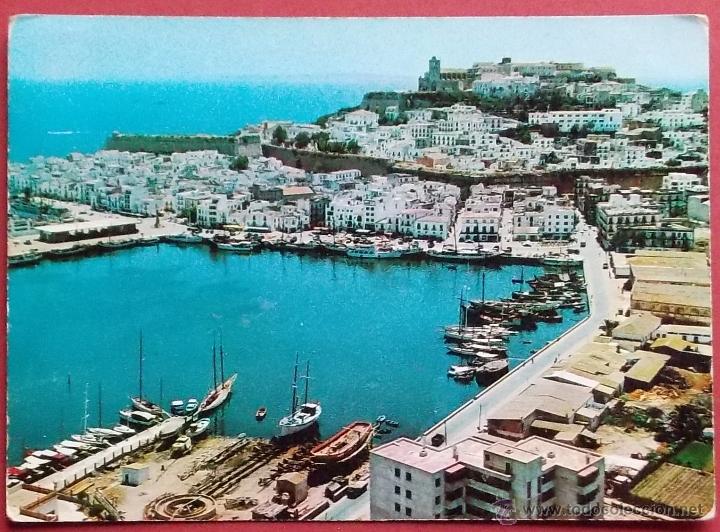
The city and the port of Ibiza: a contemporary postcard as they were in the early 1960s. [Source]

This article explores the historical accounts of the beatniks in Ibiza in the 1950s-60s, the notable figures who visited, the cultural impact they had, and the evidence – documented and anecdotal – of their time on the White Isle.

To situate the reader, since these two concepts are sometimes used interchangeably, it is worth explaining the differences and similarities between beatniks and hippies:

Differences and similarities between beatniks and hippies

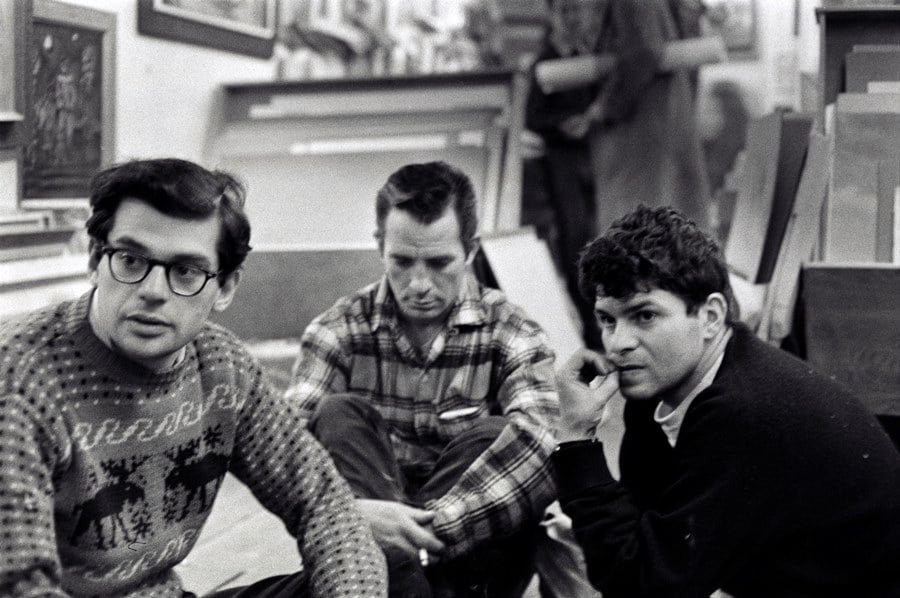
The beatniks, a subculture that emerged in the 1950s, laid the foundations for the countercultural explosion of the 1960s, which eventually developed into the hippie movement. Although both groups shared a rejection of the dominant values of the United States and the West in general, their approaches, aesthetics and philosophy diverged in some fundamental aspects. The beatniks, influenced by writers such as Jack Kerouac, Allen Ginsberg and William S. Burroughs, advocated spontaneity, existential exploration and raw, unfiltered artistic expression. They found inspiration in jazz, Eastern philosophy and a deep skepticism of materialism and conformity. The Beatniks, who preferred a minimalist, bohemian lifestyle, often lived in urban environments and frequented cafes and poetry readings where they dissected the meaning of existence and modern alienation.

By the 1960s, beat values had evolved into the hippie movement, which shared the anti-establishment stance of the beatniks but took a more communitarian, colorful and politically active approach. Whereas the beatniks were intellectuals, with melancholy tendencies, who sought personal enlightenment through literature, travel and solitude, the hippies were vibrant, free-spirited idealists who prioritized love, peace and collective social change. The beats’ love of jazz and smoky cafes gave way to the hippies’ psychedelic rock and outdoor music festivals. Drugs played an important role in both subcultures: beatniks were known for their use of Benzedrine and marijuana, while hippies turned to LSD and other hallucinogens to expand their consciousness.

Ultimately, the hippie movement can be seen as an evolution of the Beat Generation, which took its basic ideas of nonconformism and rebellion and amplified them into a full-fledged cultural revolution. While the Beatniks paved the way with their introspective, avant-garde sensibility, the hippies transformed those ideals into a noisy, colorful and politically charged movement that reshaped the landscape of Western society.

Postwar sanctuary: Ibiza’s bohemian charm

Already in previous decades, Ibiza had served as a sanctuary for outsiders. In the 1930s, the island’s remoteness attracted European intellectual exiles such as German philosopher Walter Benjamin and French writer Albert Camus, who mingled in Ibiza Town’s cafés. After World War II, Ibiza remained largely “forgotten” by General Franco’s regime, which focused on the mainland, making it an attractive escape route despite the dictatorship. In the 1950s, this forgotten quality, combined with the beautiful beaches, mild climate, tolerant atmosphere and cheap cost of living, began to attract artists, writers and vagabonds from all over the world. Everyone seemed to arrive in search of something: inspiration, reinvention, or simply a life of cheap leisure among like-minded souls. As one account points out, “everyone was, or aspired to be, a writer, poet or painter” in 1950s Ibiza.

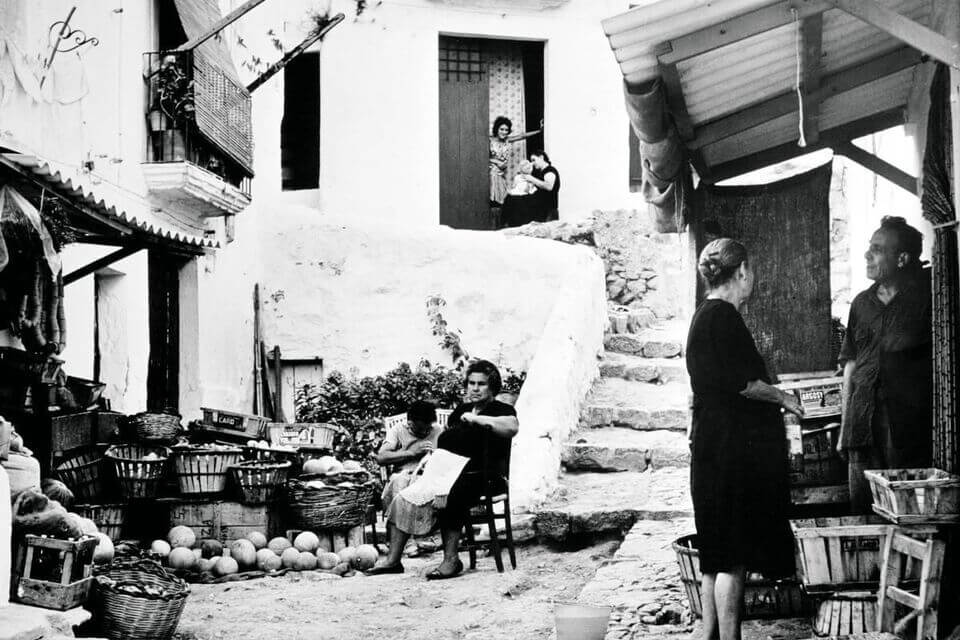
A store in the port of Ibiza (1960s)

In the late 1950s, the stage was set for the Beat Generation to arrive on Ibiza’s shores. Franco’s authoritarian government paid little attention to the goings-on in Ibiza during this period. The island was impoverished and provincial, which strangely allowed a degree of freedom. According to a later resident, Damien Enright, the native population of Ibiza was passive and did not object to foreigners doing as they pleased, nor did the authorities really interfere with the Bohemians. In part, this was because Ibiza was desperate enough economically to tolerate eccentric foreigners spending money. The result was a de facto enclave where alternative lifestyles could flourish under the radar.

Birth of a beatnik haven

The Beat Generation – writers and nonconformists typified by figures such as Jack Kerouac and Allen Ginsberg – inspired many young Americans and Europeans to travel in search of meaning and adventure. Ibiza’s nascent bohemian scene was already underway by the late 1950s, although the first arrivals did not yet call themselves “beatniks.” A turning point came thanks to a somewhat unusual origin: a jazz club in Barcelona. In the late 1950s, a couple of American mavericks ran the jazz club “The Jamboree” in Barcelona, and when life got too hot (or debts too high) on the mainland, they would escape to Ibiza for a break. “It was they who ‘started’ the Ibiza myth,” recalls Damien Enright, noting that in this small early colony there were ”more Americans than Europeans.” By 1959, a small but vibrant expat community had settled on the island.

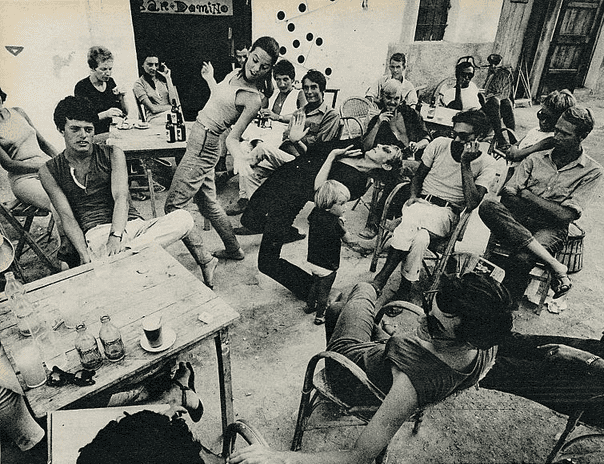
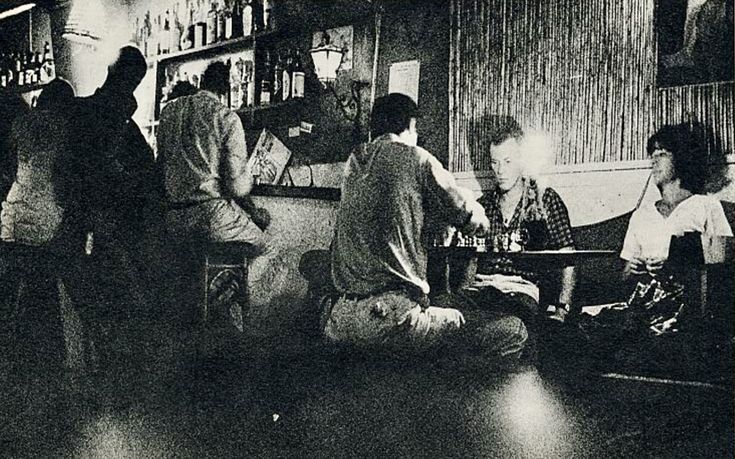
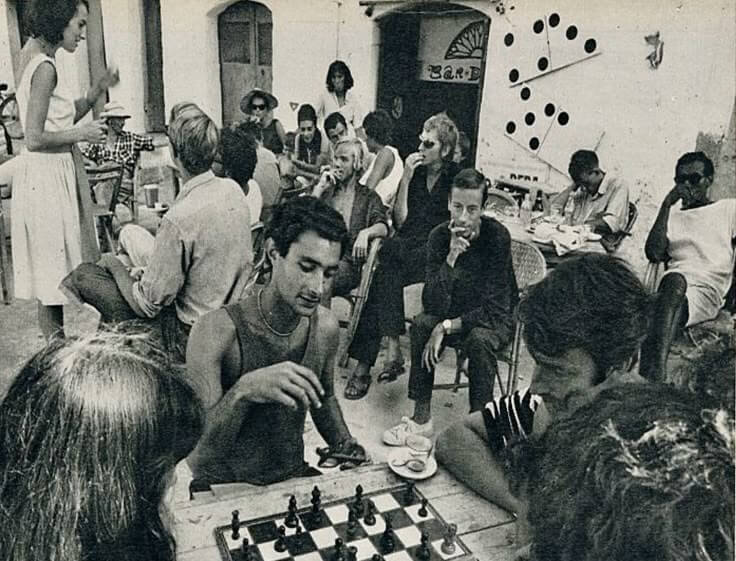
One of the first epicenters of the beatnik scene was the Domino Bar in Ibiza Town. Opened in the late 1950s near the harbor, the Domino was a scruffy harbor-side joint where the cosmopolitan mix of expatriates gathered nightly.It was run by a motley trio – a French-Canadian (Alfons Bleau), a German (Dieter Loerzer) and an Englishman, Clive Crocker – and became the gathering place for writers, artists, drifters and dreamers. Crocker, who had arrived in 1959, openly described himself as a “beat”, inspired by reading Kerouac. In true beatnik style, he and his companions spent the day in existential debates and long games of chess, and the nights immersed in jazz, cheap wine and the occasional joint or sugar cube of LSD. The bar’s record player (one of the only amplifiers on the island) played a soundtrack of American jazz – John Coltrane, Chet Baker, Billie Holiday, Charles Mingus, etc. – that gave Ibiza an unlikely bebop vibe. In Enright’s words, “jazz was pouring out of the one amplifier…it was jazz jazz jazz jazz jazz in anyone’s house,” which contributed to the scene’s heady atmosphere.

Domino Bar, (right) inside and (left) at the terrace. [Source]

In the late 1950s and early 1960s, a wide variety of characters passed through Ibiza. Several American writers made the island their temporary home -among them Clifford Irving, Harold Liebow, Steve Seeley and John Anthony West- “many of whom documented their stay on the island” in memoirs or fiction. Irving, for example, arrived in the 1950s and stayed for two decades, later gaining notoriety for his Howard Hughes hoax, but also writing novels inspired by the people of Ibiza. From further afield came Janet Frame, the New Zealand novelist who found inspiration in Ibiza, and Damien Enright, an Irish writer who arrived in 1960 and would recount the era in his memoir Dope in the Age of Innocence. Enright was both observer and participant – he was even involved in a famous smuggling adventure; and he later described Ibiza in 1960 as “beyond the reach of imagination,” a tropical bohemia come to life.

Not all were literary; there were also artists and intellectuals among the first expatriates. In 1959 the Ibiza 59 Group was formed, an avant-garde artistic collective of European and American painters settled on the island. Its members included German abstract artists (Erwin Bechtold, Heinz Trökes and others), a Swede, a Spaniard and even an African-American painter, all attracted by the light and solitude of Ibiza. These artists predated the true “beatnik” influx, but they helped cement Ibiza’s image as a creative paradise. In fact, one scholar points out that many foreign artists, writers and intellectuals in Ibiza in the 1950s “belonged to the beatnik universe,” laying the groundwork for the hippie wave that followed.

Well-known visitors and beatnik personalities

The Ibizan scene of the sixties featured an eccentric mix of notables from the worldwide Beat movement. One of them was the Danish duo Nina and Frederik, a pair of folk singers who were also Baron and Baroness van Pallandt. Known for songs like “Listen to the Ocean,” Nina and Frederik perfectly embodied the international beatnik jet set: bohemian in style but aristocratic by birth. In 1960 publicity photos, they sported matching black turtleneck sweaters and carefree smiles, looking every bit the elegant beatnik troubadours. The couple performed throughout Europe and resided frequently in Ibiza in the early 1960s. Their story took a strange turn later in the decade – Frederik van Pallandt even used his yacht to smuggle marijuana – underscoring how intertwined Ibiza had become with the drug culture of the time.

Another colorful character attracted to the island was Christa Päffgen, better known as Nico, the German singer and model who became Warhol’s muse. After a small role in Fellini’s La Dolce Vita, Nico moved to Ibiza with her mother in 1960 and bought a house on the beach. For a time she had a tempestuous affair with Clive Crocker of the Domino Bar. Nico’s presence added a touch of underground celebrity to the scene: she would later gain fame as a singer with The Velvet Underground, but in Ibiza she was just another bohemian embracing island life.

Ibiza also attracted established figures in British culture. Actors Terry-Thomas (known for his gap-toothed comic roles) and Denholm Elliott visited and resided on the island in the early 1960s. Their presence blurred the boundaries between high society and counterculture: they were genuine movie stars mingling with barefoot beatniks and local fishermen. English writer Laurie Lee, who had fought in the Spanish Civil War, also visited them. After a trip in the 1950s, Laurie Lee wrote about “playing dice and drinking bad wine” on the ferry to Ibiza and observed how the influx of foreigners was already changing the island, with each nationality forming its own expat enclave. His observation was prescient: in the 1960s Ibiza became a veritable cosmopolitan mosaic, a “Babel” of languages and cultures, as one Spanish author later described it.

Some notorious characters also arrived in Ibiza. Hungarian art forger Elmyr de Hory, fleeing legal problems elsewhere, settled in Ibiza in the early 1960s. He threw lavish parties and sold fake Picassos to gullible tourists until his story was immortalized in Orson Welles’ film F for Fake. Through de Hory, the Ibizan bohemians became acquainted with writers of the stature of Clifford Irving (who befriended de Hory and later plotted the Howard Hughes hoax) and even Orson Welles himself.

Not all of Ibiza’s notable “beats” were famous in a traditional sense. Some were legendary within the subculture. The Dutch poet Simon Vinkenoog, a key figure in Amsterdam’s counterculture, spent a stint in Ibiza around 1961, but his colleague, the famous writer and artist, Jan Cremer satirized him as a self-proclaimed guru leading pot-smoking sessions on the beach. Cremer’s account (which disguises Vinkenoog as “Simon the Soggy Noodle”) pokes fun at the earnest budding hippie, instructing him on how to look stoned and blurt out “love, love, love” in order to “look cool.” This humorous anecdote, published in Cremer’s autobiography, Barbaar Op Ibiza, offers a rare glimpse of the early 1960s Ibizan scene from a participant’s perspective.

Photo of the writer Jan Cremer, during his stay in Ibiza.

Jan Cremer, in turn, came to Ibiza by chance, a story that repeats again and again throughout the biographical history of many visitors of that time. In his autobiography, he describes himself as “destitute” at the time, but happy to leave “oppressive Holland” behind. Gallery owner Ivan Spence provided him with accommodation and some money to work with. This leads to an unprecedented creative outburst: at the opening of his first exhibition in Ibiza, practically all his works are sold. Cremer decides to stay on the island and starts working there in 1962 on the book that marks his breakthrough as a double talent: Ik Jan Cremer, the relentless bestseller that shook the culture of his homeland Holland.

Life on the Island: A Clash of Cultures and Influences

For the beatniks, Ibiza was idyllic: a “Casablanca of the mind” where “madmen” from abroad lived out their fantasies in a picturesque Spanish fishing village. They reveled in the laid-back atmosphere: days were spent lounging or creating art, and nights were spent exchanging poetry and philosophy over bottles of local wine. Marijuana was available (if you knew who to ask), and by the early 1960s even LSD had made inroads, reportedly introduced by a Dutch contingent led by Bart Huges – famous for advocating trepanation – who camped near the beach at Platja d’en Bossa. Even before the hippie era began, Ibiza’s bohemians were already experimenting with psychedelics.

Ibicencos, for their part, watched with a mixture of tolerance, curiosity and occasional bewilderment. Ibiza in the 1950s was poor and largely rural; many Ibicencos were still recovering from the hardships of the Civil War and postwar rationing. To them, foreign beatniks seemed like exotic, perhaps even irresponsible weirdos: young people rejecting a modern society of prosperity (however illusory that prosperity might be) at a time when most Spaniards were struggling to escape poverty. As a result, interactions between the local population and the expatriate Bohemians were limited. Historians note that the native population and the hippies/beats “had little contact and different values,” making meaningful exchange rare. Many Ibicencos simply left outsiders alone, following a live-and-let-live ethic. Enright observed that locals hardly interfered as long as basic respect was maintained. Some enterprising locals interacted with the newcomers by opening guesthouses, bars or services for them, quietly kick-starting a tourist economy.

The Spanish authorities, for their part, maintained an ambivalent stance. On the one hand, the Franco regime’s press and some officials condemned the beatniks and, later, the hippies as “international hooligans” who threatened public order and hygiene. A 1965 government campaign entitled “Keep Spain Clean” was understood as an attack on the scruffy, long-haired youths arriving on the coasts. On the other hand, Ibiza’s leaders realized that the island’s growing bohemian mystique was good for business. By the late 1960s, local tourism promoters prided themselves on Ibiza’s image as an island of freedom, using the avant-garde art scene and hippie flea markets as selling points. As one study notes, Ibiza’s authorities “supported the artistic avant-garde and activities stemming from the hippie movement to… publicize [the island],” actively cultivating its reputation as a countercultural paradise. This helped to consolidate an “intangible cultural heritage”-a myth of Ibiza as a free-spirited paradise-that persists in the island’s brand image even today.

Culturally, the beatnik presence also left more subtle traces. Ibiza’s artistic heritage was enriched by the many painters and writers who settled there, some of whom left works of art and literature. As for fashion, an interesting footnote links Ibiza’s beatniks to the birth of the island’s iconic Adlib style, the white cotton garments that today are emblematic of Ibizan boho-chic. According to local lore, German designer Dora Herbst launched the Adlib fashion movement around 1970. The idea of all-white, free-flowing clothing probably came after seeing a pioneering American beatnik couple in 1963 who dressed head-to-toe in white “symphony-in-white” outfits. Apocryphal or not, the story highlights how local entrepreneurs absorbed the eccentric style of the bohemians and reinvented it with a touch of glamour.

“Beatnik Central”: Ibiza in the mid-60s

In the mid-sixties, the word was spreading in European underground circles that Ibiza was “beatnik central”, a permissive playground for those looking for a “go” and a cheap life. What had been a small group of intellectuals became a wave of young adventurers. Summer brought with it an influx of transient beatniks, and soon the beat scene evolved into the hippie scene as the broader countercultural currents of the decade reached the coast. “As the decade progressed, beatniks became hippies,” writes one Ibiza chronicler, noting the influence of LSD, Eastern mysticism and the anti-war movement on the newcomers. In 1966 and 1967, Ibiza was already a well-worn stop on the “hippie route”: for many traveling from Western Europe to India (or vice versa), Ibiza was a convenient and idyllic stopover, being “as close to Algiers as to Barcelona,” making it a gateway between Europe and North Africa. A contemporary observer recalls that Ibiza became one of the three main hippie destinations along with Tangier and Goa.

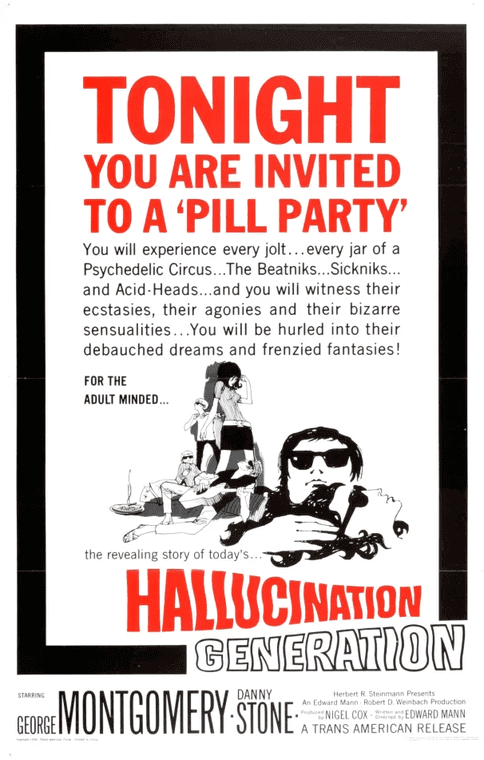
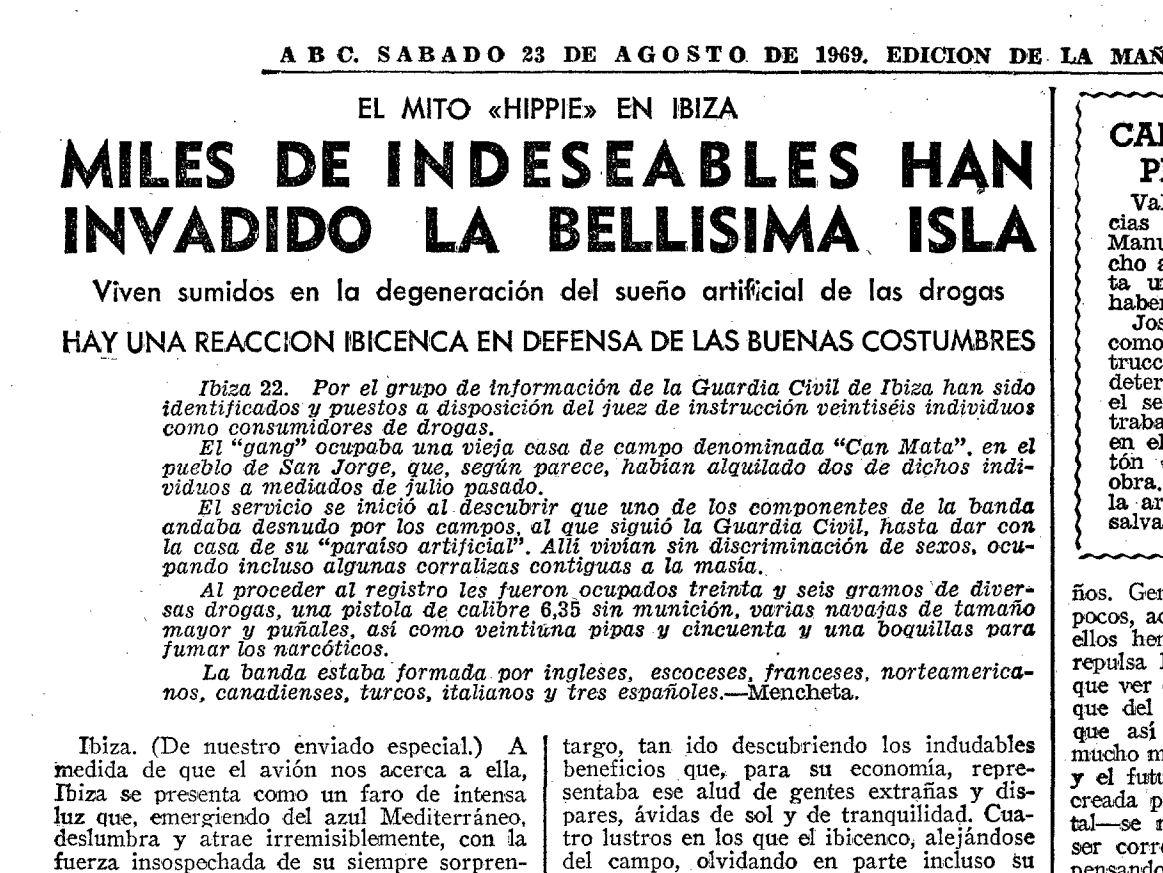
The media also took notice of Ibiza’s burgeoning counterculture. In 1966, a low-budget American film called Hallucination Generation was shot in Ibiza, exploiting its reputation as a haven for beatniks and experimental drug users. The film (for “adult minds,” its poster advertised) promised audiences an immersion into the “psychedelic circus” of Ibiza’s youth, with “beatniks, sickniks and acid-heads” indulging in “unbridled dreams and frenzied fantasies.” The poster’s lurid invitation – “Tonight you are invited to a pill party…” – enhanced the island’s wild image. Although a B cartoon, Hallucination Generation is evidence of Ibiza’s notoriety in the mid-1960s. Even Spanish newspapers of the time published alarmed articles about the “new plague” of beatniks, especially when larger groups of hippies began camping on the beaches at the end of the decade.

Headline of a Spanish mainstream publication, in 1969.

However, despite the growing influx of hippies, the original Ibizan bohemians remained a distinct and smaller group, what one local historian called the “genteel” artistic community, suddenly outnumbered by a less cultured and more rowdy hippie crowd. Carolyn Cassady, an American writer who knew the beats, visited Ibiza years later and bluntly commented that “the hippie movement was stupid” compared to the beatnik intellectual scene. “The hippie movement was a vulgarization…of the Beat movement, but with more light, sound and color,” wrote a Spanish academic, quoting the sardonic assessment of an Ibizan artist. Indeed, in 1968-69, many of the original beatniks either blended in with the hippie wave or left, as in their eyes Ibiza was no longer the “secret, quiet haven” it had been.

Legacy and sources on the beat era

The Beatnik era of 1950s-60s Ibiza, though relatively brief, had lasting consequences for the island’s cultural identity. It established the enduring brand of Ibiza as a bohemian getaway, a place where conventions fall away at the water’s edge. Many of the activities and images that are synonymous with Ibiza today – craft markets, art galleries, chill-out music sessions, holistic living – can be traced back to this period or the hippie continuation of it. As scholars have pointed out, the intangible cultural heritage left by artists, beatniks and hippies became a crucial part of Ibiza’s tourist attraction and local culture.

Fortunately, a large number of sources allow us to reconstruct this chapter of Ibiza’s history. Some of the main testimonies come from the literature of the time. Spanish novelist Rafael Azcona wrote Los Europeos (“The Europeans”, 1960), a novel set in Ibiza in the late 1950s that parodies the parade of foreign bon vivants and libertines on the island at the time. Likewise, Hombres varados (“Stranded Men”, 1960, p. 1963), by Gonzalo Torrente Malvido, vividly describes the decadent youth of Ibiza: “a drifting youth given to alcohol, leisure and easy love… among tourists, artless artists and companions of foolish ladies”, as one critic described it. These novels by Azcona and Malvido (recently adapted to film in 2020) serve as witty fictional snapshots of the Ibiza beatnik scene as seen through Spanish eyes of the time.

Memoirs and retrospective writings by foreigners provide further evidence. Damien Enright’s autobiographical book, Dope in the Age of Innocence, offers a first-hand look at 1960s Ibiza and the outrageous adventures (including drug capers) that unfolded. Some of Enright’s story has been shared in interviews, in which he wistfully details the wild freedom of those days, from the jazz-filled nights to the scams hatched with other expats. Other expats, such as Clifford Irving, Janet Frame and Laurie Lee, documented their Ibizan impressions in diaries, travelogues or later writings. Even the biting humor of Jan Cremer’s account of Ibiza’s “beatnik pecking order” is a valuable contemporary reference.

Ibiza’s own historians and lifelong residents have also preserved history. In local publications (for example, the book “El Nacimiento de Babel” – Ibiza años 60, by Marià Planells, 2002), interviews and recollections paint a vivid picture of the time. Writer Guillermo-Fernando de Castro recalled the arrival of what, in his opinion, were the first real beatniks in Ibiza: “a striking American couple” in the winter of 1963-64, the screenwriter husband and his remarkably “soap-averse wife Nora”, both always dressed in white. This same observer identified one Francisco Perez Navarro – a Spaniard who frequented Madrid’s literary cafes and periodically traveled to London – as “the first Spanish beatnik,” known for proclaiming that “the modern thing is not to bathe or brush your teeth.” Such recollections, though anecdotal, have been published and cross-checked with contemporary press reports, lending credence to the “vox populi” memory of Ibiza’s beatnik days.

In short, Ibiza’s experience with the Beat Generation was a unique intersection of time and place. During the 1950s and 1960s, a Spanish island isolated under a repressive regime improbably became a playground for the world’s disaffected creatives. The beatniks brought art, music and liberal ideas, and influenced everything from local fashion to the global perception of Ibiza.

In turn, Ibiza changed them: many found the inspiration they were looking for, others found infamy or tragedy, but few left without stories to tell. When the beatniks gave way to the hippies, and the hippies to the ravers, the cycle of countercultural renewal on the island continued. However, those early beat bohemians laid the groundwork. Today, as Ibiza markets itself as a free-spirited paradise for clubbers and yogis alike, it is echoing the real history forged by the beatniks who once danced under its stars and gazed at its Mediterranean sunrise with dreams of “On the Road” in mind.

Sources:

2333